US Navy Trainer Program Set to Select Leonardo-Textron Jet Co-Developed with Italy
The US Navy's upcoming jet trainer program is poised to select the M-346, developed by Italy's Leonardo and America's Textron. The Israeli Air Force, the aircraft's largest global operator, and Elbit Systems are positioned for major strategic and financial gains.
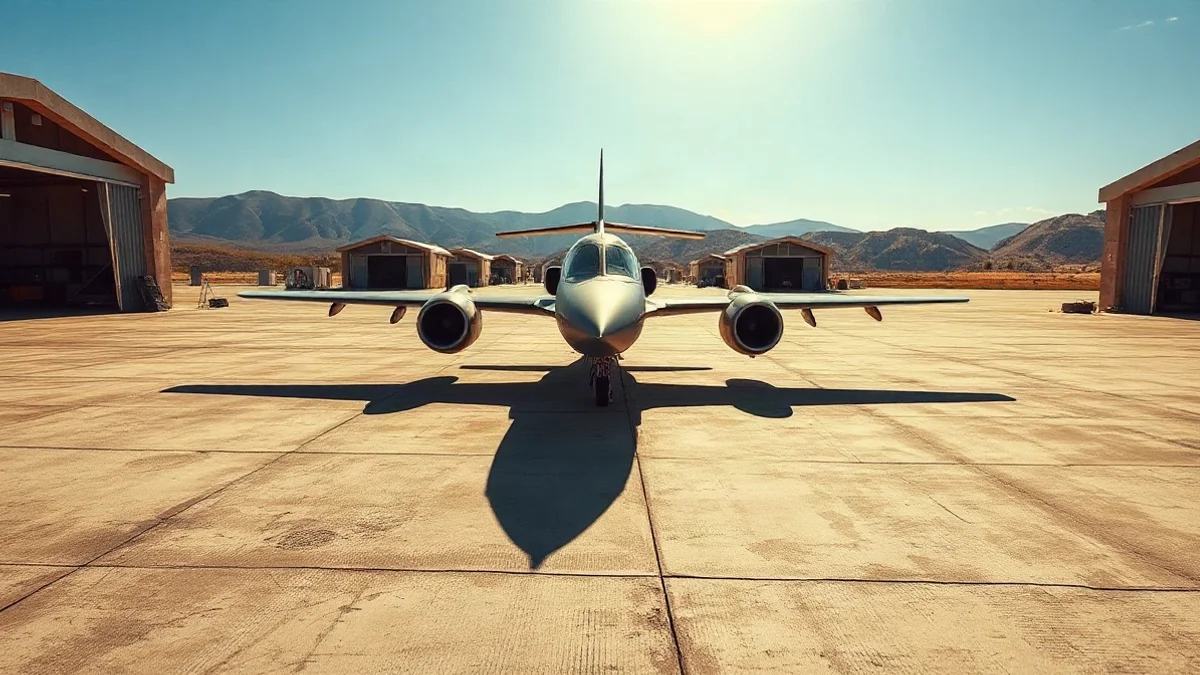
Future US Navy aviators are set to train on a jet trainer aircraft jointly developed by Italy and Russia, for which the Israeli Air Force is the largest global customer. Following recent developments in the US Navy's upcoming jet trainer procurement program, the Textron and Leonardo team has emerged as the sole contender.
While the United States rarely procures foreign-designed combat aircraft, it maintains greater flexibility regarding trainers. The Navy currently operates the T-45 Goshawk, a derivative of the British BAE Systems Hawk. Several competitors initially entered the replacement tender, including Lockheed Martin and South Korea's KAI with the T-50, Boeing partnered with Sweden's Saab, and Sierra Nevada Corporation with an original design. However, all three competitors ultimately withdrew from the program.
Sierra Nevada announced it could not meet the strict requirements set by the US Department of Defense, which mandated a fixed-price contract without adjustments for fluctuations in raw material costs or labor expenses. Consequently, American firm Textron—parent company of aircraft manufacturer Beechcraft—and Italy's Leonardo, developer of the M-346, remain as the sole bidders.
The M-346 originated as a joint venture between Italy's Alenia Aermacchi, which merged into Leonardo in 2016, and Russia's Yakovlev. The partnership later dissolved, with each company developing its own derivative. The Russian version, designated as the Yak-130, was exported to several nations, including Iran. Notably, an Iranian-operated Yak-130 was involved in the world's first combat kill by an F-35 stealth fighter when shot down by an Israeli pilot over Iranian airspace during Operation Lion's Roar. The US Navy plans to acquire 216 new trainer aircraft in a multi-billion-dollar procurement deal.
Although the M-346N variant is incapable of carrier-based landings, the US Navy confirmed that this requirement will be dropped from the tender, with training conducted from land-based facilities. This adjustment significantly streamlines the path to victory for Textron and Leonardo, pending formal announcement.
Israeli Air Force as the Leading Global Customer
The Israeli Air Force stands among the earliest and most prominent operators of the aircraft. Israel selected the M-346 in 2012 under a government-to-government agreement with Italy valued at approximately $1 billion for 30 aircraft. The procurement involved a reciprocal offset agreement, which included Italian acquisitions from Israeli defense industries, such as an observation satellite and two reconnaissance aircraft.
Operated under the designation 'Lavi'—named after Israel's canceled indigenous fighter jet of the 1980s—the aircraft were delivered between 2014 and 2017. This acquisition established Israel as the largest global operator of the type. Additional international customers subsequently joined the program, including Poland, Qatar, Turkmenistan, and Greece, the latter acquiring 10 aircraft for a Hellenic Air Force international flight training center.
Elbit Systems as a Global Avionics Provider
Beyond the aircraft themselves, Elbit Systems plays a pivotal role in the M-346 program across multiple client nations. In Israel, Elbit—operating through its 'Tor' joint venture with Israel Aerospace Industries—serves as the prime contractor that developed and supplied the ground-based training system and the embedded virtual avionics system, alongside Targo helmet-mounted displays used in the Lavi fleet.
Elbit occupies a central position in the Greek program as well, having secured the tender to establish and operate the international flight training center at Kalamata Air Base. Under the 20-year agreement, Elbit supplies the M-346 aircraft produced by Leonardo while maintaining the Hellenic Air Force's T-6 trainer fleet. Serving as the primary systems supplier for international M-346 operators, Elbit is also integrated into the US bid, positioning the Israeli defense electronics firm for substantial revenue should the Textron-Leonardo team secure the US Navy contract.