Russia Deploys Helicopter Cruise Missiles and North Korean Ballistic Missiles in Ukraine
Russian forces have integrated compact cruise missiles onto Mi-28NM attack helicopters and intensified North Korean ballistic missile strikes, overwhelming Ukrainian air defenses and targeting energy infrastructure.
The war in Ukraine continues to serve as a massive operational laboratory for high-intensity warfare. In recent days, a significant escalation has been recorded as Russian forces integrate compact cruise missiles onto attack helicopters and increase the deployment of advanced ballistic missiles produced in North Korea, striking the Ukrainian rear and challenging air defense systems facing interceptor shortages.
New Tactics for Attack Helicopters
Official footage released by the Russian Ministry of Defense revealed that advanced Mi-28NM attack helicopters have begun launching compact, low-cost cruise missiles known as Banderol (S8000) and Dan-T. This marks a major tactical and operational shift for Russian forces. While traditional standoff weapons such as the Kh-38 missile reached a maximum range of approximately 15 kilometers, the new cruise missiles reportedly achieve ranges of up to 500 kilometers.
Integrating these cruise missiles allows attack helicopters to fire from within Russian airspace or over the Sea of Azov, safely out of the detection and strike range of Ukrainian air defense systems. This move follows the loss of at least 21 Mi-28 helicopters out of a fleet of roughly 110. The Banderol missile features a small turbojet engine, deployable wings, and a satellite navigation antenna designed to resist electronic warfare. The second missile, Dan-T, is based on a target drone carrying a warhead weighing approximately 135 kilograms, with a unit cost roughly 35 percent lower than the Banderol. The Russian military plans to acquire thousands of such missiles by 2027.
North Korean Ballistic Missiles and Energy Infrastructure Strikes
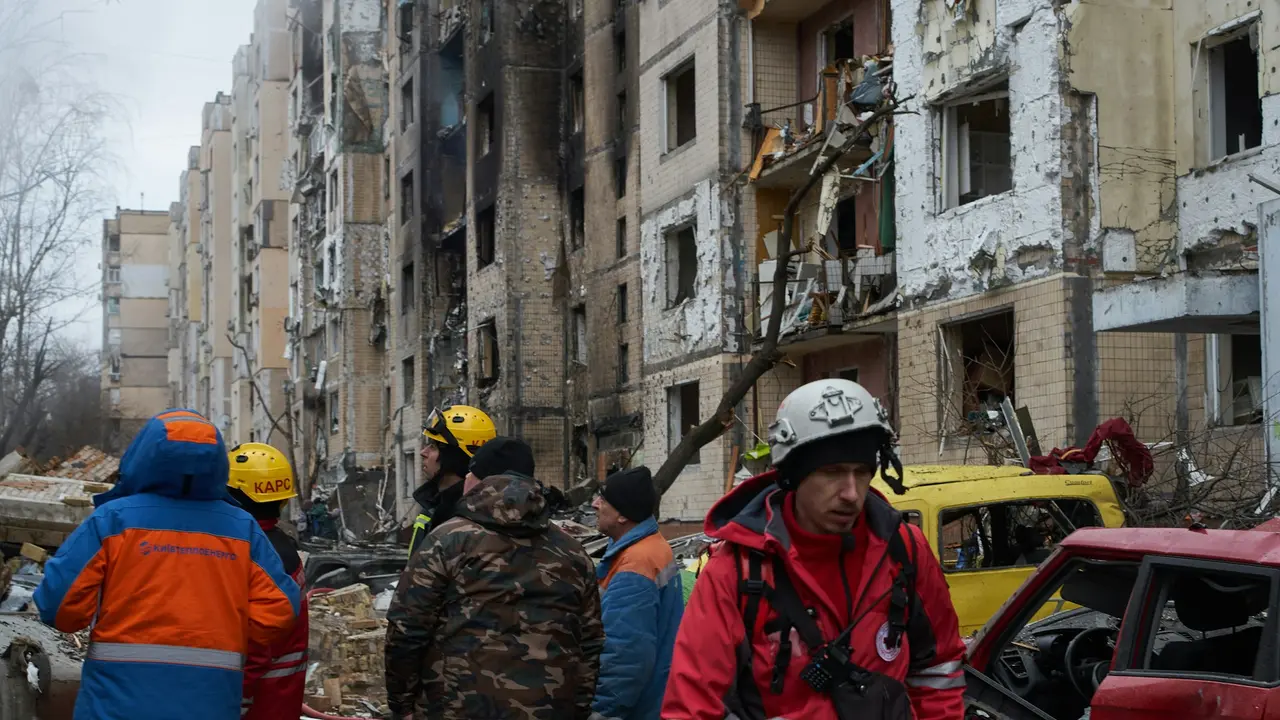
Alongside the aerial developments, Russia has intensified its use of North Korean KN-23 ballistic missiles, also known as Hwasong-11A. During a massive barrage comprising 36 ballistic missiles and 172 drones, electrical substations connecting nuclear power plants to Kyiv and central Ukraine were hit, alongside severe damage across four regions.
Ukrainian President Volodymyr Zelensky acknowledged that out of the 36 ballistic missiles launched in the barrage, Ukrainian air defenses managed to intercept only four. Zelensky pointed to a critical shortage of American Patriot interceptors, which serve as the primary countermeasure against ballistic missiles, and urged allies to expedite interceptor shipments ahead of winter.
President Volodymyr Zelensky stated regarding the interceptor shortage:
"We urgently need additional air defense systems and interceptors from our partners to protect our critical infrastructure and civilian population."
Following this appeal, Western allies announced plans to convene an emergency defense coordination meeting.
Global Trends in Aviation and Air Defense
The Russian deployment of cruise missiles from helicopters is not isolated. The United States Marine Corps is exploring a similar development under the LRAM program, integrating Red Wolf missiles with a range of hundreds of kilometers onto AH-1Z Viper helicopters. The Israeli Air Force has also integrated Spike NLOS missiles, with ranges between 25 and 50 kilometers depending on the variant, onto Apache attack helicopters.
This convergence of low-cost cruise missiles and maneuvering ballistic missiles reflects a growing global trend combining drones, cruise missiles, and rotorcraft. This reality poses an unprecedented challenge for air defense networks worldwide, necessitating new countermeasures against mass-produced, low-cost technologies operating at scale.