Cambridge Study: Clean Air Guidelines Could Save 9.4 Million Lives Every Year
A Cambridge University study shows that meeting strict World Health Organization air quality guidelines could prevent 9.4 million deaths annually and save billions in medical costs across developing nations.
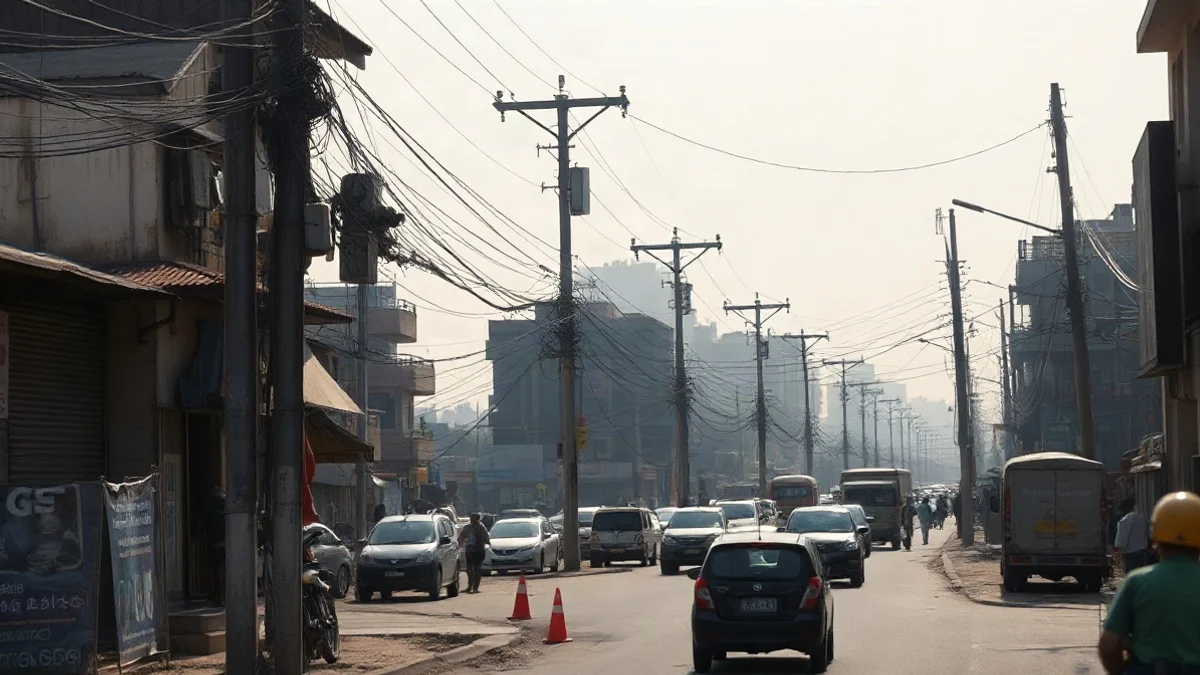
A landmark study conducted by the University of Cambridge reveals that strict compliance with World Health Organization air quality guidelines could prevent or delay approximately 9.4 million deaths globally each year. Published in the scientific journal Environment International, the research evaluated 136 low- and middle-income nations to assess the immense human and economic toll of airborne pollutants.
The Human Toll of Fine Particles and Nitrogen Dioxide
In 2021, the World Health Organization tightened its air quality benchmarks, lowering the annual average threshold for fine particulate matter known as PM2.5 to five micrograms per cubic meter. According to the computer-based models used by the researchers, meeting these stringent PM2.5 guidelines would prevent or delay 9.4 million deaths annually, while adhering to nitrogen dioxide thresholds would save another 1.1 million lives. Even reaching intermediate targets would spare roughly 6.6 million lives from particulate-related mortality each year.
Beyond mortality, the tiny particles—measuring 2.5 microns or less—penetrate deep into the respiratory system, originating from vehicles, power plants, industrial facilities, wood stoves, and construction dust. The mathematical models indicate that compliance would eliminate 7.3 million new cases of heart disease, 2.8 million cases of chronic obstructive pulmonary disease, 2.3 million strokes, and 1.1 million dementia diagnoses annually.
Economic Dividends and Health Savings
Quantifying the financial impact, researchers estimated that direct medical savings would reach 11.8 billion dollars annually for heart disease treatment, 8.6 billion dollars for dementia care, and 5.9 billion dollars for stroke management. Furthermore, productivity gains would total 18.1 billion dollars from reduced chronic bronchitis, 17.9 billion dollars from fewer strokes, and 5.3 billion dollars from lower heart disease rates.
World Health Organization Director-General Dr. Tedros Adhanom Ghebreyesus emphasized the profound inequality of environmental hazards, noting that while almost the entire global population breathed substandard air in 2019, roughly 89 percent of premature deaths from outdoor air pollution occur in low- and middle-income nations, with the highest concentrations in Southeast Asia and the Western Pacific.
Urbanization and the Policy Dilemma
Rapid urban growth in developing countries frequently relies on fossil fuel combustion, exacerbating pollution levels and widening health disparities. Wealthier urban residents can afford green neighborhoods and indoor air purifiers, whereas disadvantaged populations remain concentrated near busy roadways, industrial sites, and construction zones.
"The treatment of air pollution is expected to have a massive impact on improving quality of life," noted Dr. Analan Navaratnam, a clinical research fellow at Cambridge and co-author of the study. Dr. Haneen Khreis, a fellow researcher, acknowledged the formidable challenge ahead, stating:
"Compliance with the guidelines will not be simple, but a healthy population is not only a moral obligation, it will almost certainly bring great economic benefit."
While the findings rely on predictive modeling rather than direct headcounts and exclude high-income nations like Israel, the research underscores that future policy decisions in energy, urban planning, and transportation will ultimately dictate public health outcomes.