Without 61 on the horizon: The "wasted votes" nightmare that could decide the election
The proliferation of new parties raises concerns about "wasted votes" — with the electoral threshold potentially standing at about 171,000 votes this time. Against the backdrop of polls predicting that no bloc has 61 mandates, the need for mergers seems more necessary than ever, yet talks between some political players have not yet matured into agreements.
A little more than two weeks before the deadline for submitting lists, the fear of "wasted votes" in both political blocs is becoming increasingly tangible. Against the backdrop of polls predicting that no bloc has 61 mandates at this stage to form a government, the fear is becoming critical.
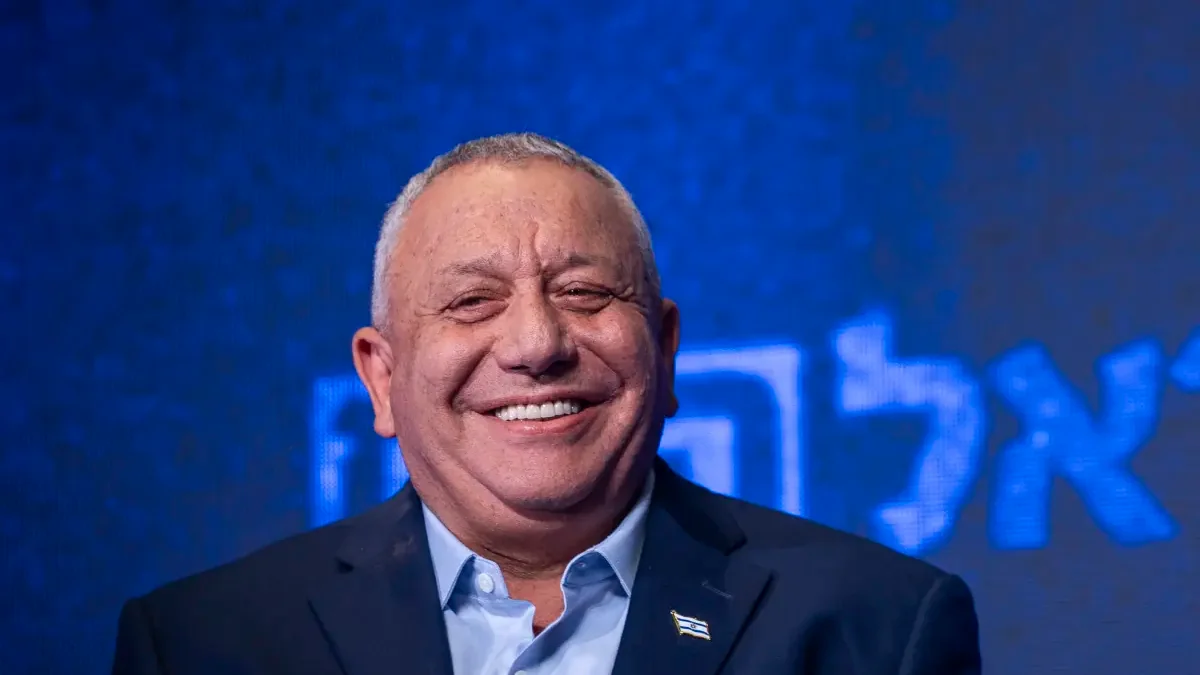
A series of new and small parties are expected to run in the upcoming elections, and a significant portion of the votes they receive may come from parties identified with the major blocs and prevent them from crossing the electoral threshold. The "Ha-Achdut" (Unity) party of Gilad Erdan and Yuli Edelstein aroused great interest upon its launch, but at this stage, according to several recent polls, it does not cross the electoral threshold. Although the two declared their intention to establish a unity party, they reiterate that it is a party located on the right — a fact that may affect the distribution of votes in the bloc.
When asked about the fear of a 1992 election scenario, in which many parties remained outside the Knesset, Erdan stated: "The unity bloc is the only bloc that can lead to solutions and unity. In this bloc there are three parties — Chili, Gantz, and us — and a magnitude of 8-12 mandates. Our test is whether we will succeed in uniting into one central force. I am open to mergers, it is not a matter of ego."
Brigadier General (res.) Ofer Winter is expected to announce his entry into the political system tomorrow. Prominent advocacy activist Yosef Haddad may be one of the prominent names on Winter's list. Besides them, Avi Maoz (Noam Le-Israel) has already announced his candidacy in the right-wing bloc — joined by Yiska Chaimov, sister of Shin Bet head David Zini. Also on the list: Moshe Feiglin (Zehut), Michael Ben-Ari and Baruch Marzel (Yisrael Yehudit Shlema Ve-Eitana), and Sharren Haskel (Yisrael Techila), who received an interesting boost in the form of Jonathan Pollard.
Awakening in the Arab sector
Also in the opposition bloc, known as the "change bloc," there are parties that could make things difficult for the major parties. Benny Gantz and Blue and White, the "Zionist Reserve Home" of Tropper and Hendel, as well as Yaron Zelekha's party, may attract votes that are clearly in the opposition bloc. Gantz has already announced several times that he will not sit in a narrow government, and even defined such a government as a "prelude to the next massacre," but the talks he held in the past did not mature into a merger.
The "Zionist Reserve Home" party attacked Erdan's campaign yesterday: "It is puzzling that a party calling itself 'Unity' has been busy with division since its inception. Erdan, to divide and define every political opponent as a leftist, there is already Netanyahu. To attack a party of fighters who left home and have been doing hundreds of reserve days since October 7 requires advanced detachment."
Meanwhile, the three Arab parties, Hadash, Ta'al, and Balad, announced at the end of last weekend that they would run together. The move comes after Balad remained outside the Knesset in the last elections because it failed to cross the electoral threshold, even though it garnered more than 138,000 votes.
The electoral threshold will rise
In the 2022 elections, the electoral threshold stood at 154,855 votes, 3.25% of the total valid votes. According to a study by the Taub Center, in the 2022 elections, almost 420,000 votes went to waste — 8.8% of all voters. This is an amount of votes equivalent to ten mandates in the Knesset.
According to the study, in the upcoming elections, the electoral threshold is expected to be higher due to the increase in the number of eligible voters. In November 2022, the number of eligible voters stood at 6.789 million, while at the end of October 2026, their number is expected to reach 7.561 million. Assuming that voter turnout will be about 70%, the entry ticket to the Knesset may stand at about 171,000 valid votes. The meaning: any party that approaches the threshold but does not cross it may turn the votes it received into wasted votes, and dramatically affect the balance of power between the blocs.