Foreign Minister Gideon Saar Sees No Current Prospect for National Unity Government
Foreign Minister Gideon Saar states that prospects for a national unity government are low, accusing Gadi Eisenkot, Yair Lapid, and Yair Golan of pushing for a minority government backed by Arab parties.
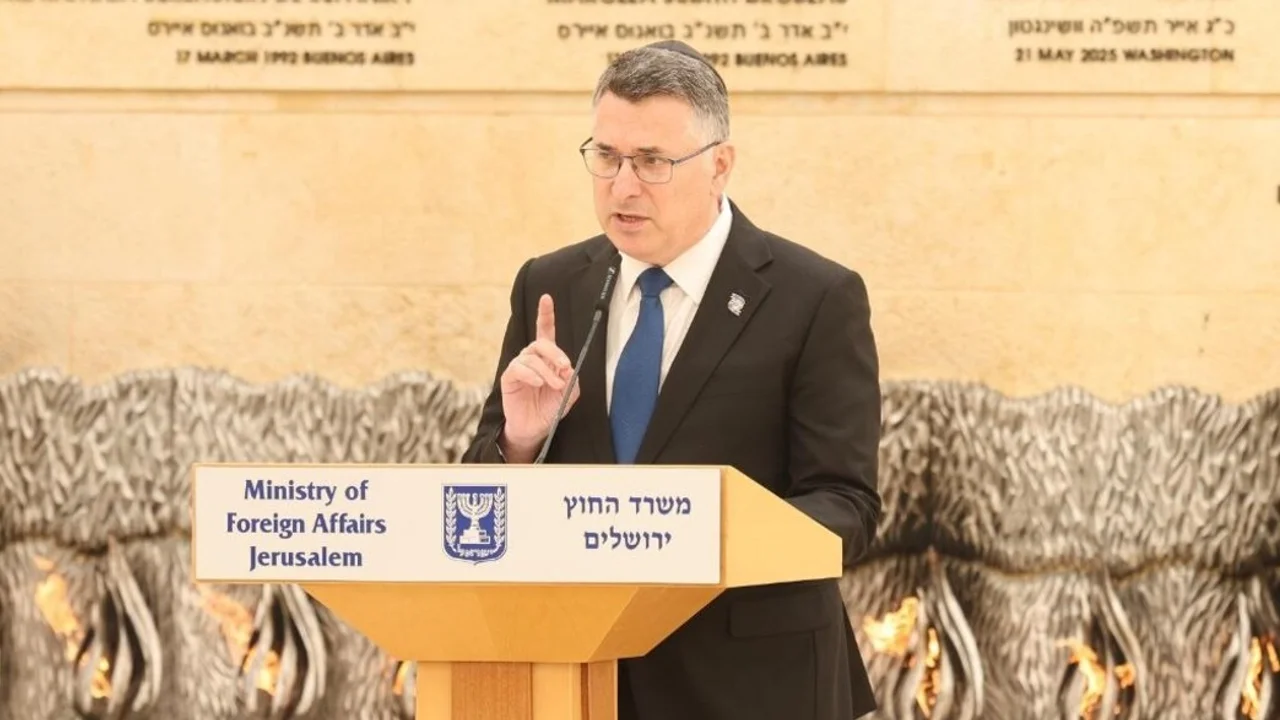
Minister of Foreign Affairs Gideon Saar assesses that prospects for establishing a national unity government remain low amidst ongoing coalition negotiations. Speaking to the press, Saar stated that despite Likud's stated desire for a unity government, the opposing political factions show no genuine willingness to pursue such an arrangement. He emphasized that should a sincere willingness emerge based on national interest, genuine negotiations would be conducted on policy platforms, though he currently sees no such possibility.
Coalition Negotiations and Minority Government Concerns
Saar addressed the actions of Yashar! party leader Gadi Eisenkot, who received the presidential mandate to form the government from President Isaac Herzog. Saar accused Eisenkot, along with BeYachad leader Yair Lapid and The Democrats leader Yair Golan, of lacking interest in a broad unity government. According to Saar, the three leaders are instead steering toward the formation of a minority government reliant on the parliamentary support of anti-Zionist Arab parties.
Noting that nearly two weeks have passed since Eisenkot received the mandate, Saar pointed out that no coalition agreement has been signed and no substantive negotiations are taking place. He suggested that this delay may reflect an effort to buy time ahead of a minority government formation initiative expected as early as next week. Furthermore, Saar criticized Eisenkot and his partners regarding their treatment of political allies Avigdor Lieberman and Naftali Bennett, stating that the bloc disregards them entirely despite Lieberman's declared opposition to administrations dependent on Arab factions.
Legislative Criticism and Institutional Independence
Saar affirmed that Likud remains open to unity discussions while stressing that the party will not compromise on its core positions or ignore the electoral mandate. He argued that the election results placed Likud first and secured the largest bloc for the national camp, meaning those outcomes will not be sidelined. In addition, Saar criticized the ongoing legislative blitz in the Knesset aimed at overturning laws passed during the previous parliamentary term, describing the move as an unprecedented attempt to railroad legislation that was debated for years prior to the formation of any coalition or presentation of a cabinet.
Concluding his remarks, Saar criticized the official legal advice provided to the government, arguing that the Knesset's legal department has demonstrated greater independence in recent years compared to government legal advisors who have aligned with specific political sides. He also asserted that ultra-Orthodox parties are increasingly realizing they are being misled by the political bloc attempting to assemble the next administration.