Who will 'do a Bennett'? The battle for the premiership behind the scenes | Listen
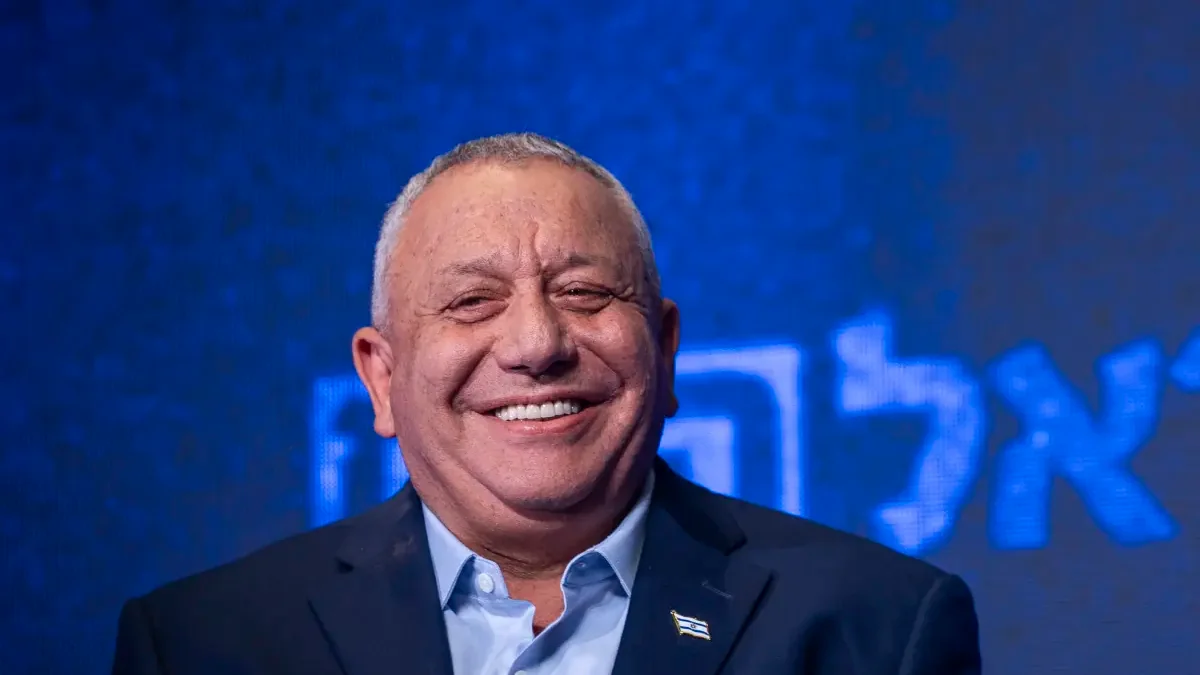
Gadi Eizenkot may be the leading candidate for Prime Minister in the event of an opposition victory, but behind the scenes, Naftali Bennett and Avigdor Lieberman are already marking the coveted chair. Who among them will demand a rotation, who might break their election promises, and who will become the tie-breaker — in the new episode of the "Al Ze" podcast.
Gadi Eizenkot? It is by no means certain that the former Chief of Staff will be crowned as the next Prime Minister if the opposition bloc wins the upcoming elections. On the face of it, Eizenkot may be the natural candidate to lead the bloc, but in the current political system, the number of mandates a party receives has long ceased to be a guarantee for entering the Prime Minister's office. Standing on the way there are two potential rivals, Naftali Bennett and Avigdor Lieberman, each of whom has their own interests, ambitions, and scenarios.
Will one emerge from the three, or will we see a rotation again that will allow a candidate who is not at the head of the bloc to reach the most prestigious chair in the country? Will Bennett and Lieberman agree to give up the ambition to lead the government, or will Eizenkot be forced to pay the price of Israeli politics and share the role? In another episode of the podcast "Al Ze" (About This), Ili Zilberberg and Yaakov Hershkowitz analyze the possible moves and try to bet on who might be the next Prime Minister — even if the result is completely different from what the voter intended.
Lieberman is lurking in the corner
According to Ili Zilberberg, one of the candidates who might surprise is Avigdor Lieberman. "Avigdor Lieberman in his current situation is the man who can achieve the premiership. Lieberman is aiming for more than 8-9 mandates, and I think there is a chance he will reach 12 if his campaign succeeds. He managed to bring a list that is much less 'Russian' than before; this is no longer an immigrants' party. I think Lieberman will be the tie-breaker, but after the Bennett precedent, that could be enough to grant him the premiership."
However, Lieberman is not the only one capable of disrupting Eizenkot's plans. Naftali Bennett, who has already proven in the past that it is possible to reach the Prime Minister's office without being the largest party in the bloc, may also find himself in a position that allows him to demand the role.
"I believe Bennett when he says he thinks this government should be replaced, but I also remember his history. I believe there is a scenario where he will volunteer to 'save the country' and enter the government together with Netanyahu, Shas, and Religious Zionism. In such a scenario, perhaps he will be Prime Minister in a rotation, or receive the Defense portfolio, and it is very possible that Yair Lapid will not go with him. This way, Bennett will be marked as the next leader of the Right - and that is not a possibility I would rule out."
The scenario that no one rules out
Benjamin Netanyahu's political future may also fit into scenarios that currently seem imaginary but may become relevant the day after the elections. Zilberberg raises the possibility that a political move will be created that will shake the entire system and allow for the establishment of a new unity government.
"Even on the subject of Netanyahu, there can be all kinds of creative solutions that will take him out of the game. For example, a possibility where President Isaac Herzog resigns to allow for unity among the people, Netanyahu replaces him, and a unity government is established led by Lieberman or led by Lieberman in rotation with a candidate from the Likud. This is not an absurd scenario. Lieberman wants to be the leader of the Right on the day after Netanyahu - and therefore whoever manages to be in the right position will be able to be the leader of the Right even a decade later."
According to Zilberberg, the question is not only who will win the elections, but also who will be willing to break the promises they made to their voters in order to reach the Prime Minister's office. The political reality of recent years has already proven that the number of mandates alone does not determine who will stand at the head of the government.
"There used to be a correlation between the number of mandates and the chance of becoming Prime Minister, but it is no longer like that. Therefore, everyone must break their election promise in some way. There is no chance to form a government without breaking an election promise. Lieberman and Bennett will be frustrated by the situation, or Eizenkot reaches 20 mandates - and from their point of view, rightly so. It may be that Bennett will demand a rotation from Eizenkot in any case. You can be Prime Minister even with four mandates, for that matter."
Thus, even before the votes were counted, the race for the premiership is already taking place within the opposition: Eizenkot may arrive with significant electoral power, Bennett may try to repeat the move that brought him to the Prime Minister's office, and Lieberman may become the tie-breaker who will decide who will sit in the chair.