Two Collectors Claim Ownership of Legendary Historic Porsche 917LH
Two collectors claim to own the legendary psychedelic Porsche 917LH "Hippie Car" valued at $25 million, sparking a fierce debate over chassis numbers and racing provenance.
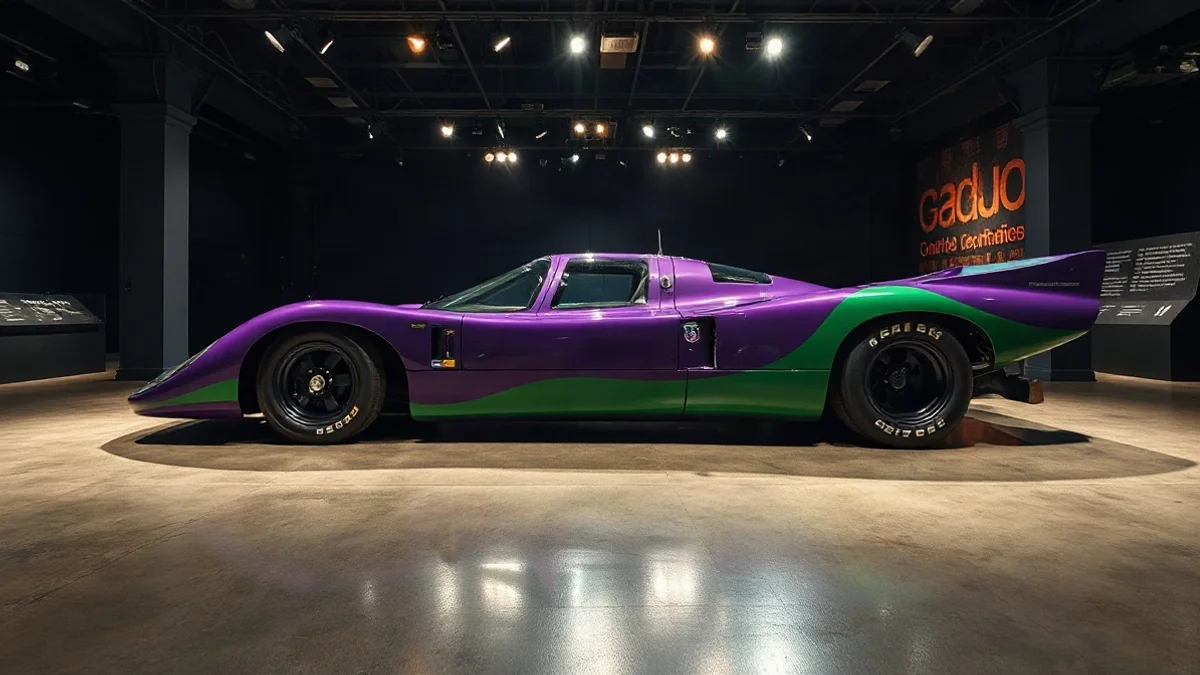
A legendary Porsche 917LH racing car, famously adorned in a psychedelic purple and green livery and known as the "Hippie Car," has sparked an intense ownership dispute as two individuals claim to possess the authentic vehicle. Valued at up to $25 million, the car made history in 1970 by finishing second at the 24 Hours of Le Mans in France, famously outperforming Ferrari in heavy rain during a race immortalized in the Steve McQueen film "Le Mans."
According to Porsche, the vehicle competed again in 1971 sporting an orange and blue color scheme, reaching a then-record speed of 240 mph (approx. 386 km/h). Today, such motorsport masterpieces command prices rivaling works by Pablo Picasso. However, the mystery deepened when two nearly identical cars emerged, one housed at the Simeone Foundation Automotive Museum in Philadelphia and the other owned by 82-year-old racing driver and car dealer Frank Sytner, who acquired it in 2024 from a Brazilian racing driver.
Conflicting Histories and Chassis Numbers
The dispute highlights a common practice in 1970s motorsport, where racing teams frequently swapped chassis numbers and ID plates to navigate customs regulations or replace damaged frames without bureaucratic delays. Both the Simeone Museum and Sytner agree that the original Hippie Car bore the chassis number 043, and that numbers were swapped during its racing career. However, their accounts diverge significantly regarding subsequent ownership and vehicle lineages.
Sytner has launched a dedicated website, exhibited his car at prestigious events like Le Mans Classic and the Goodwood Festival of Speed, and even visited the Simeone Museum to encourage a deeper investigation. Meanwhile, museum officials acknowledge they cannot definitively verify their car's provenance, yet they remain skeptical of Sytner's claims. Porsche's internal archives and former racing coordinators maintain that the history is obscured by decades of structural modifications and factory sales of surplus racing inventory.
The Search for the Truth
Experts like Porsche consultant Dale Miller note that untangling the provenance of such historic racers is an immense forensic challenge. While Sytner asserts that his vehicle is the genuine article and aims to have it recognized as the world's first art car, museum curators and historians continue to debate the murky paper trail. Ultimately, the resolution of this high-stakes dispute may remain as elusive as the high-speed legacy of the iconic Porsche itself.