No longer just vacuums: Dreame shuts down automotive division less than a year after launch
Dreame, which unveiled a concept car promising 0-96 km/h acceleration in 0.9 seconds, is closing its automotive project. Following the withdrawal of government funding, only HR and legal staff remain to wind down operations, which previously employed 1,000 people.
Dreame, the Chinese vacuum cleaner manufacturer that has successfully expanded into various electrical appliances, attempted to enter the automotive sector, but the venture has proven unsuccessful. According to a report by CarNewsChina, the company is closing its car project following the cessation of government funding. The automotive division, known as Project Starry Sky, previously employed over 1,000 people; now, only a handful of legal and HR personnel remain to manage the closure of operations.
"We have recently optimized some activities that were in an experimental stage," Dreame stated. The company added that it will henceforth focus on four core areas: smart home, outdoor and garden, smart mobility, and embodied AI (artificial intelligence systems integrated into physical bodies such as robots, autonomous vehicles, or drones). A company spokesperson did not respond to a request for comment.
According to CNBC, the move is driven by new regulations issued by the Chinese government to tighten oversight of the private equity industry, valued at $3.4 trillion. In this process, Dreame came under scrutiny. After becoming one of the world's largest vacuum cleaner manufacturers, the company expanded rapidly, establishing nearly a thousand ventures related to smartphones, robotics, and automotive technology. Much of this expansion was funded by the Chinese government, which is now closely examining how Dreame utilizes these funds, the report notes.
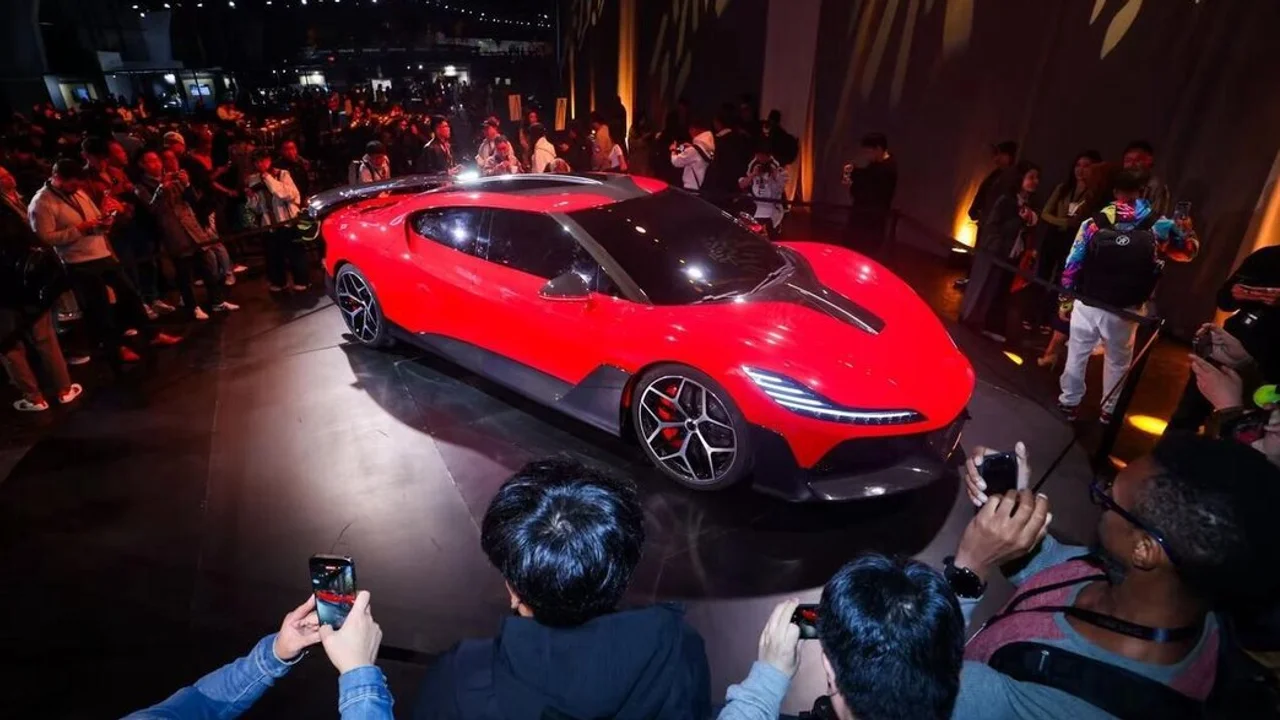
Earlier this year, at an exhibition in San Francisco, Dreame presented the Nebula Next 01 Jet Edition, a concept car featuring two rocket engines, which the company claimed could accelerate from 0 to 96 km/h in 0.9 seconds. The company also asserted that the vehicle was equipped with a sulfide-based solid-state battery with an energy density exceeding 450 Wh/kg, a range of over 550 km, and thrusters capable of providing 100 kilonewtons of force.
The concept raised numerous questions, including the fundamental issue of how such a vehicle could achieve these performance metrics without violating the laws of physics. Former employees told China Economy that the model presented in San Francisco lacked a real chassis and was operated via remote control. While concept cars are rarely production-ready vehicles, in this instance, the presentation was reportedly little more than a show.
This story is reminiscent of previous cases involving companies that promised to build electric and autonomous vehicles without having developed a functional prototype. Faraday Future, another Chinese company with similar ambitions, faced comparable issues nearly a decade ago, including allegations that public demonstrations of its autonomous cars were operated remotely from behind the scenes.