The Murder of Benyahu Razi: Investigation Reveals Complex Web of Planning and Complicity
Nearly three weeks after the murder of 19-year-old Benyahu Razi in Jerusalem, the investigation has uncovered a complex network of suspects, including planners, executors, and those who obstructed justice.
Almost three weeks have passed since the murder of Benyahu Razi (19) in Jerusalem. As the investigation progresses, a more and more complex picture emerges. What initially seemed like a violent incident that developed inside a rented apartment has, according to suspicion, turned into a large-scale affair that includes prior planning, a toxic relationship that ended in tragedy, a series of "intermediaries," those involved in the act itself, attempts to obstruct the investigation, and even the alleged involvement of a police officer and a prison service officer. Ynet puts the affair in order.
The murder occurred in a rented apartment in the heart of the Nachlaot neighborhood in the capital, on a small street that leads to the Mahane Yehuda market. Benyahu and his close friend arrived at the place after, according to suspicion, they were invited there by his ex-partner Agam Tsarfi and her friend Shilat Huta. Within minutes, the planned outing turned into a deadly ambush. According to suspicion, several teenagers were summoned to the place towards the end of the Sabbath in light of the girls' claims that Benyahu and his friend had attacked them. Benyahu was violently attacked and stabbed to death, while his friend tried to fight the attackers to save him. During the confrontation, he was injured himself and called the rescue forces. MADA teams that arrived at the scene were forced to determine Benyahu's death, while his friend was initially arrested on suspicion of involvement in the murder. Shortly after, the suspicion against him was cleared. The friend's testimony, who witnessed Benyahu's final moments, became very central to the investigation.
Murder in live broadcast
At the center of the investigation is the relationship between Benyahu and his ex-partner Tsarfi. According to investigation materials, the two managed a stormy and conflict-ridden relationship. Months before, Benyahu had turned to the police and complained that he was being threatened. Investigators believe that this toxic relationship constitutes the main background for the event. Tsarfi is considered a central suspect. According to the police, she was one of the instigators of the murder and acted together with her friend Huta to carry out the plan. During one of the detention extension hearings, the police revealed a message that Tsarfi sent to Benyahu shortly before he arrived at the apartment: "You said that Shilat and Agam are whores - come see what whores do. I will show you how you should behave towards children like you." The police see this message as evidence that strengthens the claim that she knew in advance what was about to happen. Judge Efrat Eichenstein-Shimla determined that the reasonable suspicion against Tsarfi has strengthened, at least regarding the offense of conspiracy to commit a crime. According to the police, during the violent attack, Tsarfi was not present in the apartment, but watched what was happening in real-time via a video call.
Her friend Huta is suspected of being Tsarfi's partner in planning the murder. According to the police, she was in the apartment, waited for the perpetrators, and managed the video call. Investigators claimed in court that Benyahu's bloodstains were found on her mobile phone, and that even before that, she had sent threatening messages.
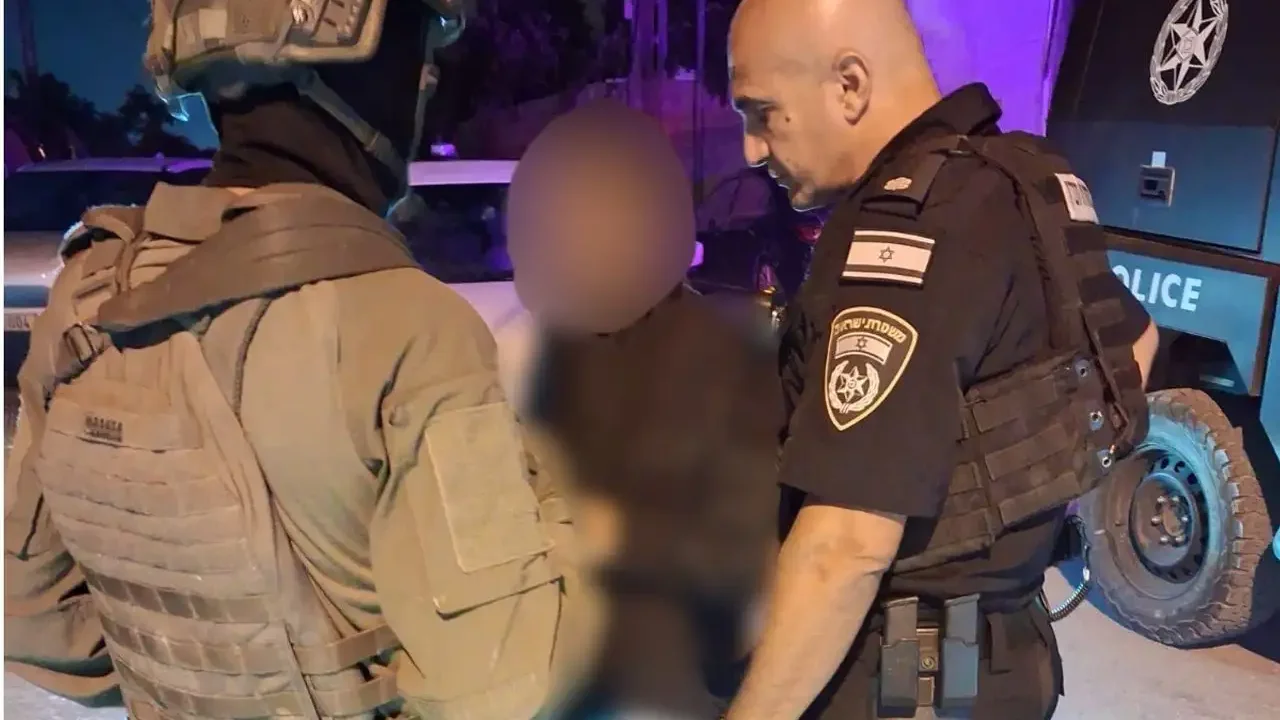
The main suspect in the murder is Avior Sasson (17). The teenager fled for long days and was arrested by the police after an extensive manhunt two and a half weeks after the murder. Investigators attribute the actual execution of the murder to him along with others. Sasson hid in various places in the center and north of the country and was arrested in the Harel tunnel at the entrance to Jerusalem while traveling in a taxi.
The instigators and the assistants
According to suspicion, the link between the instigators of the murder and the "executioners" was Linor Sasson, Avior's mother. The police claim that the organization that preceded the murder took place in her home. She is suspected of helping her son and other involved parties to escape and of obstructing the investigation. A police representative claimed in court that Sasson threatened other suspects not to talk to her son and the other involved parties, and instructed them to maintain the right to silence.
David Keren (19) from Elad is suspected of having served as the contact person between the instigators of the murder and the actual perpetrators. After several days behind bars, he was released to house arrest, but the investigation into his case continues.
The investigation did not end with the circle of suspects who were present at the scene. One of the unusual developments was the arrest of a police officer, Tsarfi's sister. According to suspicion, shortly after the murder, the police officer met with two of the involved parties, heard the details of the incident, and did not report it. She was detained by the Department of Internal Police Investigations (Mahash), and later released under restrictive conditions.
Another unusual development occurred with the arrest of an officer in the Prison Service. According to suspicion, the officer, who managed a romantic relationship with a prisoner who is the brother of Avior Sasson, passed him her personal mobile phone, through which contact was managed with parties outside the prison walls while his brother was on the run. The information that led to the exposure of the case regarding the officer and the prisoner, who is serving a sentence for extortion by threats, was collected by the Prison Service's intelligence division and passed to the police. According to suspicion, the prisoner himself, from within the prison, was also a partner in the attempts to help his brother after the murder.
Almost three weeks after the murder, the investigation is focused on four circles of involvement: the suspects in planning the murder, the parties who connected the sides and helped in the organization, the suspects in committing the murder itself, and the circle that acted after the murder to hide evidence, obstruct the investigation, and help the main suspect escape. Most of the suspects deny the allegations against them.