Arab state's deception exposed: Middle East chess game gets complicated
Against the backdrop of revelations regarding an Arab state's double game, the regional picture sharpens: negotiations with Syria are at a standstill, while contacts with Lebanon drag on. Turkey and Hezbollah challenge stability, and Saudi Arabia remains an unrealized opportunity.
The revelation that an Arab state in the Middle East conducted contacts with another Arab state with the goal that the latter would sign a peace agreement with Israel and subsequently act against it militarily has sparked a wide public outcry.
It is no secret that several states conduct negotiations at various levels with Israel, including within the framework of the "Abraham Accords". Military censorship prohibits the publication of the names of the two states in question.
Regardless of this report, the broader picture of Israel's political-military arena vis-a-vis the region is as follows: negotiations between Israel and Syria are currently at a standstill. Meanwhile, negotiations with Lebanon are progressing according to local reports, with a date already set for another round of talks.
"Turkey views Syria as part of its sphere of influence and is constantly working to establish its status there. We know the Turkish president's positions towards Israel, and we must take things seriously and prepare accordingly, including through regional alliances such as those with Cyprus and Greece," says a military source.
Lebanon is currently negotiating with Israel, but the Lebanese government requires significant external reinforcement. The fact that Hezbollah is challenging the government and threatening to ignite a civil war is one of the reasons for the delay in talks.
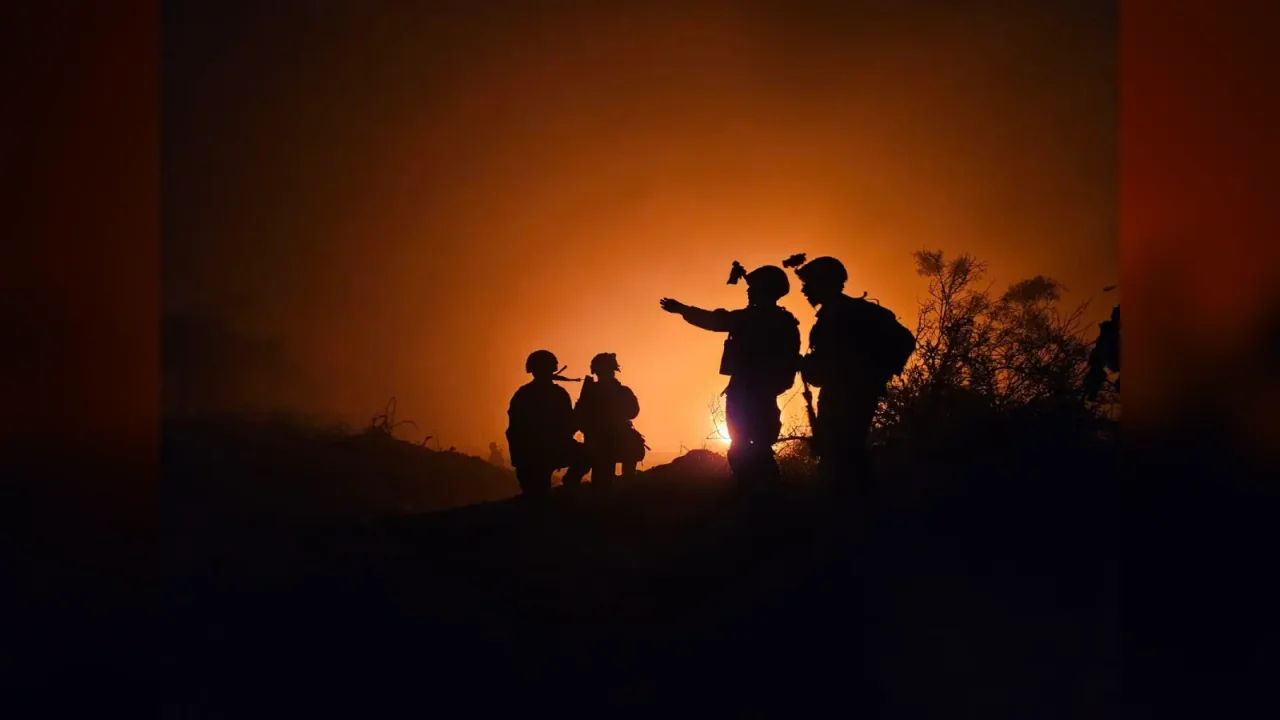
The IDF is operating on the Ali-Taher ridge. Assessments in Lebanon suggest that within days, Hezbollah terrorists from the Badr force, besieged in tunnels, will either surrender or face a battle with zero chances of survival.
The IDF acknowledges that the Lebanese army lacks the capability to hold the territory. Therefore, the 91st Division is currently constructing a rigid line of outposts inside Lebanon near the "yellow line." The IDF is building several forward defense lines due to concerns over attempts by Hezbollah, which still retains significant military power.
The Eastern and Egyptian Arenas
Peace agreements with Jordan and Egypt are viewed as strategic assets. Ties with both countries remain stable, particularly regarding security coordination and border protection. Israel is not concerned about Egyptian capabilities, as there is a massive demilitarized zone along the border, making the chance of a surprise attack minimal.
The arenas of the second and third circles of regional countries hold enormous potential for Israel. However, narrow political considerations prevent the Israeli government from promoting broad, open initiatives. The most central of these is Saudi Arabia.
Saudi Arabia possesses significant military power, in some aspects exceeding Egypt's. The Saudi Air Force is numerically larger than the Israeli Air Force and relies heavily on American and British weapon systems, including F-15EX aircraft.
Israel and Saudi Arabia share overlapping interests, primarily countering Iran and the Houthis in Yemen. Israel is prepared to act against the Houthis and could offer Saudi Arabia and other Gulf states a route for transporting oil to the Mediterranean, potentially reducing Iran's ability to disrupt energy exports.
Israel could utilize the current reality to establish its status in the Persian Gulf, especially with Saudi Arabia, Bahrain, and the UAE. However, political barriers within the government, mainly from right-wing elements, make it difficult to advance such moves. It is possible that Arab countries also recognize that at this stage, Israel is not ready for broad political shifts.