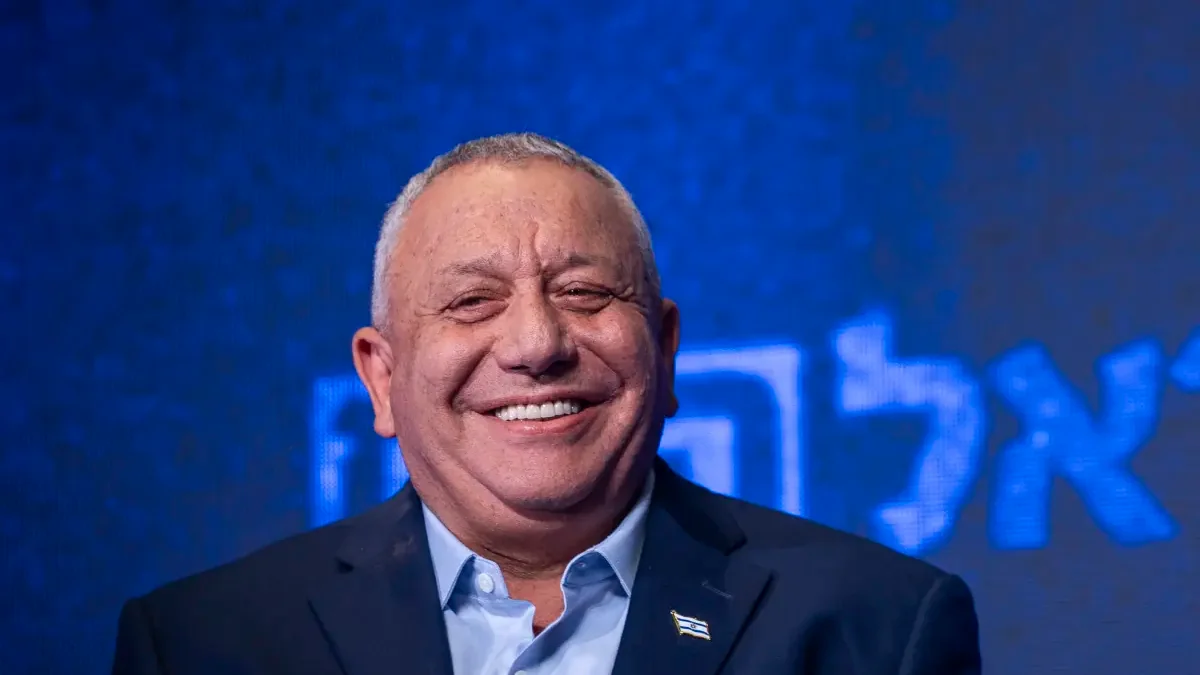
MK Avichai Boaron on Reserved Spots: 'Bitan Is Right. A Steering Committee Will Kill Likud'
MK Ron Katz (Yesh Atid) has announced his resignation from the Knesset. Meanwhile, within Likud, internal tensions persist regarding the party list formation process and Prime Minister Benjamin Netanyahu's influence.

At the beginning of the week, MK Ron Katz (Yesh Atid) announced his decision to resign from the Knesset and not run again. He apparently understood that the union between Yair Lapid and Naftali Bennett leaves no political horizon for backbenchers. Katz's story is unique both due to the circumstances of his arrival in the Knesset and his conduct: he maintained close friendships with former ministers Moshe Arbel and Uriel Buso from Shas.
Despite belonging to rival parties, they showed that it is possible to rise above toxic discourse. Katz notes: 'Even in the Knesset, we found common ground 95% of the time—in committees, in action, in legislation, in the desire to help. What separates us are the other 5%, and unfortunately, that is what the public sees.' According to Buso, Katz's decision is painful, as 'in politics, there are people you say are redundant, and it is precisely the good people who leave.'
Likud Needs Strengthening, But...
At the beginning of the week, the Likud center approved Chairman Benjamin Netanyahu's demand for eight reserved spots up to the 29th place on the party list. The Prime Minister achieved an internal political victory, but the threat of canceling primaries entirely in favor of a steering committee still looms.
MK Avichai Boaron expressed skepticism about this direction: 'We must hold primaries. There must not be a steering committee. In the long run, it will hurt us. It will kill the party. It is possible to give him a place to appoint several people to strengthen the list, such as a general, an academic, or a businessman.' According to Boaron, eight reserved spots effectively create a steering committee, and the higher the number, the more David Bitan's arguments hold true.
Boaron also commented on the responsibility for the October 7 massacre, placing most of the blame on the security establishment, which he claimed 'operated like an army that has a state.' Regarding the judicial system, he maintains a firm stance: 'It needs to be fixed because currently, it is not the elected echelon that manages the event, but the legal bureaucracy.' He suggested that in the future, a constitutional court should be established above the Supreme Court, with judges chosen by the Knesset.