"The alliance with Israel has become a burden"? The Turkish-Qatari campaign versus the reality in Greece
Media outlets in Turkey and circles identified with Qatar present the ties with Israel as a burden on Greece. A Maariv investigation reveals: the protest on the street is real, but in Athens, they are actually deepening security cooperation.
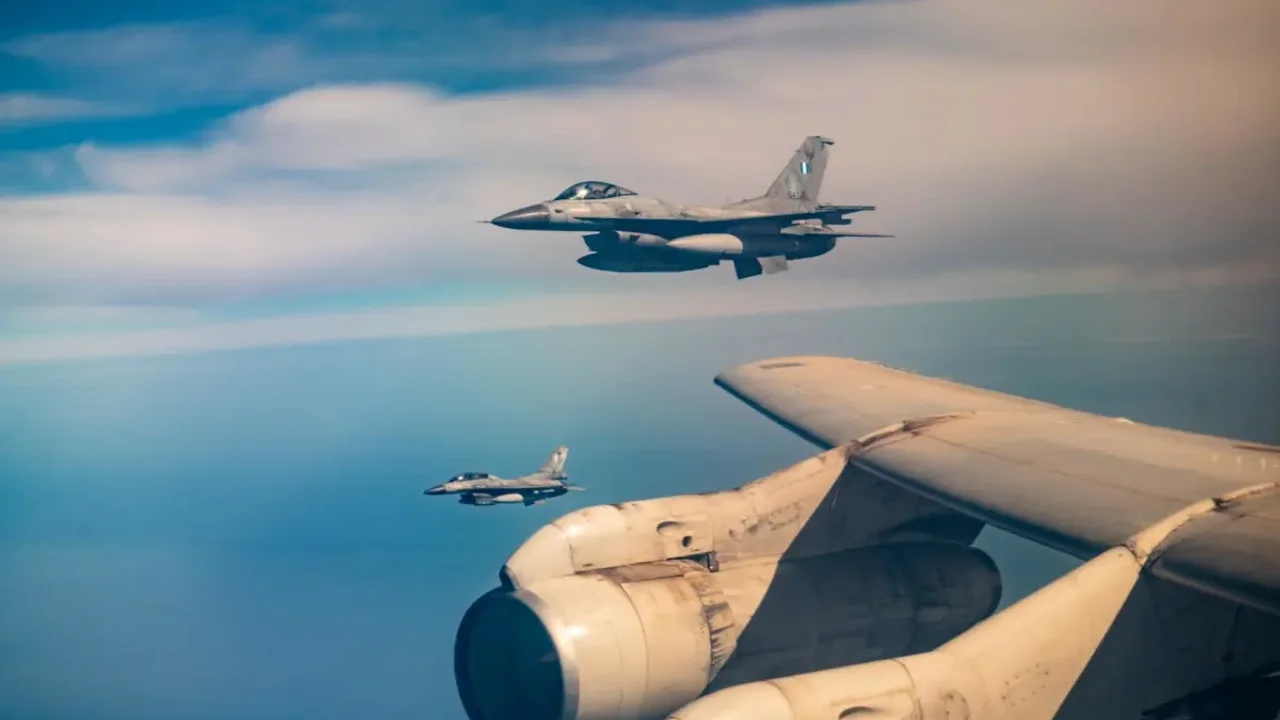
The expanding strategic alliance between Israel and Greece has been at the center of a wave of publications in recent weeks seeking to present it as an increasing burden on Athens. In fact, according to a Maariv investigation, this is an ongoing influence campaign against Israeli and Greek interests. The claim of a burden is particularly prominent in media outlets identified with a sharply critical line toward Israel, including Turkish media and the Middle East Eye website, which has been identified for years with the Qatari-Turkish line.
However, an examination of the Greek media and the conduct of the government in Athens presents a more complex picture: there is significant public opposition to Israel following the war in Gaza, but at the same time, the government continues to deepen security and strategic ties with Jerusalem.
Yesterday, Middle East Eye published an extensive article under the headline "Greece's alliance with Israel is becoming a burden on the domestic front." The website, based in London, has been accused over the years of Qatari ties and funding. Former senior officials at Al Jazeera were involved in its establishment and management, and during the crisis between Qatar and Arab states in 2017, Saudi Arabia, the UAE, Egypt, and Bahrain even demanded its closure alongside Al Jazeera.
Between protests and arms deals
The MEE article claims that anger toward Israel in Greece is fueled by the war in Gaza, the purchase of Israeli weapon systems, and the rise in housing prices, which it links to Israeli real estate investments. It quotes activists and political opponents of the ties with Israel and presents the alliance as an asymmetric relationship that is becoming increasingly controversial.
Some of the facts on which the publication relies are not disputed. At the beginning of August, demonstrations of solidarity with the Palestinians took place in more than a hundred locations across Greece, some of which included the declared demand: "No cooperation with Israel." According to the Greek website in.gr, thousands participated in the protests. On August 14, another protest was held in Piraeus against the arrival of the cruise ship Crown Iris with Israeli tourists on board.
There is also a significant Israeli presence in the real estate sector. RE/MAX data published in Kathimerini show that in 2025, Israelis were the most active group of foreign apartment buyers in Attica and Thessaloniki. However, the economic picture presented by the Greek media is broader: foreign investments in real estate came from the UK, USA, Turkey, European countries, and other nations, and the Greek economic press does not present Israelis as the sole or central factor in the rise of rent prices.
The same message in Turkish media
A framing similar to that of MEE appears in the Turkish media. The state news agency Anadolu covers the anti-Israel protests in Greece extensively and in a critical tone, including protests against Israeli tourists and calls to sever relations between the countries.
TRT, the Turkish state broadcaster, went further at the beginning of July with the headline "Confessions in the Greek media: Israel has trapped us." The article collected articles from critical Greek websites and claimed that cooperation with Israel turns Greece into a "satellite of Israel" and a "Trojan horse." This is a much sharper framing than that usually appearing in mainstream Greek media.
Habertürk, relying on Anadolu, also described the joint military exercises between Israel and Greece in July as part of an "alliance against Turkey," adding that Jerusalem and Athens are "uniting around an anti-Turkish discourse." At the same time, Hürriyet Daily News emphasized that the purchase of Israeli defense systems could increase tension between Athens and Ankara.
In Athens, they are actually deepening the bond
The gap is particularly prominent when comparing these publications to the position of the Greek establishment. Just yesterday, August 19, Kathimerini reported that the Greek Chief of Staff, General Dimitrios Choupis, met in Israel with Chief of Staff Eyal Zamir and senior defense ministry officials. The Greek Ministry of Defense defined the visit as proof of the "strategic importance and special weight of the established military relations between Greece and Israel," and declared that both countries are committed to continuing to deepen cooperation.
In July, Greece approved a plan to equip itself with the "Achilles Shield" multi-layered defense system, centered on Israeli systems, in a deal estimated at 2.8 to 3.1 billion euros.
The government also rejects the attempt to present Israel's opponents as representing the entire country. Greek Minister of Health Adonis Georgiadis last week called the rioters against Israeli tourists a "pathetic minority," defined Israel as one of Greece's most important allies, and called on Israelis to continue coming to the country.
Even the figure on which MEE relies requires qualification: the site published that a Pew survey found that 65% of Greeks "oppose partnership" with Israel. However, the question in the survey did not deal with partnership between the countries at all. Pew found that 65% of Greeks hold a negative view of Israel, compared to 30% who hold a positive view. This is a figure that indicates a significant erosion in Israel's image, but not that 65% oppose the strategic alliance with Jerusalem.
The picture emerging from Greek sources, therefore, is not one of an alliance on the verge of collapse. There is broad public protest in Greece against the war in Gaza and sharp criticism, mainly on the left, but at the same time, the Mitsotakis government continues to see Israel as a security asset in the face of threats in the Eastern Mediterranean. This gap allows media outlets hostile to Israel, especially in Turkey and the media environment identified with Qatar, to take real phenomena in Greek society and connect them to a broader narrative according to which the alliance with Israel has become a strategic problem for Athens. As of now, at least at the level of Greece's official policy, the reality points in the opposite direction.