Israel and Venezuela Move Toward Historic Restoration of Diplomatic Ties
Israel and Venezuela are moving toward restoring diplomatic ties after a 17-year hiatus, spurred by humanitarian aid and potential energy cooperation.
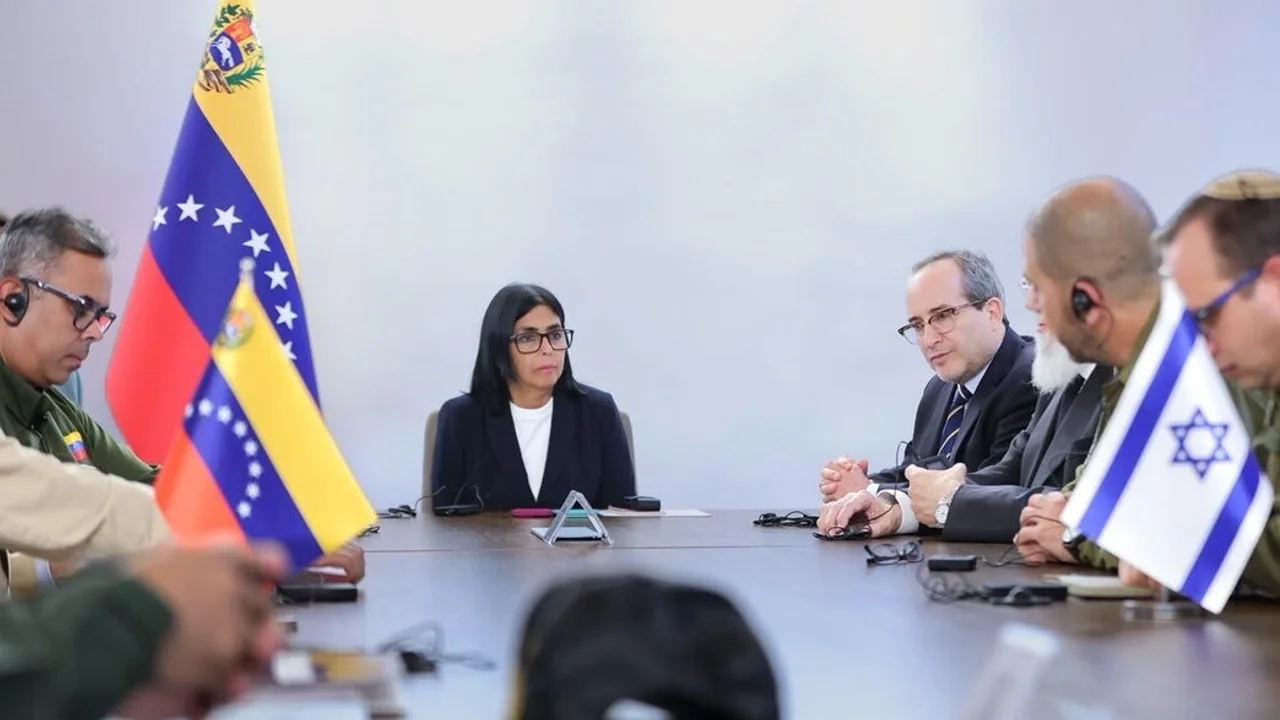
Israel and Venezuela are moving toward restoring diplomatic relations for the first time since ties were severed in 2009, driven by political shifts following the US intervention that led to the arrest of former President Nicolas Maduro and his replacement by Vice President Delcy Rodriguez. Alongside ongoing humanitarian cooperation, both governments are actively exploring potential partnerships in the energy sector.
Energy Cooperation and Oil Reserves
Minister of Energy and Infrastructure Eli Cohen recently held talks with Venezuelan Foreign Minister Felix Plasencia, who was appointed to the post in July by President Rodriguez. During the conversation, the two officials agreed to promote reciprocal ministerial visits and professional delegations to evaluate bilateral cooperation opportunities.
Venezuela holds the world's largest proven oil reserves, estimated at approximately 303 billion barrels. However, current crude production remains significantly below its potential due to aging infrastructure and a pressing need for investment and technical expertise. Israel, which predominantly procures petroleum from Central Asia, could benefit from a diversified supply source to further strengthen its energy security.
Minister Cohen also met with the Chief Rabbi of Venezuela, Rabbi Yitzchak Cohen, who has been authorized to advance the opening of a Venezuelan consulate in Israel.
Minister of Energy and Infrastructure Eli Cohen emphasized the strategic importance of the diplomatic thaw:
"We now have a historic opportunity to renew ties with Venezuela after nearly two decades. Venezuela is a significant nation in South America. Building upon its relations with the United States and our humanitarian rescue mission, we are working to forge partnerships that will contribute to the growth and prosperity of both nations by combining Israeli expertise and technology with Venezuela's vast energy resources."
Historic Delegation Visits Israel
In a parallel development, a professional delegation from Venezuela is currently visiting Israel, marking the first such visit since diplomatic relations were suspended in 2009. The delegation arrived at the invitation of Minister of Foreign Affairs Gideon Saar to participate in the Seventh International Conference on Emergency and Disaster Preparedness, organized by the Ministry of Health, the Home Front Command, the National Emergency Management Authority, and Magen David Adom.
This visit builds upon knowledge-sharing initiatives in disaster response outlined in the joint ministerial declaration of August 11, 2026. Under the agreement, both countries also announced the resumption of consular services after a prolonged hiatus.
The diplomatic rapprochement began following a major earthquake that struck Venezuela in June. Under the directives of Prime Minister Benjamin Netanyahu and Foreign Minister Gideon Saar, a joint humanitarian rescue mission comprising personnel from the Ministry of Foreign Affairs and the IDF deployed to Venezuela to assist with disaster relief and recovery operations.
The Israeli mission's relief efforts drew praise from President Rodriguez, fostering widespread appreciation within the Venezuelan government. Following years of diplomatic isolation, humanitarian collaboration has laid the groundwork for a broader renewal of economic and energy ties.