Extraordinary incident at HaSharon Prison: Inmate barricaded himself and threatened suicide
An inmate at HaSharon Prison barricaded himself on a balcony in one of the wings while wounded, threatening to commit suicide. Forces from the Masada unit, prison guards, and a negotiation team took control of him, and he was transferred for medical treatment.
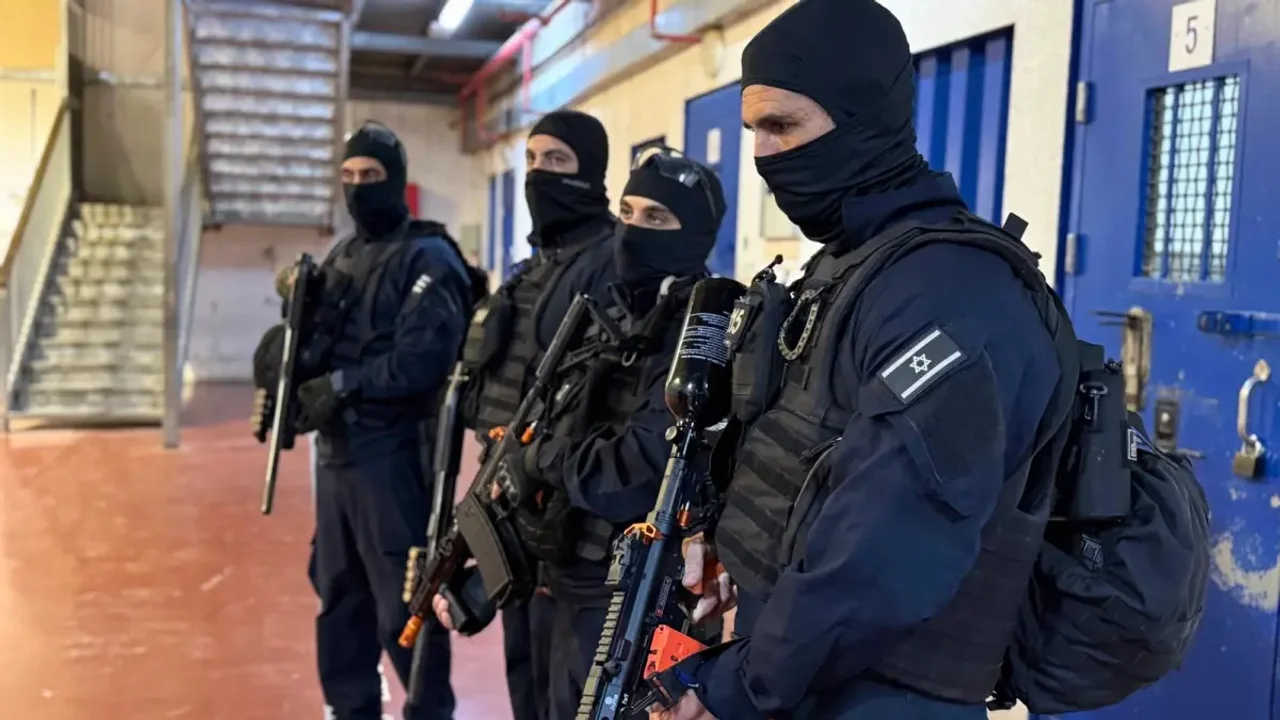
An extraordinary incident occurred today, Wednesday, at HaSharon Prison, after an inmate barricaded himself on a balcony in one of the wings while wounded from self-inflicted harm, with a rope around his neck, threatening to commit suicide.
Following the report, forces from the elite "Masada" unit of the Israel Prison Service (IPS) were scrambled to the scene. Together with the prison's guards and with the assistance of the unit's negotiation team, the forces operated against the inmate until they managed to take control of him and prevent the continuation of the incident.
According to the Israel Prison Service statement, the inmate was "bleeding as a result of self-inflicted harm" when the unit's forces arrived at the scene. After taking control of him, he was transferred for further medical treatment. The IPS noted that the Masada unit is in constant operational readiness to deal with extraordinary and complex incidents inside and outside detention facilities.
Meanwhile, this is a difficult period for the Israel Prison Service. As recalled, a 34-year-old IPS officer from the central region, who served as a wing commander at Hadarim Prison, found herself at the heart of one of the sensitive branches in the investigation of the murder of Binyamin Razi. According to the suspicion being investigated by the police, the officer allowed the inmate under her supervision – the brother of Aviar Sasson, the main defendant in the case – to establish telephone contact with him while Aviar was wanted by the police and had been on the run for days. The officer, represented by attorney Dror Shalom, denies that she helped the inmate establish contact with his brother or that she had any part in assisting his escape.
However, the investigation simultaneously revealed the depth of the relationship that formed between the wing commander and the inmate. The officer did not admit to an affair between the two, but described "camaraderie," personal closeness, and feelings toward him. Later, she also admitted that the two kissed many times in her office, that she maintained contact with his family members outside the scope of her duties, and even acknowledged that some of this conduct was forbidden. The line she maintained throughout the investigation was clear: she does not deny that she crossed professional boundaries, but she categorically denies the suspicion that the personal relationship turned into criminal assistance related to the murder.