"We need to talk about how we build, not just how much we build"
Construction times in Israel are breaking negative records. While everyone understands the urgent need, there are not enough incentives or real infrastructure to change the reality on the ground. Industry sources explain that the technology exists, but integration is slow and the pace must be increased. "The construction industry is chronically short of manpower, and the right question is not where to bring more workers from, but how much each worker builds."
The construction of an average residential project in Israel takes about 37 months. That is over three years — a long time. Even in international comparison, Israel is poorly positioned relative to the Western world, Europe and the USA. This is not a matter of fate, but a combination of old culture and work procedures and a lack of desire or economic incentive to adopt new technologies. And there is no shortage of new or relevant technology. In recent decades, new methods and significant tools have been developed that can shorten the construction process and make it more efficient, but things take too long to be absorbed into the local market.
Haim Feiglin, Deputy President of the Israel Builders Association, addresses the combination of industrialized construction and its contribution to improving productivity in the industry:
"There is no doubt that increasing the level of industrialization in the industry is the key to increasing labor productivity, a trend we have seen accumulating significantly over the last 20 years. However, to realize the technological potential inherent in industrialization, planning adaptation is required — with an emphasis on high-density construction based on repetitive elements. In practice, the main challenge lies in planning fragmentation: about a quarter to a third of construction in Israel is low-density, suburban construction, where the investment required in complex industrialization infrastructure, such as modern tower cranes and industrialized molds, becomes clearly uneconomical. As long as planning remains scattered, sparse, and non-repetitive, the ability to implement advanced technologies and boost productivity remains blocked, while in urban, high-density, high-rise construction, industrialization processes are improving and their level of industrialization will continue to rise in the future."
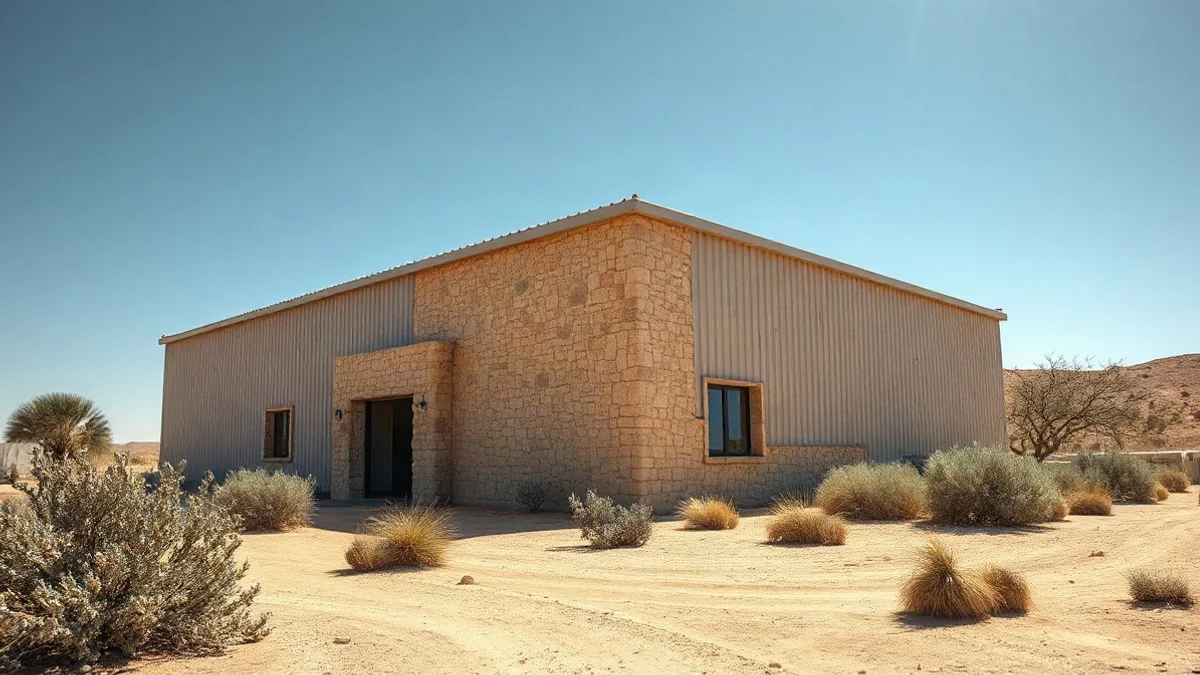
Feiglin added that "as far as low-rise construction of up to five floors is concerned, the future is in structures 'printed' by concrete printers."
Printing houses
Following Feiglin's words, one can already find companies today that deal with the field of printing, and if it once sounded like science fiction, it is rapidly approaching.
"3D concrete printing sounds futuristic, but the idea is simple," explains Yohanan Kaplnikov, founder and CEO of the Kaplnikov Group. "A robotic printer builds the walls of the house layer by layer, from a dedicated concrete mixture based on local raw materials. A small team operates it, and the skeleton, which takes months today, is printed in days. In practice, this is a reduction of up to 80% in the time of erecting the skeleton and a saving of more than a third of the construction cost. Every month saved is less financing, less rent, and less delay costs. In the world, this is no longer an experimental technology: dozens and even hundreds of projects have been carried out in different countries, and families are living in printed houses today. What is missing in Israel is not the technology, but the approval path."
According to Kaplnikov, "the real story is productivity. The construction industry is chronically short of manpower, and the right question is not where to bring more workers from, but how much each worker builds. When the printer raises the skeleton, one worker operating it does work that until today required a whole team. And this is not a competition for jobs, this is an answer to the shortage: the worker is upgraded from manual labor to a robotic system operator, a profession that did not exist here a decade ago, the kind that brings back to the industry the young people who left it. This transition does not happen on its own: we accompany it with training and instruction, which prepare professionals from conventional construction to work with the printer, because not everyone can print a house. And this training connects directly to the second change, safety. The main cause of serious accidents in construction is working at height, and at a printing site it is greatly reduced: fewer scaffolds, less formwork, fewer people in risk areas, and each layer is planned and documented digitally in advance. Such a site is not only faster, it is first and foremost safer."
"Increasing productivity — a necessary condition"
"If the State of Israel really wants to increase the supply of apartments, it must start talking about how we build, not just how much we build," explains Ariel Fukotinsky, CEO of Ecowall. "Increasing productivity is not a theoretical goal, but a necessary condition for the industry's ability to meet demand. Advanced construction methods allow for more work to be done in less time, reduce dependence on manpower on site, reduce errors, and improve the quality of execution."
According to him, the Ecowall system well illustrates this change. Unlike methods where the building envelope is installed only after the skeleton is completed, the system is integrated already at the concrete pouring stage and becomes an integral part of the structure. This saves a significant work stage, shortens schedules, and results in a higher quality, more accurate, and more durable envelope.
"Ultimately, innovation in the construction industry is not an end in itself," concludes Fukotinsky. "It is the way to create a more efficient, safer, and more productive industry, one that will be able to provide the construction volumes that Israel needs in the coming decades."
Roi Malka, CEO of the Kostika Group, which specializes in the design, production, and installation of advanced aluminum and glass envelope systems, also addresses the issue:
"The quality of a building's envelope is not determined only at the construction site. It starts with meticulous and creative engineering design, thinking about every detail, continues with advanced production processes based on advanced technologies, automation, and strict quality control at the factory, and only then reaches its peak with precise installation on site," says Malka. "The construction industry has been undergoing a fundamental change in recent years, centered on a shift from execution processes based on assembly work on site to advanced industrialization processes where a significant part of the work is done in advance in a controlled production environment. This trend allows, first and foremost, to ensure a higher level of quality, accuracy, and uniformity throughout all stages of the project. One of the clear expressions of this trend is the increasing use of envelope systems using the Unitized method, a method where entire envelope units are produced at the factory, undergo full quality control, and arrive at the site ready for installation. The controlled production environment allows for adherence to accuracy, finish quality, and uniformity in production, while performing quality control and systematic checks for each unit even before it leaves the factory. Alongside the quality advantages, the Unitized method significantly reduces the scope of assembly work on site — more components arriving ready for installation lead to higher safety, accuracy in execution, optimization of work processes, and a significant shortening of the assembly duration."
"An engine for economic efficiency"
Malka adds that "this method is not only a tool for improving construction quality, but also an engine for economic efficiency: faster and more accurate assembly on site translates for developers and contractors into better adherence to schedules and reduced dependence on changing site conditions. In large-scale projects, where every delay carries costs of financing, management, and manpower, shortening the envelope stage can lead to financial savings, earlier delivery of the building, and reduced risk of budget overruns."
Malka summarizes: "Quality is not the result of one action or a single stage in a project, but of a systemic approach that accompanies the project from beginning to end. The more of the process that is planned, produced, and tested in a controlled environment, the higher the level of accuracy, consistency in execution, and quality of the envelope that will serve the building for years. As projects become more complex, taller, and more accurate, the importance of moving from traditional execution methods to advanced industrialization processes, based on precise planning, controlled production, and strict quality control, increases. This change allows for better handling of the engineering and architectural complexity of modern projects, improving execution quality, reducing risks, and optimizing schedules at construction sites."
"A strategic move to strengthen the construction industries"
After long years when the issue of increasing productivity, construction industrialization, and technology adoption was not a priority, it seems that now there is a start of promotion and implementation of new initiatives. For example, a joint program of the Innovation Authority, the Ministry of Construction and Housing, and the Ministry of Transport to create a "joint strategic move to strengthen the construction and infrastructure industries in Israel." As part of the program, about 60 million shekels were invested in advanced technologies intended to "accelerate the establishment of infrastructure, improve its durability, reduce costs, and support national security, through advanced protection capabilities."
The Ministry of Construction and Housing stated that "as part of the move, about 28 million shekels were allocated for the development of innovative reinforced concrete systems, which will contribute to reducing the environmental damage involved in cement production and extending the service life of infrastructure in Israel. The construction industry is currently required to significantly increase the pace of construction and deal with growing engineering complexities, from building residential towers to bridges, tunnels, and national infrastructure facilities. Combining advanced technologies is considered a necessary condition for meeting national goals. Simultaneously, the move will support the promotion of technologies from advanced industries in which Israel leads, such as aviation, and the implementation of solutions based on carbon fiber and material innovation."
Simultaneously, a national strategic program was launched aimed at "implementing innovation in the construction industry in Israel." According to those involved in the move, the program focuses on the issue of innovation and provides an answer to the main challenges in the industry, such as: low labor productivity, dependence on manpower, lengthening of execution durations, safety issues at construction sites, and environmental consequences — through the development and implementation of innovative work methods, materials, and technologies.
The program focuses on four main areas:
-
Development of human capital and knowledge — promotion of training and skills adapted to a technologically advanced industry.
-
Promotion of infrastructure supporting innovation — establishment of industrial production plants, demonstration centers, pilot sites, and digital infrastructure.
-
Financing and incentive system — creation of financial mechanisms that will incentivize investment in research, development, and implementation of innovation.
-
Enabling regulation — design of a regulatory framework that will remove barriers and encourage advanced construction.
And finally, very recently, a subsidized support program for local authorities was also launched to promote innovation in construction and infrastructure. This is a move that is part of the strategic program for innovation. As part of the program, local authorities will receive subsidized hours of consultation and professional support, which will include identifying challenges and barriers in the planning and execution processes, exposure to innovative technological solutions, and formulating a roadmap adapted to the needs of the authority. The support will be carried out by the CivicLabs innovation center, one of 16 innovation centers operating in cooperation with the Innovation Authority and government ministries.