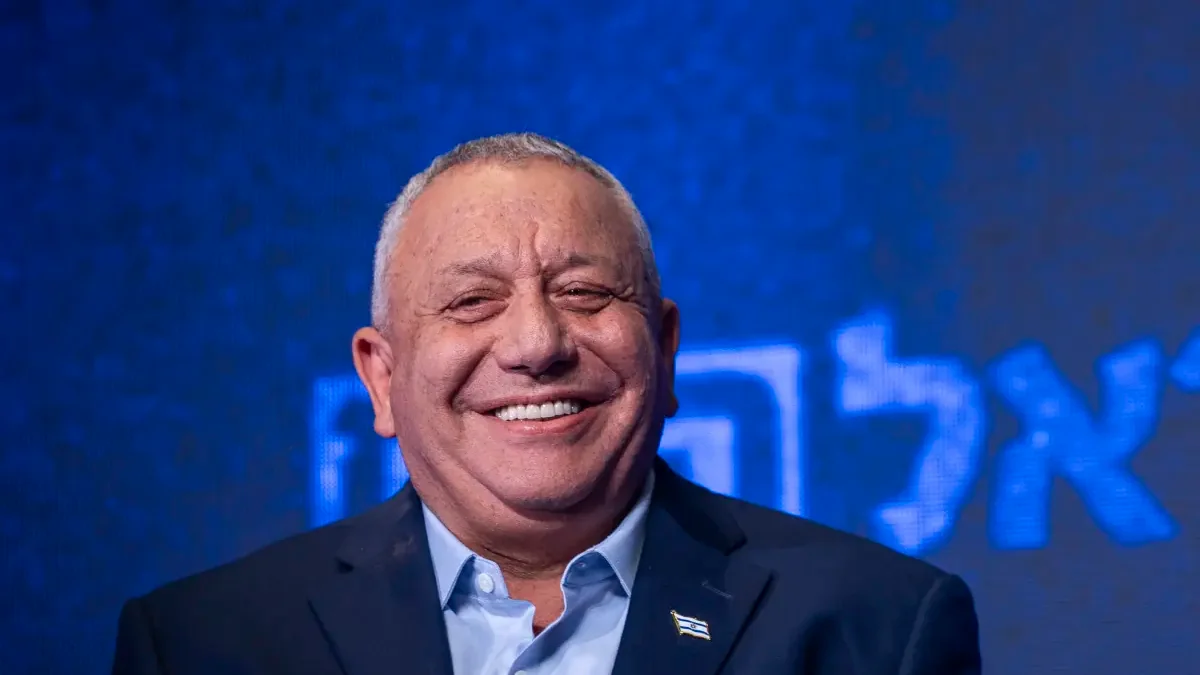
Dadi Simhi considers leaving Benny Gantz — Likud is ready to negotiate
According to Kan 11, Dadi Simhi is considering ending his political partnership with Benny Gantz, while the Likud is exploring the possibility of offering him a reserved spot. Simhi previously confirmed he had received such offers from the ruling party.
Kan 11 political correspondent Yaara Shapira reported on Sunday that Brigadier General (res.) Dadi Simhi is considering ending his political partnership with Benny Gantz. He is exploring a potential move to the Likud if offered a reserved spot on the party's list for the upcoming elections. According to the report, Simhi has made it clear to Gantz that he intends to continue his political career, even if it does not occur within the framework of Blue and White.
The possibility of Simhi moving to the Likud gains further weight against the backdrop of his recent remarks in an interview with 'Maariv', where he revealed that he had already received offers from the party. When asked which parties had approached him, he noted:
"Offers came from both sides. Just yesterday, I received signals from the Likud again: they offered me a reserved spot and attractive positions, but I am striving for unity, which is why I joined Gantz."
Earlier this month, Simhi did not rule out the possibility of accepting a reserved spot in the Likud, refraining from denying his willingness to take on an executive position in the next government.
However, in a 'Maariv' podcast, Simhi explained why he chose to align with Gantz at this stage:
"I saw that he carries the banner of unity. When you try to set idealism aside and move to pragmatism, you realize that you need to build alliances. Doing it alone is more complex. Therefore, the first alliance was with Benny. I believe he is a decent man who believes in unity and acts for the good of Israel."
Simhi emphasized that the alliance with Gantz does not imply total agreement on all issues. As an example, he pointed to disagreements regarding the nature of the investigative committee into the events of October 7: Gantz supports a state commission of inquiry, while Simhi himself prefers a special investigative committee with broader powers.
Despite these disagreements, Simhi has so far presented the partnership with Gantz as a means to achieve his primary goal—the establishment of a broad unity government. However, Shapira's new report once again raises questions about the durability of this partnership ahead of future election cycles.