Israeli Biotech Pioneers World-First Bioprinted Corneal Transplants
Precise Bio has successfully performed world-first bioprinted corneal transplants in five patients, transforming lab-grown human cells into functional sight-restoring tissue.
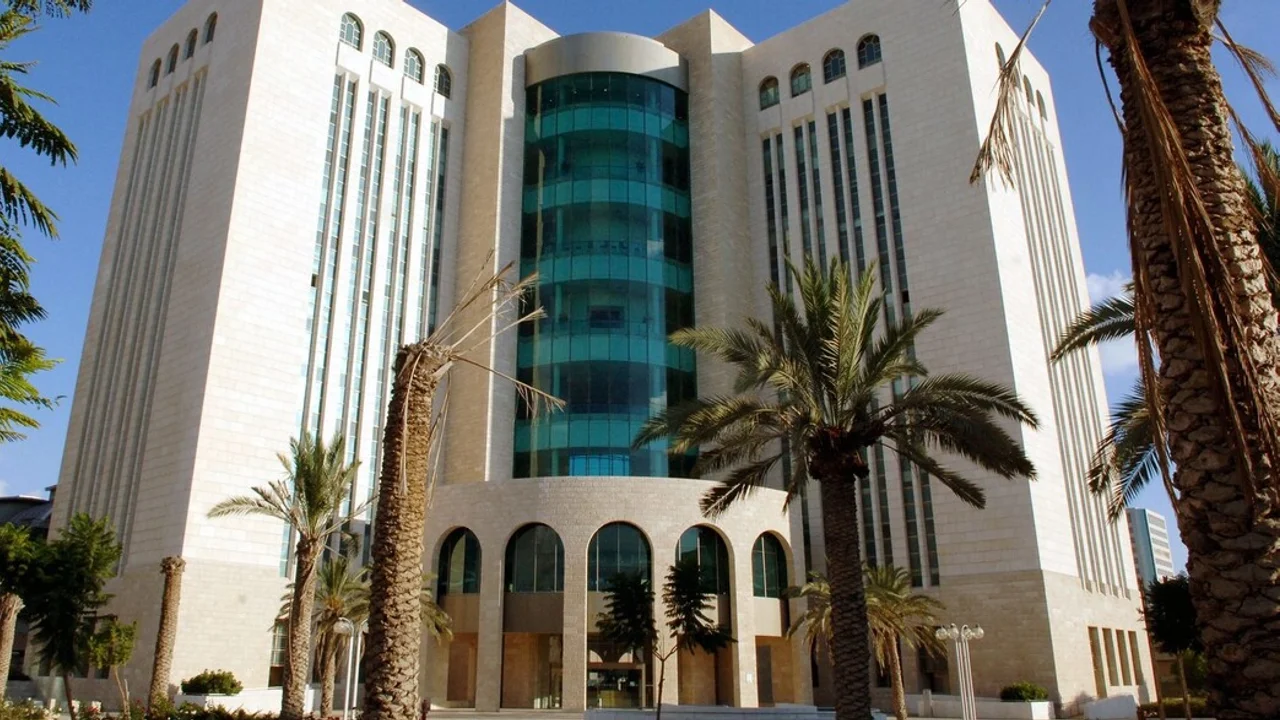
For nearly a decade, Aryeh Batt was told he was chasing an impossible dream. The notion of cultivating human cells, printing functional tissue, and transplanting it into a human body sounded to many like something straight out of a science fiction movie. Today, after corneal implants manufactured by his company have already been successfully transplanted into five patients at Rambam Health Care Campus, Batt feels he has finally received the proof he waited for so long.
"People said it was impossible, that it was science fiction," he shares. "So we proved that it is no longer science fiction. There are people who could not see and now they see thanks to this technology. This is no longer a dream or an investor presentation. We proved that tissue can be produced on a production line, tested, transplanted into a human, and that it can actually work."
Restoring Sight to the Blind
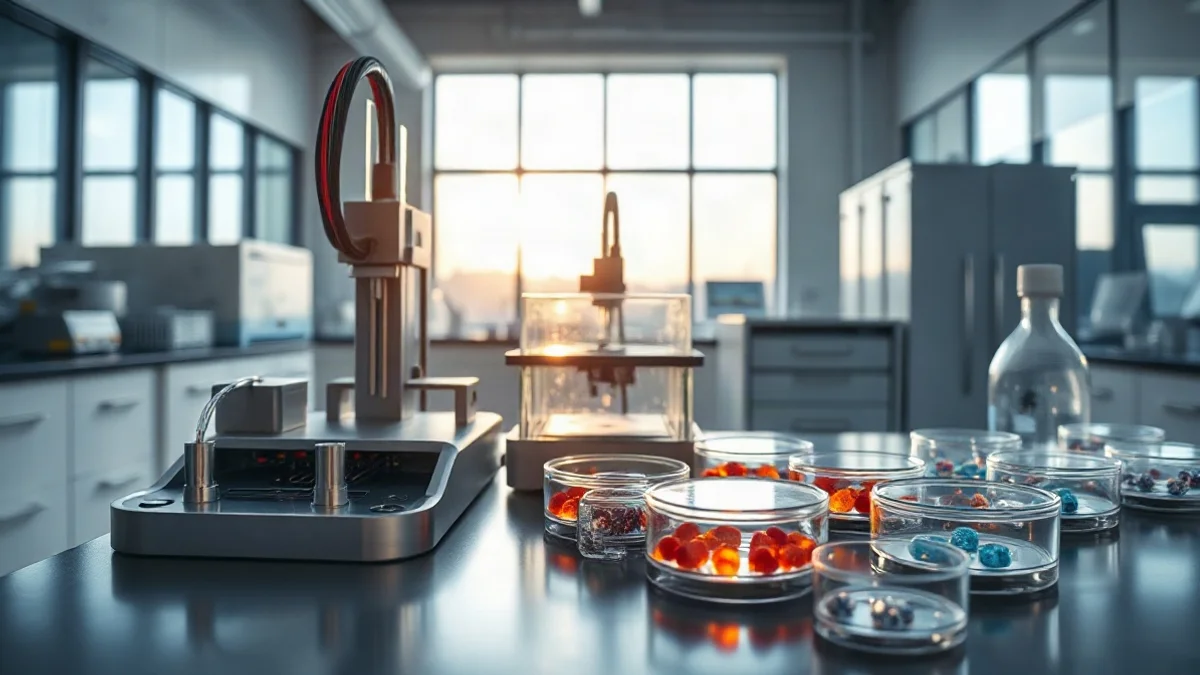
The defining moment occurred on October 29, 2025. The corneal unit team at Rambam, headed by Prof. Michael Mimouni, together with Prof. David Zadok from Shaare Zedek Medical Center and Prof. Eitan Livni from Rabin Medical Center (Beilinson), transplanted a biological implant produced by Precise Bio into a human for the first time. The implant was created from human corneal cells grown in a lab and printed using a 3D bioprinting system.
The patient, who was blind in the treated eye, regained her sight in that eye following the procedure. This marks the world's first transplantation of a functional, living-cell-based corneal implant produced via bioprinting. Since then, the trial has expanded, with implants performed on a total of five patients so far. The trial is an open-label, non-randomized Phase 1 study planned to include 15 patients. Its primary objective is to evaluate safety and tolerability while identifying preliminary signs of efficacy. Results are expected to be published in 2027 following the completion of follow-up monitoring.
Replacing the Endothelium Layer
Despite the catchy term "printed cornea," it is important to clarify that the company does not replace the entire cornea. The implant replaces the endothelium, a thin layer of cells on the inner surface of the cornea, along with a collagen-based support layer. Endothelial cells play a vital role: they pump excess fluid from the cornea to keep it transparent. When these cells are damaged due to conditions like Fuchs' dystrophy or cataract surgery, fluid accumulates, causing the cornea to swell and become cloudy, leading to impaired vision.
"Over half of corneal transplants today are actually transplants of the endothelial layer," Batt explains. "Instead of taking this layer directly from a donor, we produce it on our production line. From the physician's perspective, the transplantation method is very similar to existing procedures, and post-operative care is also comparable."
Scaling Production from a Single Donor
Precise Bio's technology aims to address one of the most severe challenges in the field: the global shortage of corneal tissues. A global study published in JAMA Ophthalmology estimated that for every 70 people in need of a transplant, only one cornea is available, leaving approximately 15 million individuals without sight-restoring treatment. While the company still relies on human tissue donations, instead of using a single cornea for one patient, cells are isolated and multiplied in the laboratory.
Batt notes that the company is currently capable of yielding 400 to 500 implants from a single donor. If proven in large-scale commercial production, this capability could transform a rare biological material into an on-demand, mass-produced product. Furthermore, the printed implant features a higher density of endothelial cells—over 4,000 cells per square millimeter, compared to about 2,000 to 2,500 in many donor tissues. Researchers hope this higher cell count will ensure the implant remains functional for a significantly longer period.
Looking Ahead: Heart and Kidney Tissues
Precise Bio's vision extends far beyond corneas. The company is also working on retinal tissue and has previously printed cardiac muscle tissue in experimental settings. Batt estimates that partial tissues, including segments of the heart, liver, and kidney, will reach clinical use within 10 to 15 years, long before entire organs. While bioprinting a fully functional heart or kidney remains a challenge requiring complex vascular networks and neural connections, the journey has officially begun.