Yisrael Beytenu Open to Compromises with Ultra-Orthodox Factions to Form Government
MK Oded Forer of Yisrael Beytenu expressed his party's readiness to compromise with ultra-Orthodox factions to form a stable government, stressing that replacing the current administration is a supreme necessity.

MK Oded Forer (Yisrael Beytenu) stated in an interview with 103fm that despite ideological gaps, his party is willing to make compromises in order to form a stable government and replace the current administration led by Benjamin Netanyahu. "Right now, the Israeli public and the ultra-Orthodox public have no choice but to reach compromises. I believe we will succeed in finding common ground," Forer said. However, he emphasized that any agreement must remain strictly within the framework of the law and avoid creating a state within a state.
Addressing the party's shift in stance regarding negotiations with ultra-Orthodox factions, Forer noted that Yisrael Beytenu leader Avigdor Lieberman made a significant concession by agreeing to hold talks with these parties to ensure a stable government. He explained that the party's top priorities are replacing the government and preventing a minority government dependent on Arab parties, which he described as a political trap that would ultimately bring Netanyahu back to power. Forer acknowledged that election results do not allow the party to fulfill all three of its campaign promises simultaneously—ruling out a Netanyahu government, a minority government with Arab parties, and a coalition with ultra-Orthodox parties—making compromises an unfortunate necessity to avoid another crippling election cycle.
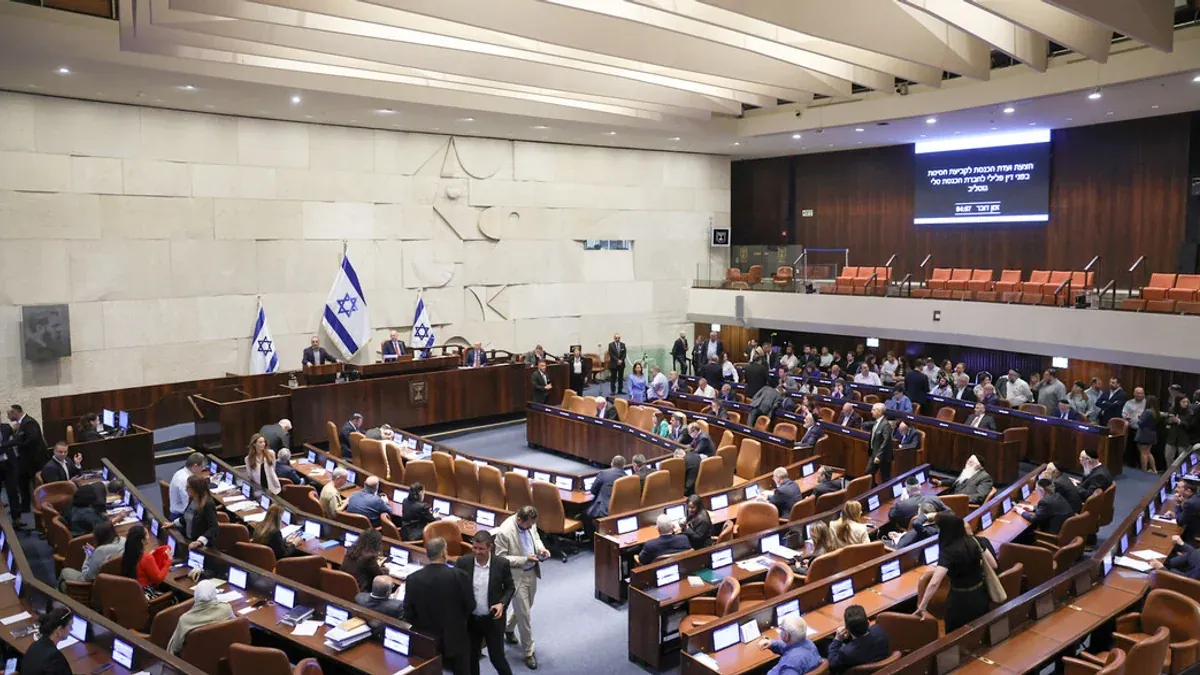
Furthermore, Forer criticized the coalition's handling of the Foreign Affairs and Defense Committee, accusing it of resorting to parliamentary acrobatics and threats to block committee oversight. "I do not understand what scares Benjamin Netanyahu so much about parliamentary oversight," he asserted, dismissing claims that the push for oversight is merely political maneuvering and stressing that national security transcends partisan politics.