Massive 2,000-Year-Old Xiongnu Elite Tomb Uncovered in Mongolia
Archaeologists in Mongolia uncovered a massive 2,000-year-old elite Xiongnu tomb featuring nine stepped levels and 413 burial offerings, reflecting wide Eurasian trade.
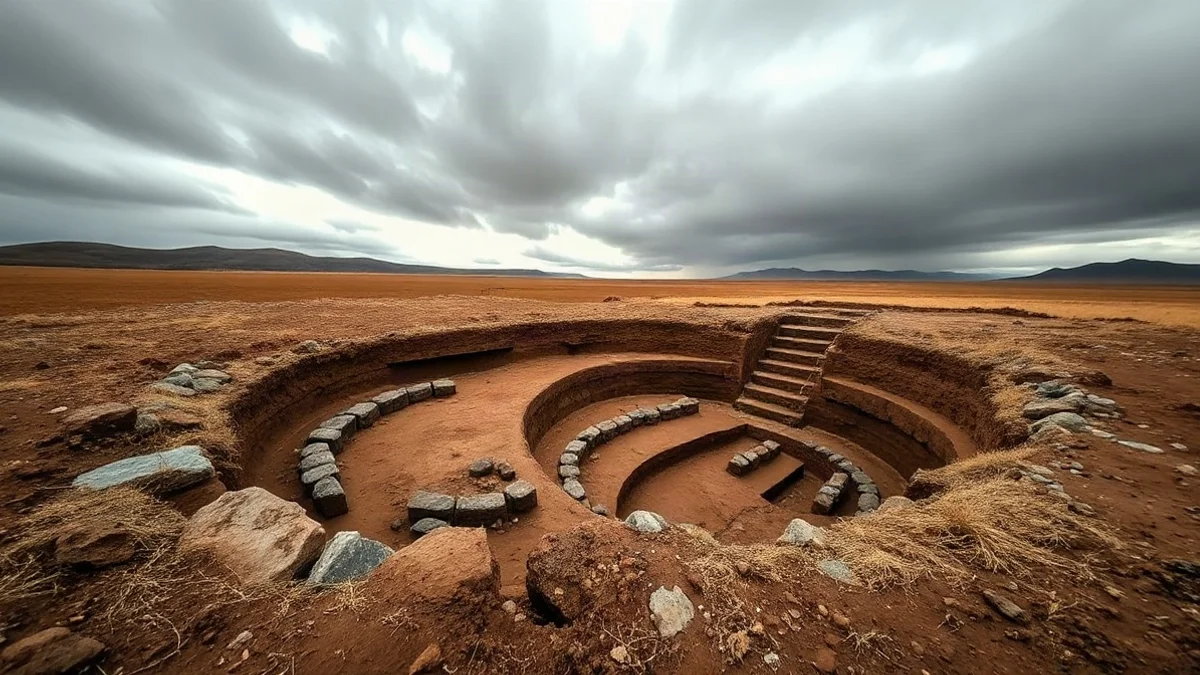
Archaeologists have uncovered a massive, 2,000-year-old elite tomb in Mongolia belonging to the Xiongnu nomadic empire. Spanning nine stepped levels descending 14.5 meters into the earth, the structure contains 413 burial offerings and is the largest Xiongnu grave ever discovered in the Central Asian country. The excavation was carried out over four years at the Duurlig Nars burial complex by a joint team from the National Museum of South Korea, the Institute of Archaeology of the Mongolian Academy of Sciences, and the National Museum of Mongolia.
Duurlig Nars is the largest elite cemetery of the Xiongnu empire, featuring nearly 300 ancient burial mounds known as kurgan structures. The Xiongnu confederation of nomadic tribes united into a mobile empire in 209 BCE, maintaining extensive trade networks stretching from the Roman Empire in the west to China and the Korean Peninsula in the east. When the empire disintegrated in the late first century BCE, one faction migrated westward, eventually forming the Huns who dominated Eastern Europe and the Caucasus from the first to the seventh centuries CE.
Architectural Features and Burial Offerings
The newly revealed tomb features a square-like shape with an elongated entryway corridor, measuring a total of roughly 73 meters in length—comparable to the size of the Great Sphinx of Giza. The stepped layers narrow successively toward the bottom, forming an inverted pyramid structure centered on a wooden burial chamber containing a coffin. Researchers note that the wooden chamber is smaller than those found in other elite Xiongnu burials, suggesting potential social shifts or a decline in imperial power during its construction between the late first and second centuries CE.
The grave yielded a vast array of artifacts highlighting widespread Eurasian connectivity. Discoveries include silver and quartz horse-harness accessories, a horse-drawn chariot wheel, and fifteen flat, irregularly shaped jade pieces carved with intricate designs. These jade items reflect an adaptation of Han Dynasty burial traditions, which frequently utilized circular bi discs. Additionally, archaeologists recovered fragments of a transparent glass handled chalice that may have been manufactured in the Roman Empire, pending further laboratory analysis.
Future DNA Analysis and Research
While the exact identity of the high-ranking individual remains unknown, researchers plan to perform DNA extraction on teeth and hair recovered from the coffin. These genetic tests aim to determine the biological sex of the deceased and explore potential familial relationships with individuals interred elsewhere in the Duurlig Nars complex, offering deeper insights into ancient Xiongnu social structure.