Western Trade Restrictions Threaten West Bank Industry and Palestinian Jobs
Western trade restrictions on West Bank settlement products threaten to cost 4,000 Palestinian jobs. Spain, Ireland, the Netherlands, and the UK have already implemented or advanced import bans, heavily impacting Israeli industrial zones.
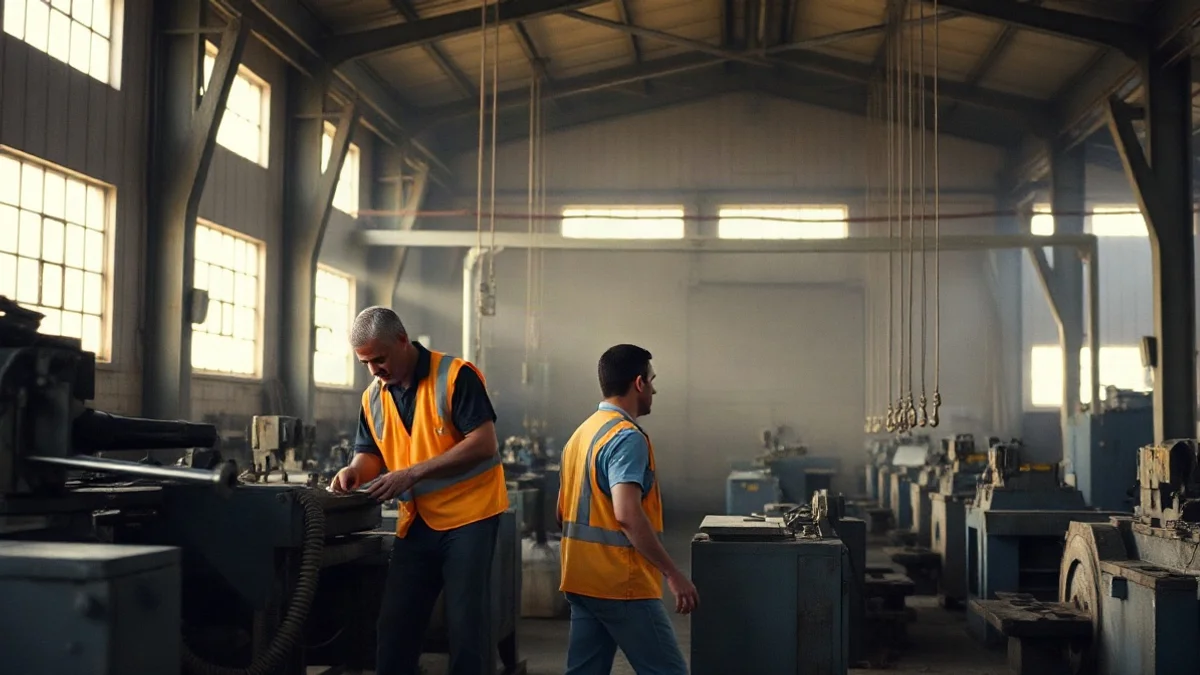
A wave of trade restrictions implemented and promoted by Western nations against products from West Bank settlements threatens to severely damage Israeli industry beyond the Green Line. According to estimates by industry officials and economists, the immediate victims are expected to be Palestinian workers: approximately 4,000 out of some 18,000 currently legally employed in Israeli factories and industrial zones in the West Bank are expected to lose their jobs in the near future. There is also concern that some factories will close or relocate their operations inside the Green Line.
The crisis is developing following a series of decisions and initiatives in Western Europe and Canada aimed at restricting trade in products from settlements in the West Bank and East Jerusalem. Import bans have already entered into force in Spain, Ireland, and the Netherlands: in Ireland the ban has applied since September 15 of this year, and in the Netherlands since September 22. The United Kingdom announced in September that it would advance legislation to take effect within six to nine months. France and Canada have also announced they will promote measures to ban the import of settlement produce, and legislative initiatives on the issue are being promoted in Belgium and Norway. Denmark, Finland, Sweden, Poland, Portugal, and Iceland are also participating in the initiative to varying degrees.
Economic Impact and Shifting Markets
The damage is already visible on the ground. The Ministry of Economy and Industry, the Foreign Trade Administration operating within it, and the Manufacturers Association report a sharp drop in orders from abroad and the cancellation of long-term distribution contracts. Industry circles fear the loss of markets in Western Europe, upon which many factories in the region depend.
Among the central activity hubs is the Barkan industrial zone, where factories operate in the fields of plastics, textiles, metal, and food. Another hub is Mishor Adumim, one of the largest industrial zones in the West Bank, where manufacturing plants and commercial businesses employ thousands of local Palestinian workers. Israeli factories also operate in the Ariel industrial zone.
The SodaStream Precedent
Industry leaders recall the case of SodaStream in this context. The company, which was the target of a boycott campaign by the BDS movement, closed its factory in Mishor Adumim in 2015 and transferred its operations to a new plant in the Idan the Negev industrial zone, near Rahat. The company stated at the time that the move stemmed from commercial considerations rather than boycott pressures.
Following the factory closure, hundreds of Palestinian workers lost their jobs. In February 2016, 74 veteran Palestinian workers who continued working at the new plant were also fired after authorities refused to extend their entry permits into Israel. In May 2017, approvals were granted allowing their return to work. At the time, European officials expressed regret over the blow to the livelihood of hundreds of Palestinian families. Now, industry figures fear a similar blow on a broader scale.
Government Response and Alternative Markets
Israel is currently acting through the Ministry of Foreign Affairs, the Ministry of Economy and Industry, and the public diplomacy array to try to curb the trade restrictions. However, these efforts arrive belatedly, with some of the bans already in force. In the background, hill youth violence in the West Bank continues. In their announcements, Western nations cite settler violence and settlement expansion as justifications for the measures they are promoting.
Israeli activity includes legal and diplomatic struggles and direct contacts with governments in Europe and Canada. Israel emphasizes to them that the blow to factories endangers precisely the livelihoods of Palestinian workers and the economic cooperation between them and their Israeli employers. Simultaneously, the Foreign Trade Administration is working to help West Bank factories find alternative markets in the Far East, Latin America, and countries not participating in the restrictions. Assistance and compensation plans for businesses harmed by the cancellation of international contracts are also being examined, alongside attempts to ease security and regulatory requirements involved in employing Palestinian workers. The goal is to prevent factory closures and the expansion of the unemployment circle in the region.
The boycott of West Bank manufacturing plants is a cynical step that hurts Palestinian workers first and foremost. While various organizations present this as a principled move, in practice those paying the price are thousands of workers and their families who lose a stable and respectable source of livelihood, said Avraham Novogrotsky, President of the Manufacturers Association.
Novogrotsky added: Instead of building economic bridges between Israelis and Palestinians, some choose to dismantle them. Industry creates employment, stability, and hope, and the boycott creates the exact opposite.