Ancient Vampire Camel Species Discovered in Century-Old Museum Fossils
Paleontologists discovered a new ancient North American camel species named Vampyrocamelus welshi, featuring sharp four-centimeter fangs despite being a herbivore.
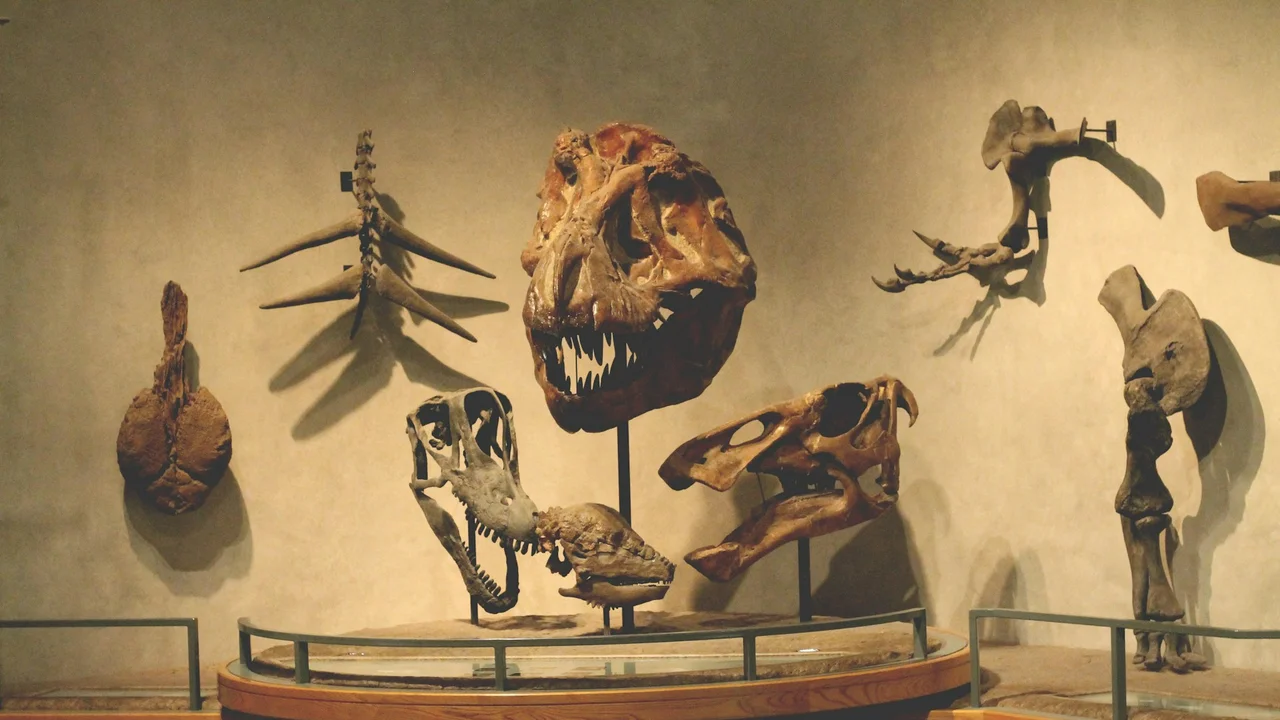
For nearly a century, thousands of fossils collected during the early 20th century sat quietly in the storage cabinets of the American Museum of Natural History in New York. Among these forgotten bones, paleontologists recently identified the remains of one of the most unusual animals to ever roam North America: an ancient, long-necked camel equipped with sharp, curved canines reminiscent of a predator.
The Discovery of Vampyrocamelus welshi
Following a comprehensive study involving the re-examination of tens of thousands of fossils, researchers identified a new genus and species to science, officially named Vampyrocamelus welshi, or loosely translated as the vampire camel. This prehistoric creature once wandered across the expansive plains of North America, with its fossilized remains discovered primarily in regions recognized today as Texas, Oklahoma, and Nebraska. Its most striking physical feature was a pair of colossal upper canines measuring about four centimeters in length, terminating in a backward-curved point. Some recovered skulls also revealed additional pointed front teeth, giving the animal a particularly menacing appearance.
Despite these formidable, four-centimeter fangs, researchers emphasize that the creature was not a predator. Much like modern-day camels, llamas, and alpacas, the vampire camel was strictly a herbivore. Scientists suggest that these oversized teeth served as weaponry for males competing during mating season, functioned as a territorial defense mechanism, or acted as a visual deterrent to attract potential mates, as females likely did not possess the same exaggerated dental features.
Body Structure and Evolutionary Context
While the current fossil record consists largely of skulls, teeth, and a few fragmented limb bones, researchers note strong similarities to another ancient camel genus known as Aepycamelus. That related genus featured exceptionally long legs and a giraffe-like neck capable of reaching vegetation up to three meters high. Although the vampire camel likely shared a similar anatomical structure allowing it to feed on high foliage, scientists stress that a complete skeleton is still required to confirm its exact appearance and locomotion.
"The discovery underscores the immense value of historical natural history collections, proving that sometimes the most surprising breakthroughs are already waiting inside museum drawers."
The historical collection was originally amassed by paleontologist Childs Frick, who financed numerous expeditions across the USA in the early 20th century with a special focus on the camel family. Although Frick gathered vast quantities of specimens, many remained unexamined for decades until the recent systematic review updated scientific understanding of camelid evolution in North America.