Tesla Rolls Out Cybertruck Turning Upgrade for 2027 Models Ahead of Phase-Out
Tesla introduced a software update to sharpen the Cybertruck turning radius via rear-wheel steering, though the feature is limited to 2027 models amid upcoming production wind-down plans.
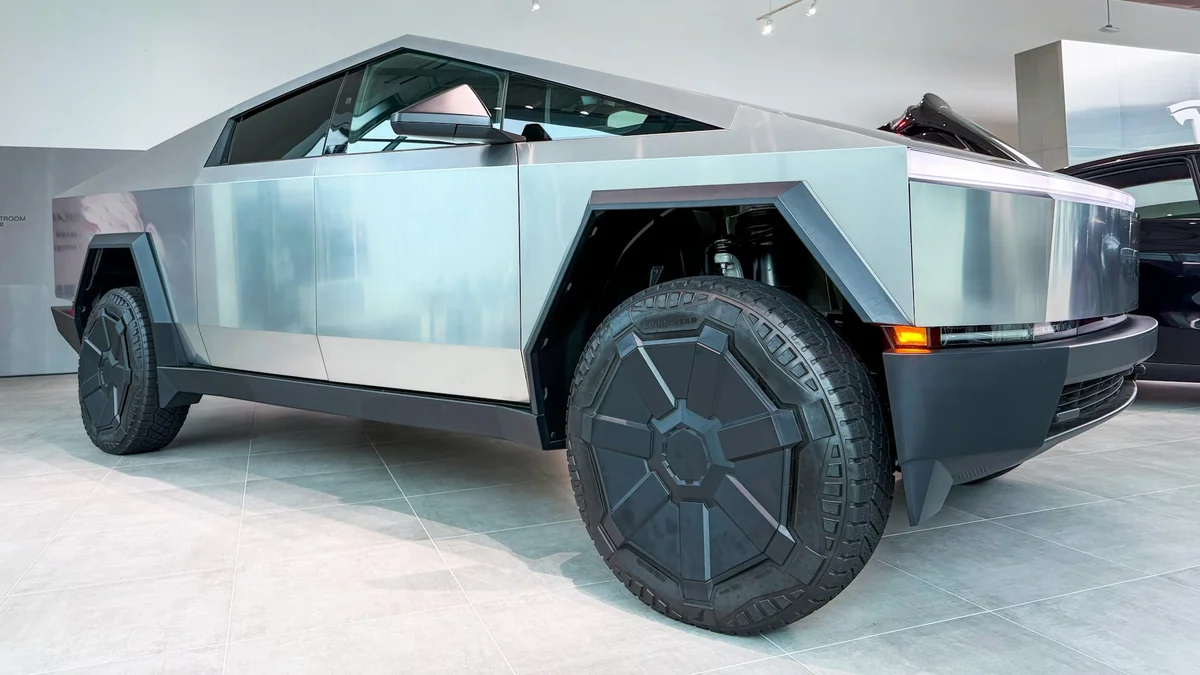
Tesla continues to refine its unconventional electric pickup, the Cybertruck, even as its production timeline nears its eventual conclusion. The company announced a new over-the-air software update that significantly improves the vehicle's turning radius and maneuverability, though the upgrade carries a notable limitation as it is restricted exclusively to 2027 model-year vehicles.
According to software details released by Tesla, the enhancement becomes available through software version 2026.44 and later. The system utilizes four-wheel steering paired with an advanced electronic steer-by-wire system. Unlike traditional vehicles where only the front wheels pivot, the Cybertruck can also turn its rear wheels in the opposite direction at low speeds, dramatically reducing the footprint required to execute a U-turn.
Engineering Specs and Competitor Comparison
Measuring nearly 5.8 meters in length and weighing close to three metric tons, the Cybertruck previously offered a turning diameter of approximately 13.25 meters. By comparison, the Ford F-150 Lightning requires about 14.57 meters, and the Rivian R1T requires roughly 13.69 meters, meaning the Tesla pickup already maneuvered in tighter spaces than several competitors despite its massive proportions. While Tesla has not yet published the exact updated turning diameter figures resulting from the latest software patch, promotional demonstrations illustrate a noticeably tighter trajectory.
At the vehicle's initial launch, rear-wheel steering angles were capped at just three degrees, though engineering teams previously indicated plans to expand that limit up to ten degrees via software updates. It remains unconfirmed whether the current upgrade unlocks this maximum capability or if it depends on specific hardware revisions. Furthermore, owners of earlier model years are left unable to access the feature through standard updates, with the manufacturer omitting explanations regarding potential hardware dependencies.
Production Horizon and Market Challenges
This engineering milestone unfolds against a backdrop of shifting long-term production plans. In early November, Elon Musk outlined proposals to phase out Cybertruck manufacturing at the Texas facility to redirect production capacity toward the Cybercab robotaxi project, though the final shutdown timeline was later pushed to late summer 2027 to fulfill remaining order backlogs.
The vehicle faced severe commercial headwinds since its 2019 unveiling, which originally promised a starting price of 39,900 US dollars before actual market figures climbed significantly higher, with the Cyberbeast variant retailing at 109,990 US dollars. Sales volumes also lagged behind initial projections of 250,000 units annually, with current industry estimates placing quarterly deliveries between 7,000 and 8,000 units. Consequently, Tesla is actively upgrading a groundbreaking electric vehicle right through its final commercial chapters, prompting ongoing debate over whether advanced software enhancements can reshape the legacy of one of the decade's most polarizing automotive projects.