US Jewish Leaders Warn of Bipartisan Shifts and Rising Antisemitism
North American Jewish leaders gathered in Washington for the General Assembly, addressing rising antisemitism, US political shifts, and community resilience.
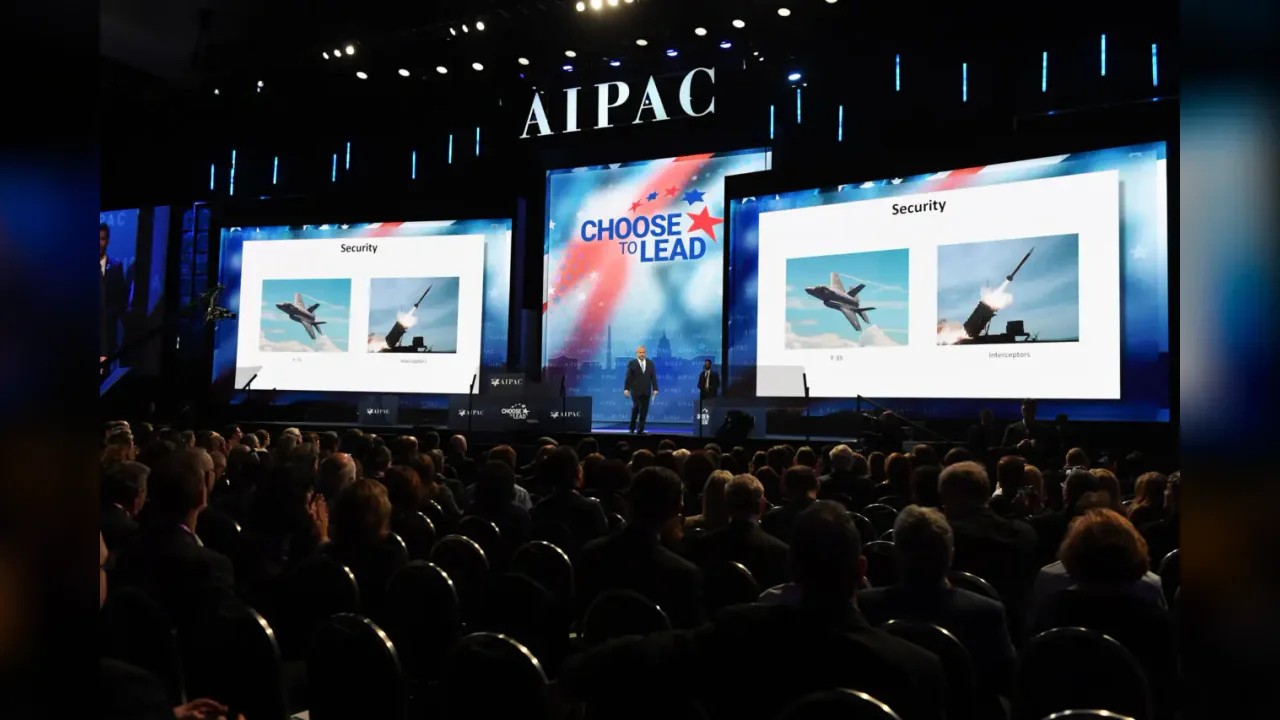
Some 2,500 Jewish representatives from across the United States and Canada gathered in Washington for the General Assembly of the Jewish Federations of North America. The convention served as a major show of strength for the North American Jewish community amid a sharp rise in antisemitism and declining standing for Israel in the United States. Held in the wake of the US midterm elections, the gathering focused heavily on the political landscape and its implications for bilateral relations.
Political Shifts and Concerns Over Bipartisan Support
Eric Fingerhut, president and CEO of the federations, described the midterms as complex, noting the reelection of staunch congressional allies like House Minority Leader Hakeem Jeffries, Senator Chuck Schumer, and Representative Debbie Wasserman Schultz. However, Fingerhut expressed deep concern over a rising wave of progressive Democratic candidates and anti-Israel mayors, pointing to figures such as Abdul El-Sayed and municipal leaders in New York, Los Angeles, Washington, and Seattle. He warned that leadership failure to push back against anti-Israel sentiment within the party threatens traditional bipartisan backing.
Fingerhut also rejected assertions that the midterms were solely a referendum on Israel, while warning against a dangerous political convergence:
"If both parties agree that Israel is to blame, that is a source of great concern. We need to be involved to support our friends and reduce the influence of those who are anti-Israel."
Addressing military aid, Fingerhut noted that reducing US assistance would not appease critics or halt political battles over arms sales, predicting that pressure would simply shift toward restricting commercial weapons purchases.
Strengthening Community Ties and Education
Becky Caspi, director-general of the Israel office, presented findings from a new binational study contradicting narratives of a widening rift between American Jewry and Israel. According to the research, 62 percent of US Jews view Israelis as extended family or part of their community, up from 46 percent in 2021. Miri Kravitz, vice president of impact and growth, attributed this enduring emotional bond to shared trauma following the October 7 terror attacks and a global surge in antisemitism, though she noted that many supporters remain hesitant to speak out openly due to fear of harassment.
The convention also unveiled "Frontline," a new $35 million initiative providing grants to 120 local federations to hire 100 professionals dedicated to combating antisemitism through localized engagement with civic authorities, educational institutions, and faith communities. Shira Hutt, senior vice president, emphasized that community security must go hand in hand with robust coalition-building to prevent the normalization of bigotry.
Continued Investment in Israel's Recovery
Three years after the outbreak of the war, the federations showcased the ongoing impact of their $283 million "Rebuild Israel" recovery program. The initiative has distributed $242 million in loans to 4,132 small businesses and $176 million to 13,773 reservists. Furthermore, the federations have mobilized over 30,000 volunteers through partnerships with Taglit-Birthright Israel, contributing more than 150,000 days of service to border communities in the south and north.
Gary Torgow, chair of the board of trustees, reaffirmed the community's steadfast commitment:
"We have an intergenerational responsibility to stand up for our communities and for all our children and adults who maintain deep, enduring connections with the State of Israel."