Ten Most Unusual Railways Worldwide, Featuring Trains in Buildings and Air
Discover ten of the world's most unusual railways, featuring suspended monorails in Germany and China, bamboo platforms in Cambodia, solar trains, and a route passing through a residential building.
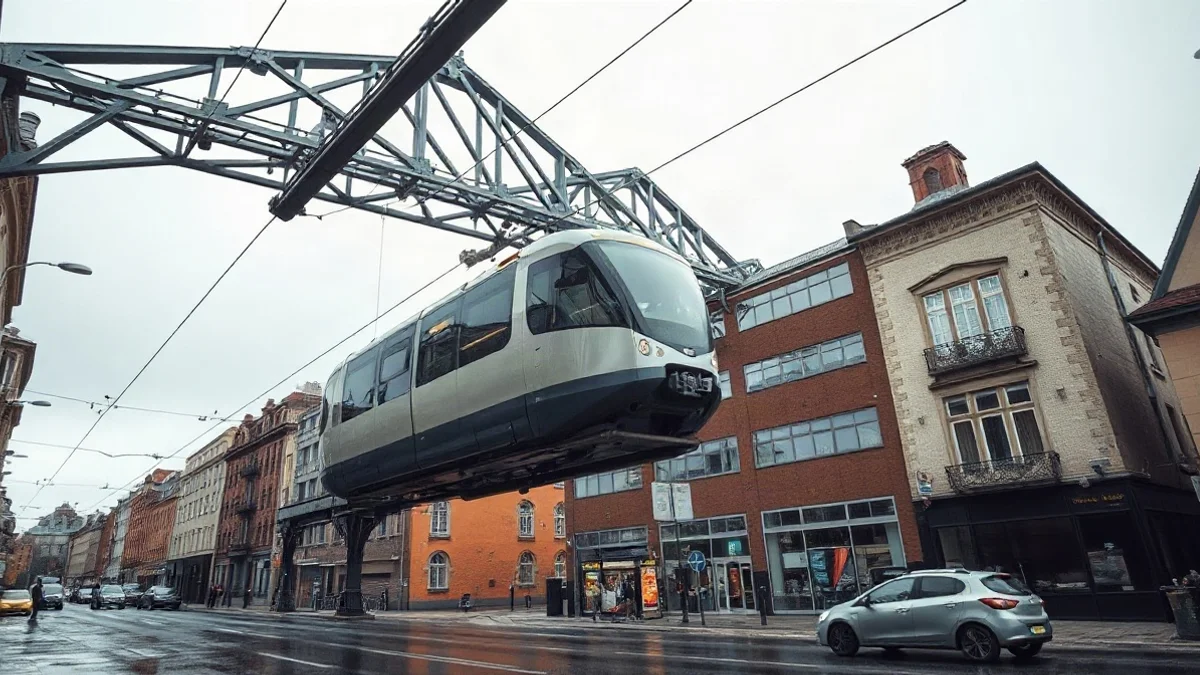
For many travelers, a train journey is a standard and predictable experience: familiar carriages, passing landscapes, and perhaps a cup of coffee. However, crossing global borders reveals extraordinary engineering feats that redefine rail transportation. From suspended monorails and bamboo platforms to trains passing through residential buildings, engineers worldwide have developed innovative methods to transport passengers.
Wuppertal Suspension Railway in Germany
The Wuppertal Suspension Railway (Wuppertal Schwebebahn) is an unconventional transit system where carriages hang beneath the track high above city streets rather than riding on top of it. Originally proposed by inventor Eugen Langen for Berlin and Munich, the concept was rejected by both capitals before finding a welcoming home in Wuppertal. Today, the system operates along a 13-kilometer route with 20 stations, transporting approximately 80,000 daily commuters and tourists. The network recently marked its 125th anniversary with a community festival.
Bamboo Trains of Cambodia and Dual-Mode Vehicles in Japan
In Battambang, Cambodia, locals devised an improvised transport solution known as the bamboo train, or Norry. These flat bamboo platforms fitted onto rail wheels and powered by small engines were created to utilize tracks damaged by conflict where regular trains no longer run. Traveling at speeds up to 50 kilometers per hour, the Norry serves both as local freight transport and a popular tourist attraction.
Meanwhile, Japan introduced the Dual-Mode Vehicle (DMV), a unique hybrid that functions as both a bus and a train. The vehicle switches from road tires to steel railway wheels in just 15 seconds at the push of a button. Weighing 5,850 kilograms and accommodating 23 passengers, the DMV reaches speeds of up to 60 kilometers per hour on tracks, offering an efficient transit option for regional routes.
Extreme Slopes and Solar Power in Switzerland and Argentina
Switzerland hosts the Stoosbahn, the steepest funicular railway in the world, transporting passengers to the alpine village of Stoos sitting 1,300 meters above sea level. The open-air carriages feature a specialized rotating mechanism that keeps passenger compartments perfectly level while navigating sharp vertical inclines. The 12-minute journey offers breathtaking views for visitors.
In South America, Argentina launched the Tren Solar de la Quebrada, the nation's first solar-powered train. Operating along a 42-kilometer route through historical villages dating back 10,000 years, the lithium battery-powered train travels at a leisurely 33 kilometers per hour, providing a sustainable travel experience across northern landscapes.
Rail Buses and Chongqing's Building Monorail in China
South America also utilizes the Ferrobus, a converted bus fitted with steel wheels to navigate narrow rail lines in high-altitude regions of Bolivia and Chile, such as Chile's historic Gondola Carril.
In China, the Chongqing Monorail achieves a remarkable architectural integration by passing directly through a 19-story residential building. The Liziba Station occupies floors six through eight of the structure. Built simultaneously with the building and equipped with advanced noise-reduction technology, the station accommodates a major transit hub without disrupting residents.
Aerial Railways, Devil's Nose, and Pokemon Trains
Wuhan, China, operates the Optics Valley Photon Air Rail, a commercial suspended monorail featuring glass-paneled floors that offer panoramic downward views for up to 200 passengers per autonomous train. In Ecuador, the Devil's Nose (Nariz del Diablo) railway navigates extreme zigzag mountain cliffs, offering a dramatic tourist route born from difficult historical construction efforts.
For family travelers, Japan's Pokémon With You train utilizes Pikachu-themed carriages and play areas to bring tourism and joy to the Tohoku region following the 2011 earthquake and tsunami.
Mauritania's Iron Ore Train
Concluding the list is Mauritania's iron ore train, one of the longest freight trains globally at roughly 1.9 kilometers in length. Running along a 700-kilometer desert route connecting Zouérat to Nouadhibou, the train primarily transports heavy cargo. Despite safety warnings from authorities, extreme adventure travelers frequently ride atop the open iron ore carriers to cross the harsh Saharan desert.