UAE Economy Faces Inflation and Fuel Price Surges While Dubai Real Estate Booms
The United Arab Emirates faces severe fuel and food inflation amid regional tensions with Iran and transport disruptions, yet Dubai's real estate sector continues to attract billions in high-end investments.
The ongoing regional conflict with Iran and the closure of the Strait of Hormuz are testing the economy of the United Arab Emirates, driving fuel prices up by roughly 70 percent since the beginning of the year. While inflation accelerates and the aviation sector suffers significant setbacks, the Dubai real estate market continues to demonstrate remarkable resilience.
Fuel costs represent one of the most visible points of economic strain. Filling a standard 60-liter vehicle tank currently costs approximately 100 dirhams, or about 27 dollars, more than it did in January. This increase occurs despite state subsidies of 0.24 dirhams per liter introduced to cushion consecutive hikes between August and October. According to industry data, gasoline price increases range between 64 percent and 70 percent, while diesel prices surged by 86.3 percent. President Mohammed bin Zayed has opted against price freezes, and analysts warn that further hikes could materialize in December if military tensions persist.
Aviation and Consumer Price Pressures
Commercial aviation is also bearing the brunt of the crisis. Passenger volume at Dubai International Airport plummeted by 28.1 percent during the first three quarters of the year compared to the same period last year, totaling 50.4 million passengers. Even the peak summer quarter failed to reverse the downward trend, registering a 22.1 percent decline to roughly 18.8 million travelers, with transfer passengers accounting for about half of September traffic. Dubai Airports Chief Executive Officer Paul Griffiths projects annual passenger traffic to reach approximately 70 million, down from 95.2 million.
Dr. Yoel Guzansky, head of the Gulf Program at the Institute for National Security Studies, noted that social unrest remains unlikely due to the high-income status of local citizens and the distinct priorities of foreign workers. However, he emphasized that a 70 percent surge in fuel costs is severe and warrants clearer public communication regarding the underlying drivers.
Inflationary pressures extend well beyond energy and transportation. Central bank figures show that food and beverage inflation in Dubai climbed to an annual rate of 9.1 percent in October, marking the highest level since January 2010. Driven by combined food and transport costs, overall inflation reached 5.5 percent after the consumer price index jumped 1.1 percent in a single month. For the first time since October 2022, the transportation sector surpassed housing as the primary driver of inflation, registering an annual rate of 19.3 percent.
Real Estate Defies Regional Tensions
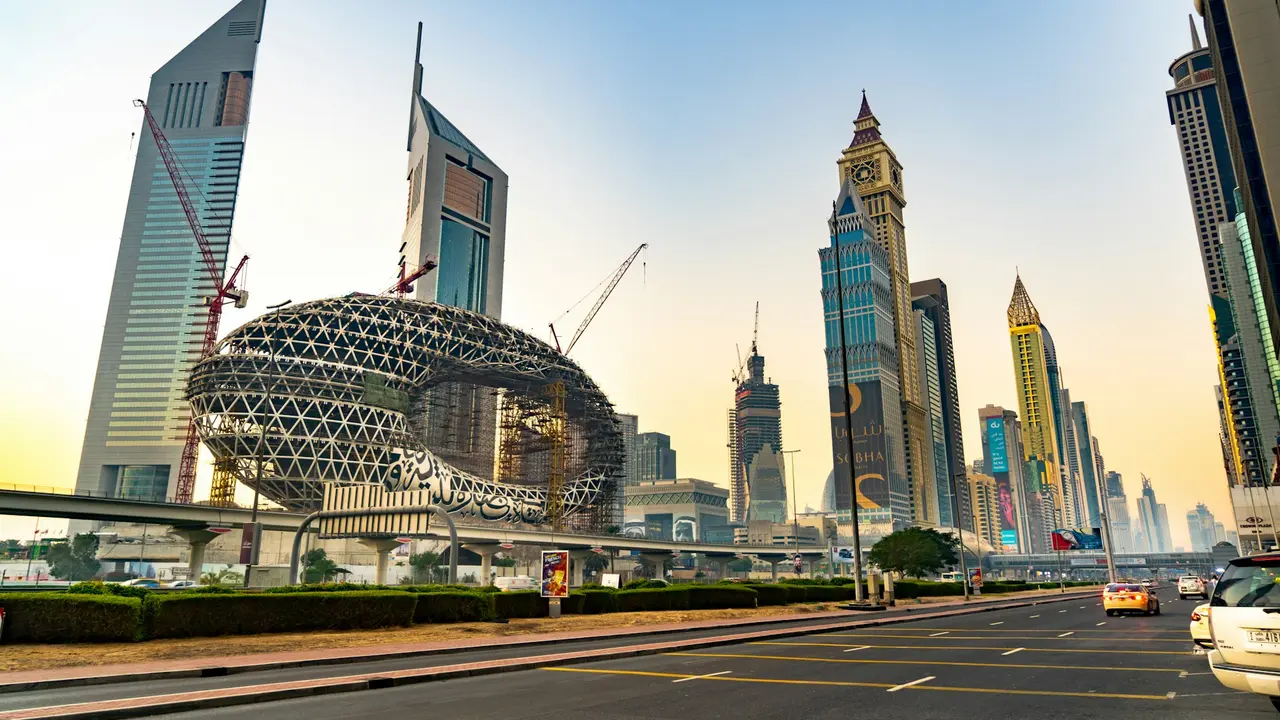
Despite regional volatility, Dubai's property market continues to attract massive capital inflows. In the span of a single week, real estate transactions reached 12.4 billion dirhams, equivalent to 3.4 billion dollars. Notable deals included a Palm Jumeirah apartment sold for 23 million dollars and a Business Bay office space changing hands for 8.2 million dollars. Luxury real estate remains particularly robust, with transactions totaling 23.2 billion dollars during the first ten months of the year, according to proprietary market research.
Dr. Eido Zelkovitz, head of Middle Eastern Studies at the Max Stern Yezreel Valley College, observed that Gulf economies remain heavily reliant on oil, with tourism and technology serving as vital pillars dependent on open airspaces. While regional states desire a swift end to hostilities, they recognize the long-term strategic challenge posed by persistent Iranian threats.
International rating agencies maintain a cautiously optimistic outlook regarding the stability of the United Arab Emirates. Fitch Ratings recently affirmed the country's AA- credit rating, underpinned by robust oil revenues, a low debt-to-GDP ratio, and substantial financial reserves. Nevertheless, Fitch slashed its real GDP growth forecast for the year to just 0.5 percent, marking a sharp deceleration from 6.2 percent last year.