Tokyo Sleep Competition Challenges Contestants to Fall Asleep for a Grand Prize
A unique sleep competition in Tokyo awarded a 14,000-dollar prize to the best sleeper, shedding light on Japan's widespread chronic sleep deprivation.
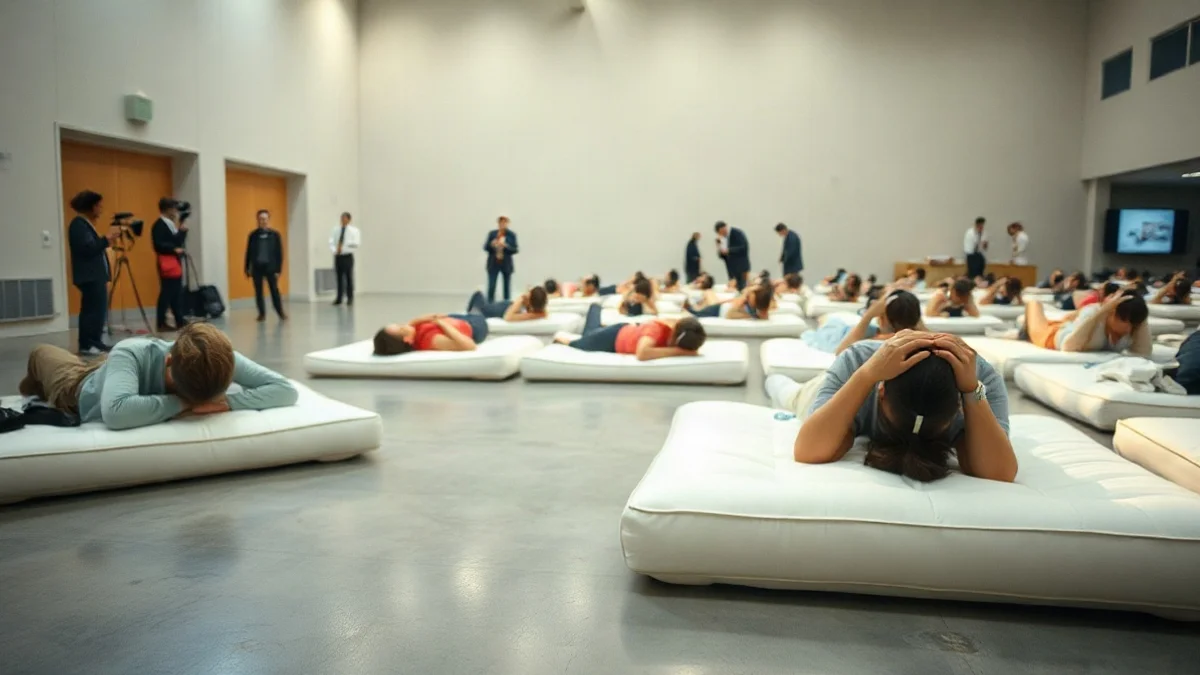
While most global competitions challenge participants to run faster, lift heavier weights, or display extraordinary athletic feats, a recent event in Tokyo offered a remarkably different path to victory: falling asleep. Dozens of contestants lay down on comfortable mattresses, competing to achieve the deepest and highest-quality sleep within a 90-minute window. The grand prize reached 2.22 million yen, equivalent to about 14,000 US dollars, with the unusual event designed to raise public awareness about widespread sleep deprivation across the nation.
The Rules and Challenges of the Matt Race
Named the Matt Race and organized by the mattress manufacturer Koala, the competition took place at the SHARE GREEN MINAMI AOYAMA complex in Tokyo. Participants were divided into three separate heats, each given 90 minutes to demonstrate their sleeping prowess while wearing specialized head monitoring devices. These sensors measured sleep onset latency, sleep depth, and stability, combining the data into a comprehensive score to determine who rested most effectively.
Securing victory proved far from easy, as contestants had to doze off in a brightly lit hall alongside complete strangers and under the watchful eyes of cameras. Organizers implemented strict rules prohibiting intentional sleep deprivation prior to the event or the use of sleeping pills to gain an unfair advantage. To elevate the difficulty, tests included sudden disruptions such as doorbell chimes, delivery notifications, and flashing lights, evaluating whether participants could maintain continuous rest under imperfect conditions.
A Lighthearted Event with a Serious Message
A 24-year-old Tokyo resident known by the alias Soyomi captured first place, expressing genuine surprise despite her known ability to doze off in noisy environments. "I want to live alone, so I think I will use the money for moving expenses," she shared, adding with a smile that she dreams of purchasing a luxurious princess-like bed. Another competitor, 32-year-old Chisato Honda, noted that the 90 minutes flew by remarkably fast and that he would have gladly continued resting.
The lighthearted competition generated massive public interest, with approximately 47,000 applicants vying for a severely limited number of spots. Organizers intentionally set the top prize at 2.22 million yen as a playful nod to the letter string Zzz, while runners-up received 220,000 yen. Beyond the entertainment value, the event aimed to address a severe societal issue, as OECD data from 2021 highlights Japan as having one of the lowest average sleep durations in the developed world due to grueling work hours and demanding lifestyles.