New Laboratory Dating Revives Debate Over Biblical Noah's Ark Discovery
New laboratory dating results from an archaeological site in eastern Turkey suggest organic remains could date back over four thousand years, renewing debate over biblical history.
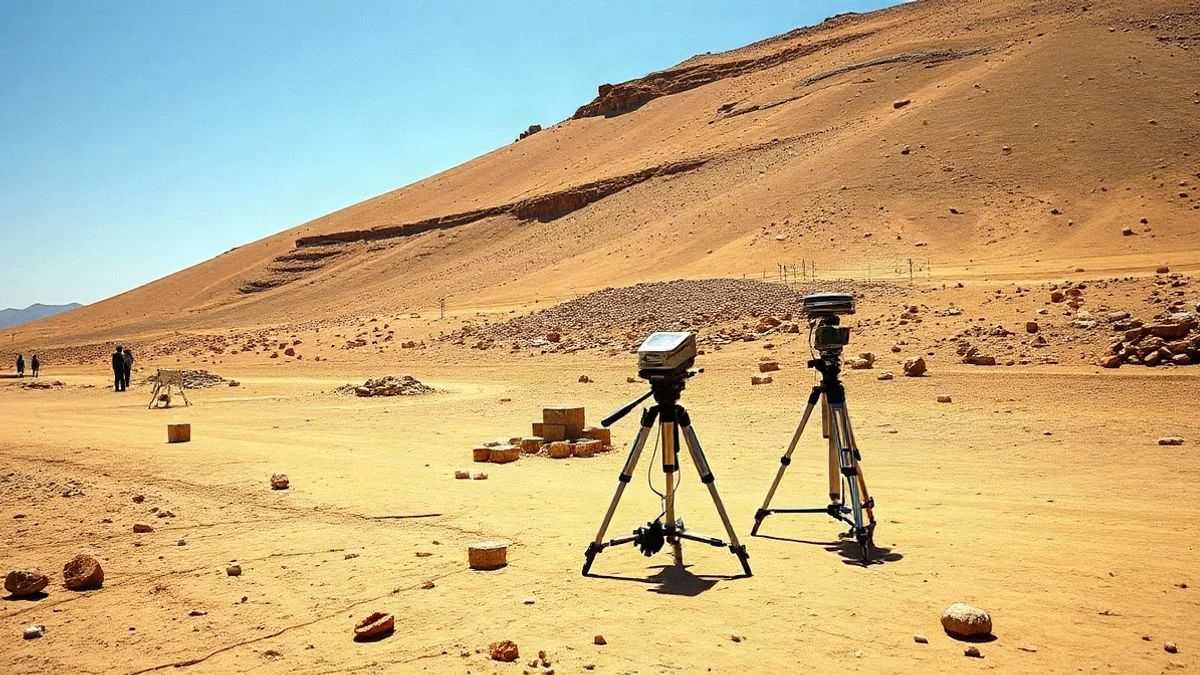
A compelling new chapter in the quest for the biblical vessel unfolded as researchers presented laboratory dating results from an archaeological site in eastern Turkey. Speaking to the press, project founder Jones shared findings that he asserts align closely with the traditional biblical timeline of the great deluge.
The Durupinar Site and Its Mysterious Formation
At the center of the ongoing investigation is the Durupinar site, situated in eastern Turkey not far from Mount Ararat, a region long associated in various traditions with the resting place of Noah's Ark. First brought to widespread attention in 1959, the location features an unusual ground formation that strikingly resembles a massive ship when viewed from above. Over the decades, geologists, researchers, and archaeology enthusiasts have flocked to the area to determine whether the vessel-like contours are artificial or merely a natural geological phenomenon.
Recent scientific efforts have focused on subsurface scans and core sampling to peer beneath the earth. Investigators working on the project reported uncovering dark fragments buried approximately nine meters below the surface. These samples are believed to contain organic material, with researchers pointing to specific fragments that display markings allegedly suggesting human crafting or toolwork.
Laboratory Dating and Biblical Chronology
According to the latest laboratory analysis, organic samples retrieved from the site have been dated to a range between 2456 and 2143 BCE. This timeframe spans more than 4,000 years, matching certain calculations derived from biblical chronology regarding the era of the flood. While these dates have sparked considerable excitement among researchers and believers, mainstream scientific consensus emphasizes that dating organic material does not automatically confirm the presence of an ancient ship.
Experts note that distinguishing between intentional human modification and natural geological abrasion requires rigorous, independent verification. As researchers continue to probe the secrets of the Durupinar formation, the definitive proof of whether the legendary ark rests beneath the slopes of Mount Ararat remains an intriguing mystery waiting to be unraveled.