Record 451 Sharks Return to Thailand's Maya Bay After Tourism Limits
A record 451 blacktip reef sharks have been documented in Thailand's Maya Bay following strict tourism restrictions, marking a major milestone for local marine ecosystem recovery.
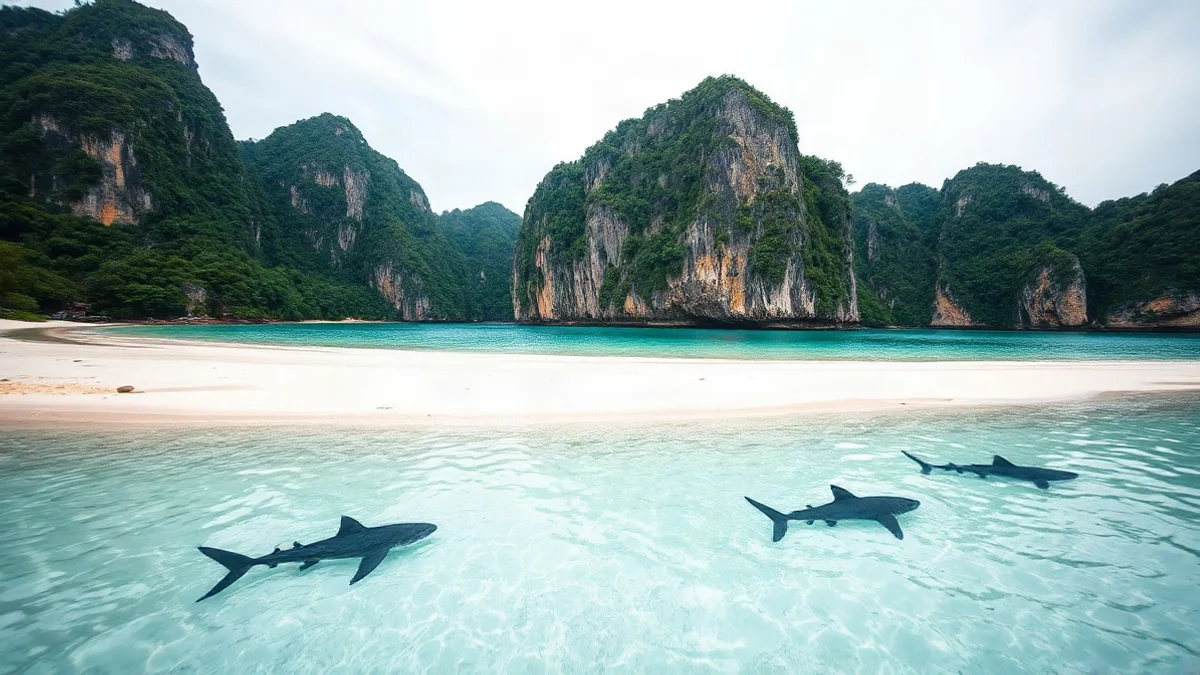
A record 451 blacktip reef sharks have been documented in Maya Bay, southern Thailand, marking the highest count since official monitoring began in 2023. According to reports in Thai media, authorities attribute this remarkable ecological recovery to strict tourism restrictions implemented after years of severe environmental degradation.
The Aftermath of 'The Beach'
Maya Bay, located in Krabi province on the Andaman Sea, gained international fame following the release of the Hollywood film "The Beach," starring Leonardo DiCaprio. Over the years, the site became one of Thailand's most popular tourist destinations. However, the overwhelming influx of visitors caused significant ecological damage, prompting authorities to close the bay to tourists for an extended period. Following its reopening, strict regulations were enforced, including daily visitor limits and the establishment of strict no-sail zones.
Aerial and Underwater Monitoring
The data was collected during a week-long research operation conducted from November 3 to 9, led by the Marine National Park Research Center in Trang province in collaboration with students from Prince of Songkla University. Researchers utilized advanced monitoring tools, including 15 drone flights, 22 underwater cameras, and continuous water quality assessments.
According to the findings, the average water temperature stood at approximately 30.8 degrees Celsius, with salinity and acidity levels deemed optimal for marine life. Researchers noted that an average of 330 sharks were observed daily during the early morning hours. While experts hypothesize that this unusual concentration may be linked to the breeding season, further studies are underway to confirm the exact causes.
A Natural Nursery for Young Sharks
During the survey, researchers identified a clear distribution pattern among the sharks across the bay. Adult and adolescent sharks were spotted primarily near the shore and along the cliffs on the right side of the bay, while newborn and juvenile sharks measuring less than one meter in length were documented in the shallow waters on the opposite side.
Officials from Thailand's Department of National Parks stated that the survey results clearly demonstrate the positive impact of tourism restrictions on ecosystem recovery. Fieldwork was led by research center director Kittipong Songnoi, with the objective of establishing a long-term monitoring framework to balance ecotourism with wildlife preservation.