New Archaeological Finds at Durupinar Site Revive Noah's Ark Debate
Recent archaeological excavations at the Durupinar site in eastern Turkey have uncovered charred wood fragments deep underground, reviving scientific debate over Noah's Ark.
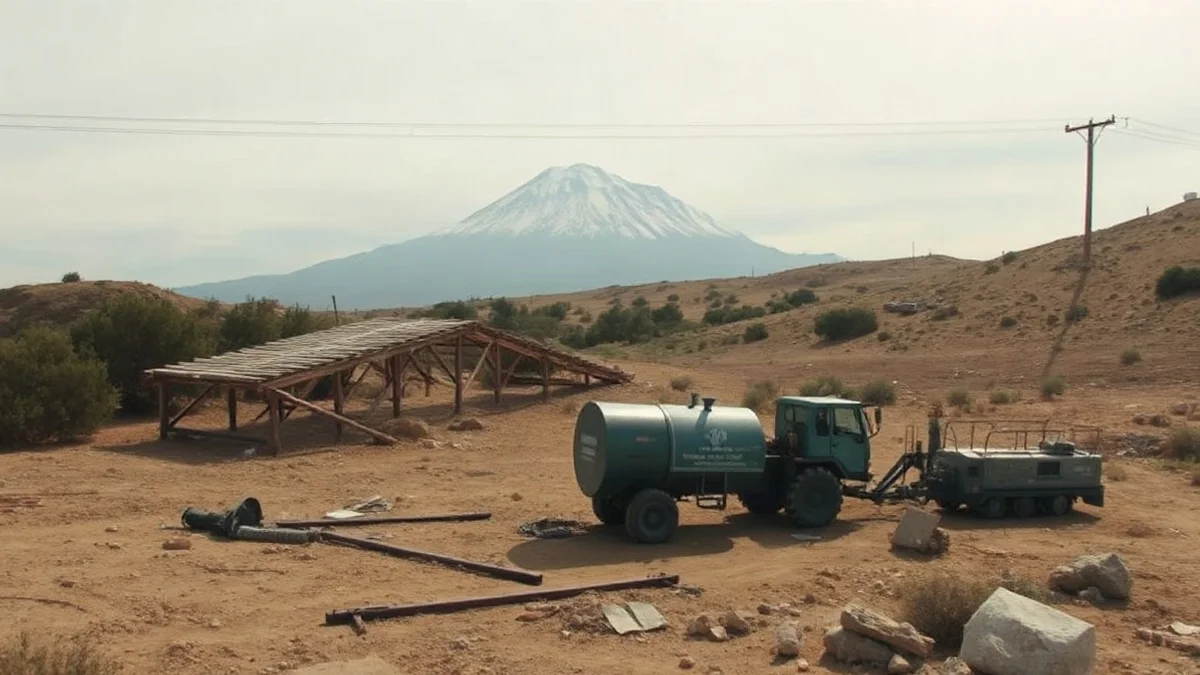
New archaeological research at the Durupinar site in eastern Turkey, located about five kilometers south of Mount Ararat, has revived the debate surrounding the biblical account of Noah's Ark. Researchers backed by Turkish universities recently extracted charred wood fragments from deep beneath the surface, supported by radar surveys and laboratory tests aimed at determining whether the boat-shaped structure conceals ancient remains.
Historical Context and Scientific Skepticism
The boat-shaped Durupinar formation has drawn attention for decades regarding a potential connection to Noah's Ark, a claim consistently challenged by geologists. In a 1996 study, geologists Lawrence J. Collins and David Fasold argued that the formation is a natural rock structure rather than an ancient vessel. Despite skepticism from the wider scientific community, research teams pressed forward with deep drilling, advanced underground volume detection equipment, and laboratory analysis of hundreds of soil samples.
Recent Discoveries and Laboratory Testing
During recent fieldwork, scientist Khosrow Bakhtar conducted radar surveys indicating the presence of structured patterns, potential rooms, and corridors beneath the roughly 253-meter-long structure. Professor Gencay Atila, an archaeologist at Sivas Cumhuriyet University in Turkey overseeing the investigation, noted that the team retrieved the wood fragments approximately ten meters below the surface. Although laboratory results are pending, Atila assessed that the fragments are extremely ancient, pointing to striking similarities between the structure's dimensions, three-tier configuration, and biblical descriptions.
The recovered wood samples have been dispatched to four laboratories across four different countries for carbon-14 dating and precise wood identification, while lab teams continue analyzing core and soil samples. Lauren Witzke, the project's marketing and recruitment manager, described the discovery as globally significant, noting that the research is being conducted under official Turkish regulatory oversight, strict documentation procedures, and independent lab testing. With comprehensive laboratory results expected soon, the team plans to seek permits for expanded excavations ahead of 2027 to further investigate the enduring archaeological mystery.