Tesla Announces 3.3 Billion Dollar Expansion for Grünheide Gigafactory in Germany
Tesla announced a 3.3 billion dollar investment to expand its Grünheide gigafactory near Berlin, targeting an annual production of one million autonomous Cybercabs by 2029.
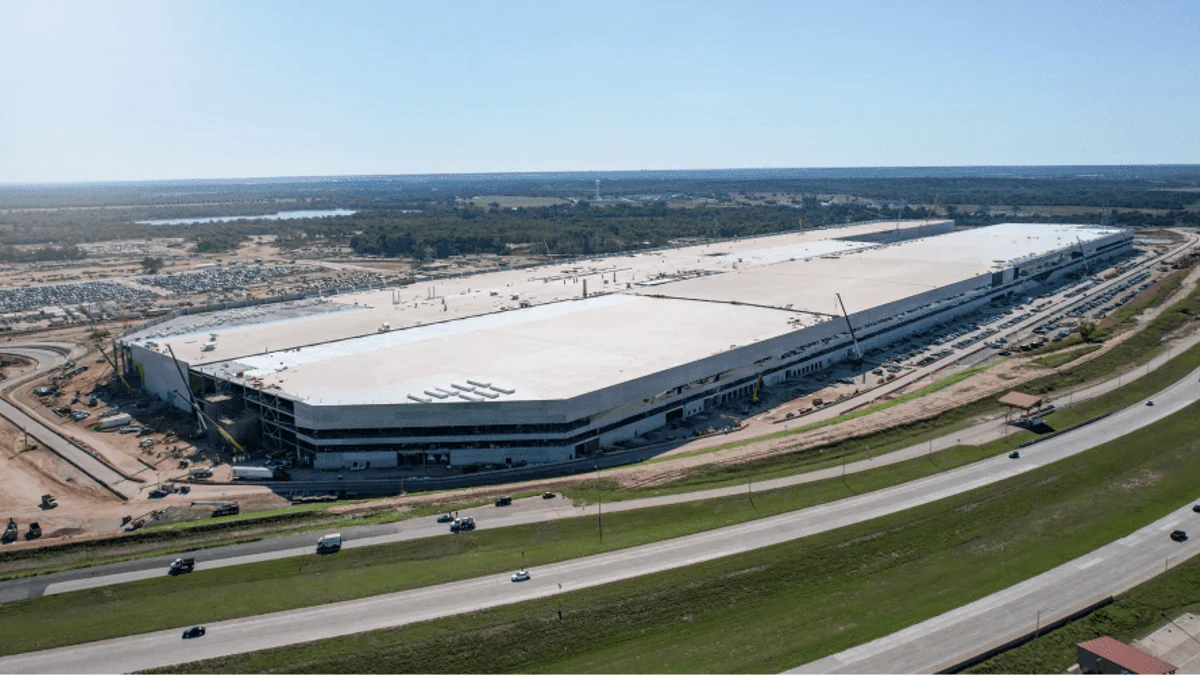
As the German automotive sector navigates one of the most challenging periods in its history, American electric vehicle pioneer Tesla is moving forward with a massive expansion in the country. The company announced plans to invest approximately three billion euros, equivalent to roughly 3.3 billion US dollars, to expand its gigafactory in Grünheide near Berlin. This major development could potentially transform the site into the largest car manufacturing facility in Germany by production capacity.
The capital injection is primarily earmarked for establishing an additional production line dedicated to the Cybercab, Tesla's forthcoming autonomous taxi. According to company disclosures reported in the media, the stated objective is to achieve an annual production capacity of up to one million autonomous cabs at the German plant. This represents an exceptionally ambitious benchmark, given that the vehicle model has not yet reached widespread commercial distribution.
Timeline and Workforce Projections
Under the schedule outlined by corporate leadership, a formal construction permit application is slated for submission by the end of 2026. Civil works are scheduled to commence in the first half of 2027, with the initiation of commercial manufacturing targeted for 2029. During the initial phase, Tesla expects to recruit several hundred additional personnel to support engineering, construction, and pre-production preparations.
This strategic announcement arrives at a critical juncture for domestic industrial competitors. Traditional German automotive giants, including Volkswagen, Mercedes-Benz, and BMW, are currently grappling with elevated domestic production costs, fierce competitive pressures from Chinese manufacturers, and structural reorganization. While several local firms are downsizing workforces and weighing plant consolidations, Tesla is aggressively scaling up its industrial footprint on German soil.
Operational Background and Future Outlook
Inaugurated in March 2022, the Grünheide facility remains Tesla's sole European vehicle assembly plant. Over recent months, the company has ramped up output of the Model Y at the site and onboarded more than 2,000 new employees. Simultaneously, the firm intends to initiate localized battery cell manufacturing at the location by mid-2027 as part of a broader industrial integration strategy.
Nevertheless, the path toward realizing this ambitious expansion is accompanied by distinct hurdles. Previous operations at the facility have drawn localized environmental protests, and corporate leadership has experienced friction with the powerful German trade union IG Metall. Industry analysts also question the net employment gains the new investment will generate, particularly given the high degree of automation planned for the advanced manufacturing lines.
Furthermore, the commercial trajectory of the Cybercab remains contingent on multiple external variables. Despite grand production blueprints, the eventual success of the vehicle depends heavily on the maturation of autonomous driving technology, the acquisition of necessary regulatory approvals, and the evolution of consumer demand for driverless transit.
In a parallel strategic realignment, Tesla plans to gradually phase down Cybertruck production at its Austin facility in Texas by the end of the summer of 2027. According to company Chief Executive Officer Elon Musk, the transition is designed to reallocate critical manufacturing resources toward the Cybercab, which anchors the firm's future product roadmap.
Should these expansion milestones be fully achieved, Tesla is positioned to emerge as a dominant force in the German automotive landscape, potentially surpassing the production capacity of Volkswagen's flagship plant in Wolfsburg. For the present, however, these projections remain forward-looking corporate targets rather than finalized operational realities.