Strategy in deep freeze: Israel is winning the battle, but losing the political campaign | Avi Ashkenazi
Israel's biggest problem is not its military capabilities, but the political stalemate. Israel is not a country that leads political moves; it is dragged along by them.
Former Prime Minister Naftali Bennett presented his party's security plan on Wednesday. The plan is based on four key security issues: Qatar as an enemy state, exacting a price from Iran for any Hezbollah action in Lebanon, bringing in Egypt as a central player and mediator for managing the Gaza Strip on the 'day after', and introducing the IDF into the Arab sector.
Bennett has further plans and demands for the security establishment regarding Judea and Samaria, Lebanon, and Syria. In the coming days, leading up to the elections, more security and political plans will be presented by various parties and candidates.
Israel is successfully recording military achievements. Forces of the 36th Division are operating on the Ali al-Tahar ridge in southern Lebanon. In the Gaza Strip, Prime Minister Benjamin Netanyahu has returned to authorizing the IDF and the Shin Bet to carry out targeted killings, based on prior individual approval by the political echelon. Notably, in the past week, the Prime Minister did not approve four killings in Gaza for political reasons. The assessment is that Israel intends to continue the strikes as part of the pressure exerted on Hamas.
Regarding the other heating front, it was suggested yesterday in some Middle Eastern media that the strike on the Abu al-Duhur airfield in Syria's Idlib province could have led to a direct confrontation between Israel and Turkey. In truth, this is an exaggerated assessment. The strike was carried out while the three countries — Israel, Syria, and Turkey — were operating in a space of denial, where each side had an interest in swallowing the insult and keeping quiet. It is highly doubtful that any of the three is interested in escalating the situation.
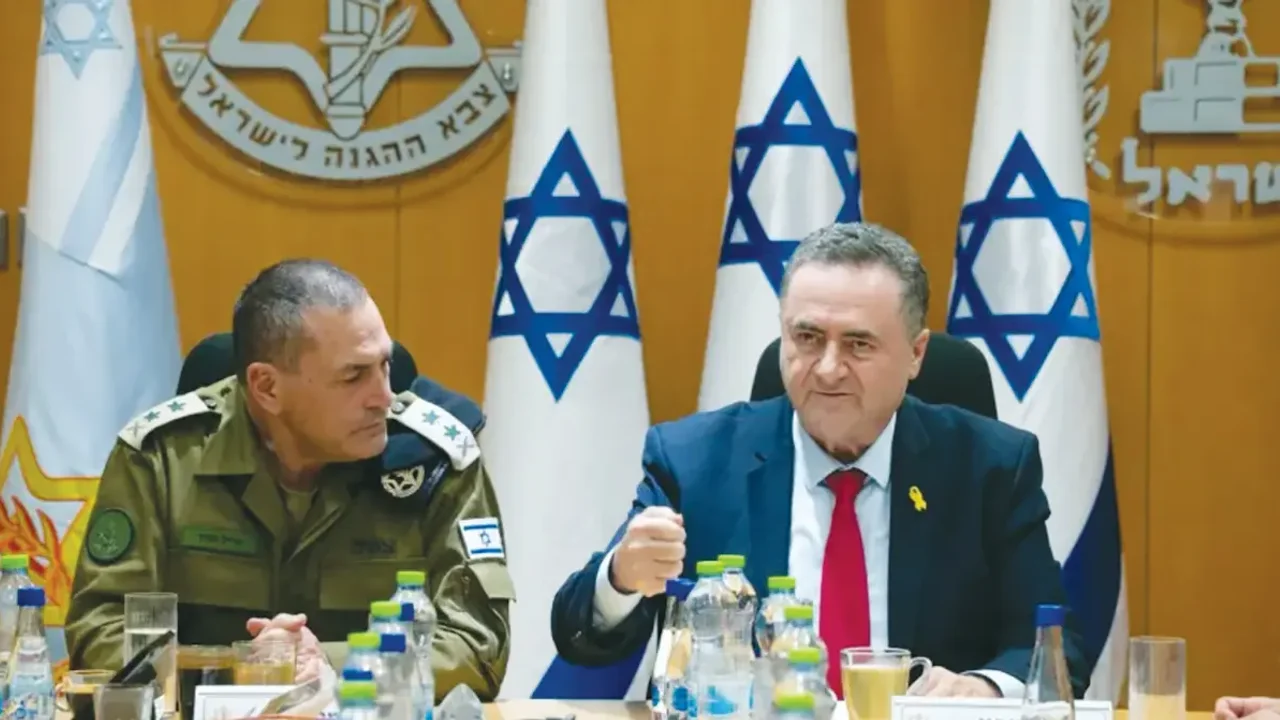
IDF Chief of Staff Rav-Aluf Eyal Zamir, during a tour of the sector, sent a clear message to Syria and Turkey:
"We see what is happening and are monitoring the changes on the Syrian front; we will not allow hostile forces to establish themselves on our borders and we will know how to use our power precisely where it is needed and when it is needed."
Israel's biggest problem is not its military capabilities, but the political stalemate. Israel is not a country that leads political moves; it is dragged along by them. The political paralysis has led Israel to a situation where negotiations in Gaza are conducted by the Qataris and Turkey. Israel must bring Egypt, Jordan, Saudi Arabia, and other Gulf states closer. Only in this way can moves be built to undermine Hamas's rule.
Of course, Israel must continue to eliminate everyone who participated in the October 7 massacre. But this does not contradict the duty to act simultaneously on the political arena. Israel must lead the strengthening of the Lebanese government — militarily, economically, and governably — with the help of Saudi Arabia and France. These two countries have an interest in Lebanon that does not contradict the Israeli interest.
In Syria, Israel must act not only through military means but also through a political channel. Only in this way will Israel be able to shape, with the help and thanks to its military achievements, a new Middle East. The big question is which of the politicians running for the country's leadership will build the multi-front political plan after the elections.
