State Pilot Faces 2.6M NIS Claim After Four Trucks Burned in Extortion Attack
Four trucks worth 2.68 million shekels were destroyed in an arson attack at Dudaim Recycling Park, testing a state compensation pilot capping payouts at 2 million shekels for protection-racketeering victims.
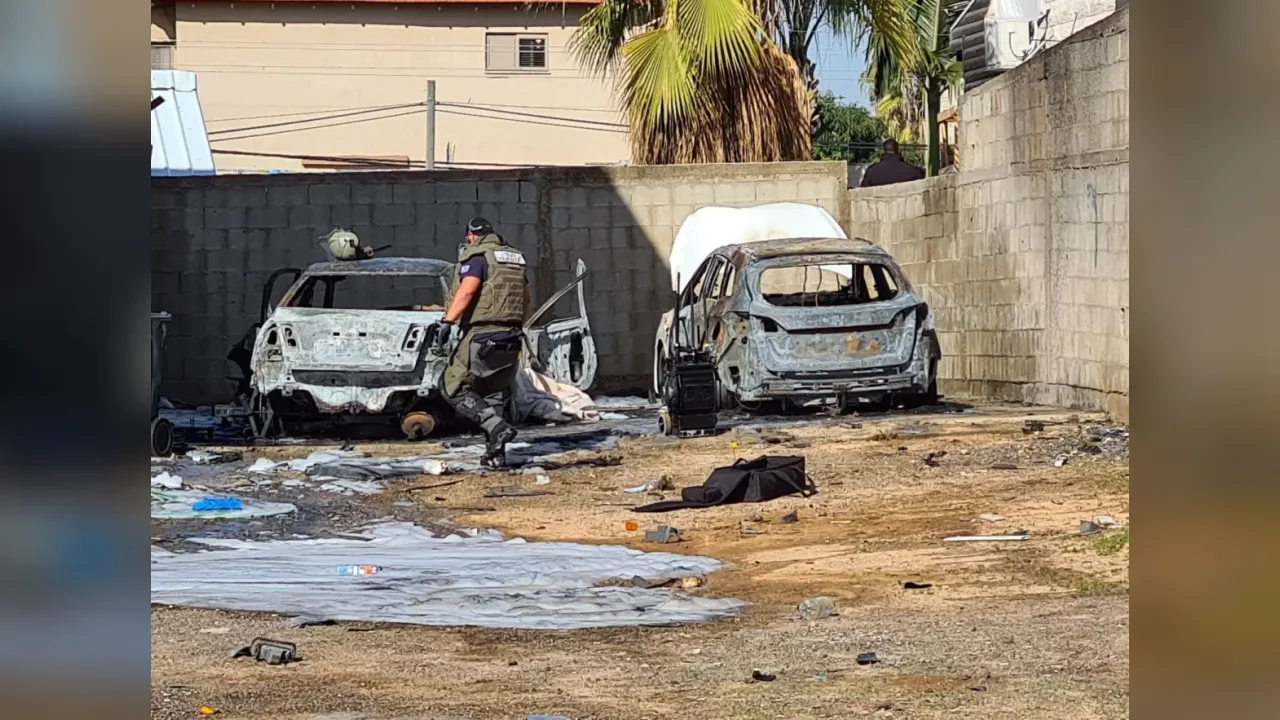
A compensation claim has been submitted to the state for four heavy trucks destroyed in an arson attack at the Dudaim Recycling Park, testing the limits of a new government pilot program compensating victims of extortion. The combined insurance value of the incinerated waste-disposal vehicles stands at approximately 2.68 million shekels, while the maximum payout ceiling under the state scheme is strictly capped at 2 million shekels.
The arson attack took place overnight between October 8 and October 9, targeting heavy commercial vehicles equipped with specialized gear for environmental waste management. The sudden loss of these essential vehicles directly threatens local waste collection continuity. The formal compensation request was filed through an initiative launched last month by the Israel Tax Authority, which provides financial relief for direct damage to business property or residential homes caused by protection racketeering.
Government Pilot Program Criteria
Operated as a pilot under Government Resolution 4299, the compensation track applies to direct damages incurred between October 4, 2024, and December 4, 2024. Payouts cover direct physical harm only, excluding indirect losses or liabilities toward third parties. Eligible applicants must run a legitimate business with an active tax file and a valid business license, having suffered direct property loss following either a refusal to pay protection money or the filing of a police complaint.
Strict eligibility prerequisites govern the program, requiring claimants to demonstrate that police officially recognized the incident as extortion-related. Furthermore, applicants must show they could not secure malicious-damage insurance coverage despite previous efforts, or that their commercial insurance claim was denied. Businesses must also prove full compliance with insurer-mandated security and risk-mitigation measures, alongside legal building permits where permanent structures are involved.
The compensation application for the truck fleet included mandatory documentation and a formal police certificate issued by the Negev YAMAR division. The document confirmed that the affected company is recognized as a genuine victim of extortion with no ties to criminal syndicates, and that the vehicle destruction is directly linked to protection racketeering.
Extortion Crisis and Legislative Response
Extortion rackets, protection fees, and forced "guardianship" payments inflict widespread terror on construction contractors and business owners across the country. Refusing criminal demands frequently triggers extreme retaliation, including machinery theft, vehicle arson, firebombings, grenade placements, and direct gunfire at residential homes.
The severity of the phenomenon was recently highlighted when the Japanika restaurant chain became a battleground for criminal organizations. Fragmentation grenades were hurled at branches in Afula and Netanya, while gunfire damaged the storefront of the Herzliya branch, following similar attacks in Ramat Gan, Kiryat Ono, Ra'anana, and Givatayim.
Recognizing extortion as a severe national plague, authorities have deployed specialized police units and advanced legislative tools to combat organized crime. In August 2023, the Knesset enacted a dedicated five-year emergency anti-extortion law establishing distinct criminal tiers. Collecting protection money without explicit threats carries a sentence of up to 6 years in prison, while extortion backed by threats commands harsher penalties ranging from 7 to 9 years behind bars.