Sanrivatti Unveils Prone-Position Supercar With 800-Horsepower V10 Engine
Dutch startup Sanrivatti has unveiled the One, a track-only single-seat supercar featuring a prone driving posture, a Judd V10 engine, and targeted production by 2030.
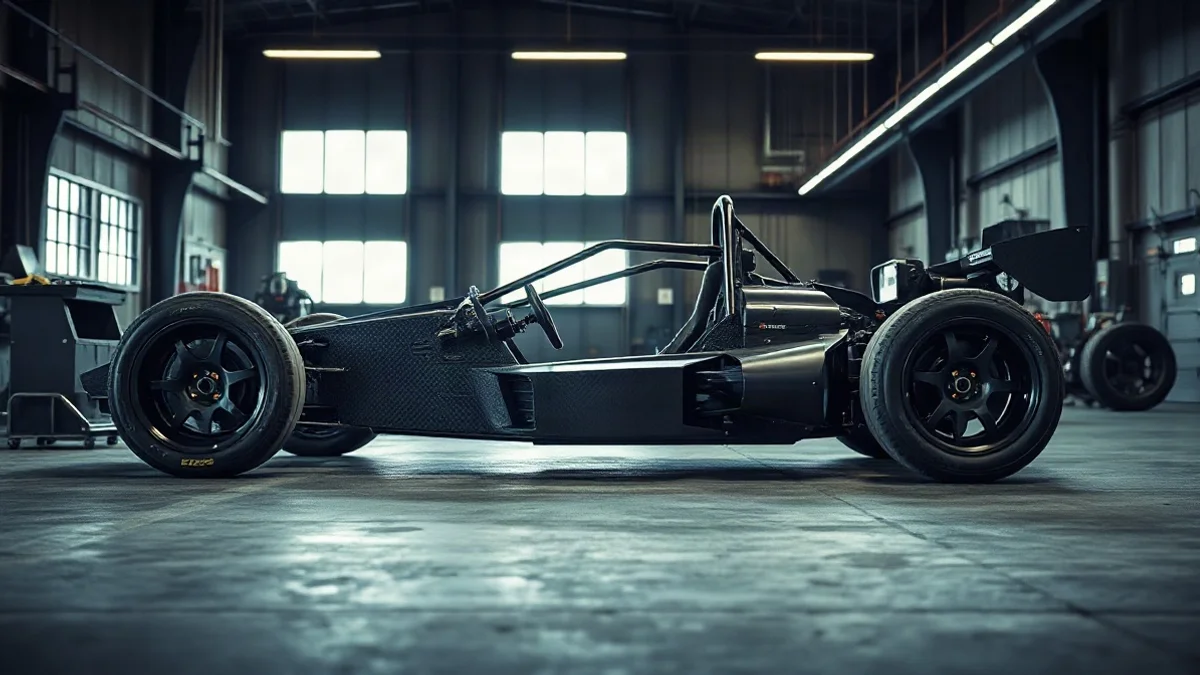
A young Dutch automotive startup has introduced a radical single-seat track car that reimagines the traditional driving posture, challenging decades of sports car design. The company, Sanrivatti, unveiled the One, a vehicle where the driver leans forward and lies nearly prone on their stomach, resembling the physical stance of riding a sports motorcycle.
The Innovative Apex Position
The manufacturer terms this innovative configuration the "Apex Position," aiming to foster a direct and intuitive connection between driver, machine, and circuit. Unlike a motorcycle with handlebars, the driver controls the One via a steering wheel positioned ahead and pedals mounted behind, flanking the body. The driver rests forward on a padded saddle, placing the head significantly closer to the front end of the vehicle.
Behind this unconventional layout lies an aggressive performance specification. The One is slated to feature a 5.5-liter naturally aspirated V10 engine built by British racing specialist Judd, generating roughly 800 horsepower at 9,000 rpm. This powerplant pairs with a sequential transmission featuring paddle shifters behind the steering wheel. The vehicle targets a dry weight of just 1,100 kilograms and a top speed of approximately 330 km/h, though these target figures await verification in independent performance testing.
Advanced Engineering and Aerodynamics
To handle extreme G-forces, the chassis relies on a carbon fiber monocoque structure complemented by pushrod suspension, high-performance brakes, magnesium wheels, and slick track tires. The exterior showcases massive air intakes, prominent aerodynamic wings, and a forward-opening canopy that grants access to the cockpit.
According to Sanrivatti, positioning the driver's head further forward drastically expands the field of view toward apexes and track boundaries. Company simulations comparing the layout against ten conventional supercars indicated that the new posture grants a visible track area 3.2 times larger. However, automotive analysts note that whether this theoretical visibility advantage translates to faster lap times remains to be proven.
Production Timeline and Track Focus
The unique weight distribution requires engineers to completely rethink chassis balance, steering geometry, suspension tuning, and aerodynamics. Unlike standard sports cars where driver mass is centralized low in the chassis, the One disperses weight differently across the frame.
Despite ambitious claims, the Sanrivatti One remains in early development, with only a full-scale model and an experimental prototype based on a Porsche Boxster demonstrated so far. The company targets production by 2030, though it has not yet disclosed pricing, planned production volume, or a binding rollout schedule. Built exclusively for closed circuits rather than public roads, the Sanrivatti One could ultimately fuse the visceral engagement of motorcycle racing with the raw downforce of a track-day supercar.