Reservist in Judea and Samaria: "We were told to use physical force against Jews if necessary"
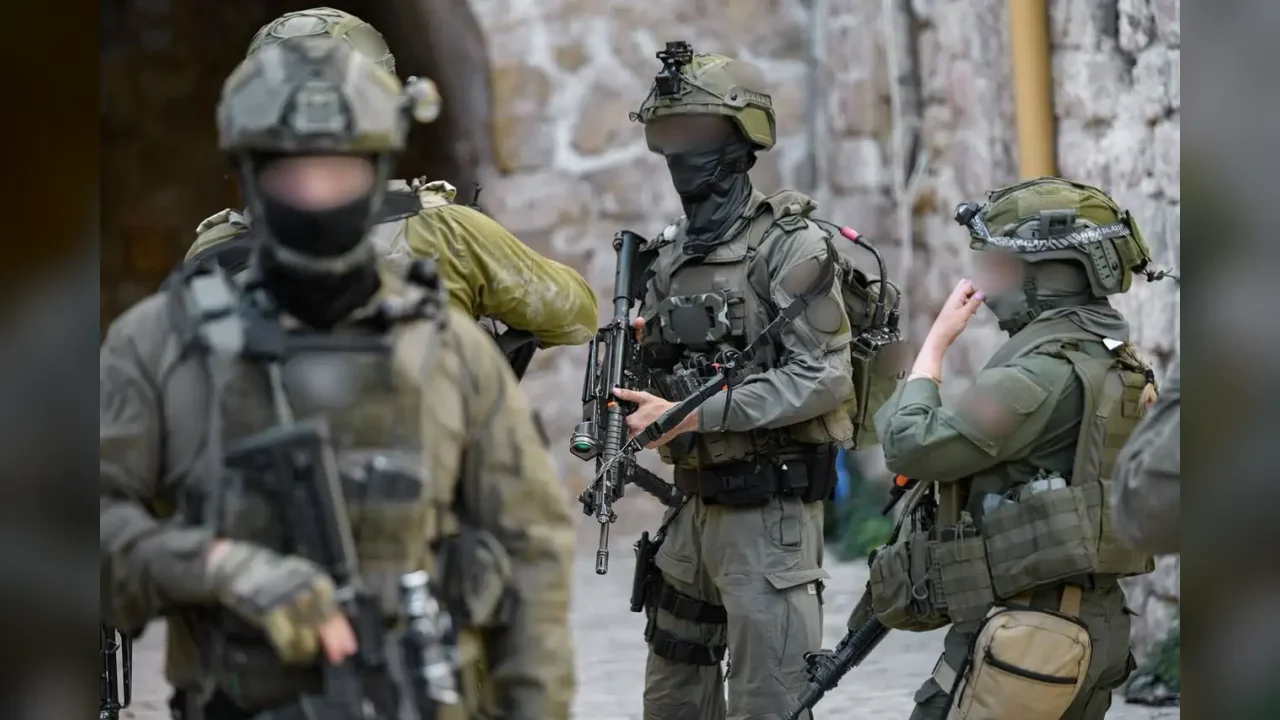
Following the attack that claimed the lives of Benyahu Melet and Major Yuval Ezra, the IDF has deployed across hundreds of locations in Judea and Samaria, conducting numerous arrests. Staff Sergeant (res.) Shahar, who has served in the area for years, reported that commanders are instructing troops to strictly manage friction, including the use of physical force against both sides if required.

Staff Sergeant (res.) Shahar, a fighter in the David Brigade, is currently serving a reserve duty rotation in the Binyamin Territorial Brigade. Between 2007 and 2010, he served in the Kfir Brigade, and has since been regularly called up for reserve duty, spending most of his service in Judea and Samaria.
"In the places where I served, there were no major riots by Jews, but there were friction incidents—not like what we saw now in Alon Moreh or at Havat Gilad," he said, referring to Friday's shooting attack. "Farms are often located near or inside Palestinian agricultural lands. Palestinians come to work there, and friction is created that needs to be managed."
Shahar explained that when forces arrive at a scene, the standard action is usually "to get the Arab out of there." "That is what happens most often, it is easier. It is easier to use the tools we have on them, and there is a better chance they will listen to us, whereas Jews are more cunning and allow themselves more. Commanders tell us: 'It will be easier for you to get him out of there first, so do it.'"
The IDF notes that there is no formal order to remove specifically Palestinians from conflict hotspots. "The IDF is not supposed to decide who is right or wrong; the IDF wants to keep the sector quiet," a source said. "This is the IDF's interest. We see what is happening now at Havat Gilad; it ignites the entire sector and causes chaos."
After the attack, the army addressed the incident in a briefing. "The company commander criticized the soldiers' conduct, saying they 'let it escalate too much' and allowed too much friction instead of quickly separating the sides. He repeated this message in briefings before missions," Shahar recounted.
Following the briefing, the instructions became clearer to Shahar. "My weapon is attached to me at all times. We must not reach a situation where someone can take it from me. We saw what happened—they took it from Benyahu Melet (of blessed memory), a member of the Havat Gilad standby squad, and shot him," he said, referring to the victim who was murdered alongside Major Yuval Ezra (of blessed memory). "We were also told that if necessary, we should use physical force against Jews. I personally asked the company commander. Everything is done to calm the area."
According to Shahar, the preoccupation of forces with preventing friction diverts attention from other activities. "They didn't want things to heat up, so they placed military forces there. This means there is less military presence on the roads where civilians travel. They keep forces permanently at the farm under the pretext of protecting it, but ultimately it is to prevent such incidents," he said.
In response, the IDF stated that forces were not diverted from the roads, but rather that the entire sector was reinforced.
Arrests and Operational Status
Following the escalation in Judea and Samaria, Central Command forces arrested over 130 wanted persons over the weekend, including arms dealers, Hamas-affiliated operatives, and inciters. According to the IDF, forces operated in hundreds of locations and questioned hundreds of suspects. Two terrorists' homes were mapped, and one was sealed overnight.
Fighters are deployed on traffic axes, in settlements, and in security zones, using roadblocks to prevent friction. Meanwhile, the army has identified an increase in incitement on Palestinian social media and a desire to carry out copycat attacks. Any indication of an intent to carry out an attack is handled immediately.
The IDF, Shin Bet, Judea and Samaria Border Police, and the police are working in cooperation to cool the area. Security agencies are also working to reduce nationalist crime incidents and bring those involved to justice. As part of new instructions, workers' entry into settlements is prohibited until Tuesday.
Assisted in the preparation of this article by Elisha Ben Kimon.