Public Utility Authority Plans Major Rooftop Solar Tariff Cuts by 2030
Israel plans to slash rooftop solar tariffs and incentives by up to 20% through 2030, sparking fierce warnings from environmental groups and local authorities over missed renewable energy goals.
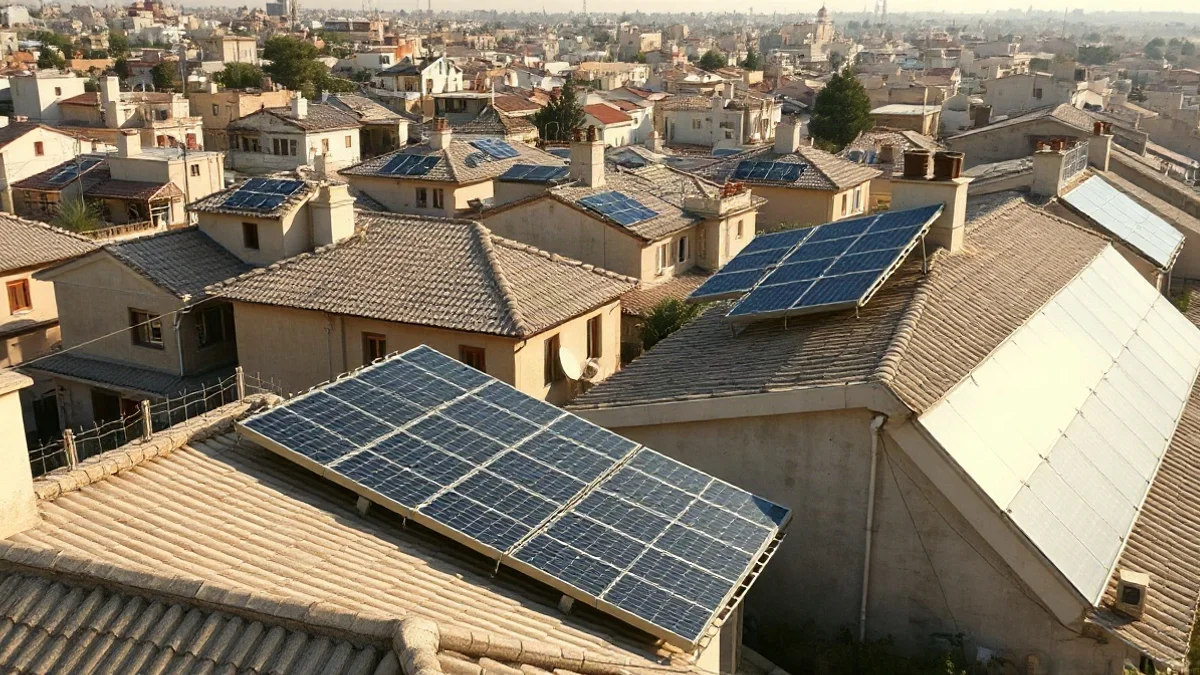
Israel faces severe environmental challenges as one of the most polluted OECD member states, with approximately 5,300 annual fatalities attributed to heavy air pollution. Despite this crisis and surging power demand from massive data center approvals that will necessitate polluting power plants, the Public Utility Authority plans to slash tariffs for rooftop solar installations and scale back clean energy incentives.
Tariffs, Rates, and Timeline Adjustments
Under current regulations, residential rooftop owners receive 48 agorot per kilowatt-hour produced, supplemented by a 6-agorot municipal premium in over 70 urban authorities, with tariffs guaranteed for 25 years. However, this regulatory framework expires at the end of 2026. A newly published public consultation draft outlines significant reductions: tariffs for rooftop systems will drop by roughly 20% by 2030, with steeper cuts anticipated in sunny peripheral regions. Overall rates will decline by 5% annually between 2027 and 2030, while 40% of the tariff will be pegged to the US dollar from 2024 onward, potentially reducing payouts by an additional 10% as early as 2027.
Furthermore, the fixed-rate eligibility period will shrink from the current 25 years down to 20 years for systems established in 2027, and to just 17 years for installations built in 2030. Municipal premiums are set to be drastically shortened to a total duration of 6 to 10 years, terminating entirely by 2037. In grid-congested areas such as the Negev, the Arava, and The North, tariff reductions will be even sharper due to intense network competition. Large commercial, public, and agricultural rooftops will gradually lose guaranteed tariffs entirely and be forced into the open market.
Falling Short of Renewable Energy Targets
Critics warn that these cuts will severely damage the economy and prevent Israel from meeting its renewable energy targets, cementing its lag behind global standards. By the end of 2025, renewable energy accounted for a mere 16.7% of electricity generation, falling short of the government target of 20% and remaining at roughly half the global average of 34%. Achieving the modest 2035 target of 35% renewable energy requires adding at least 14 gigawatts of solar capacity within a decade, excluding future demands from server farms which are projected to consume 20% of total electricity.
Rooftop solar serves as a vital tool to overcome grid bottlenecks, bringing generation directly to major consumption centers in central Israel instead of transmitting power from distant polluting plants or consuming open spaces. In the first nine months of 2026, small residential systems added 134 megawatts, marking a historic peak. Sector estimates project the year to close with 200 megawatts of private rooftop capacity, a one-third increase from the previous year's 150 megawatts.
Economic Impact on Households and Local Authorities
Tariff reductions will significantly extend return-on-investment timelines. A detached home with a 20-kilowatt system currently generates an estimated annual income of 15,000 shekels, totaling 358,000 shekels over 25 years. Following the cuts, projected 2030 annual income will drop to 10,500 shekels, yielding 174,000 shekels over a shortened 17-year framework—representing a loss of more than half total revenues.
Local authorities face a heavy financial blow. According to a State Comptroller report from June 2026, 52 local authorities secured loans totaling approximately 136 million shekels to install solar arrays on public buildings. A 150-kilowatt school rooftop currently generates about 92,000 shekels annually, totaling 2.15 million shekels over 25 years. By 2030, the same roof will bring in 65,000 shekels annually, reducing total revenue to 1.1 million shekels—a deficit exceeding one million shekels.
The Federation of Local Authorities strongly opposes the cuts, stating that the proposed changes endanger ongoing clean energy projects and undermine local energy independence. Environmental organizations, including Greenpeace, the Society for the Protection of Nature in Israel, and "Sun for All", have petitioned the Public Utility Authority to withdraw the consultation draft. Energy and climate advocates emphasize that clean energy benefits extend far beyond electricity generation, encompassing reduced mortality from air pollution, lower greenhouse gas emissions, and strengthened national energy security.