Police Informant Details Post-Election Talks with Netanyahu Amid Investigation
The central informant in Israel's election interference controversy reveals details of his post-election talks with Prime Minister Benjamin Netanyahu as police leadership clashes with the Attorney General over a frozen internal probe.
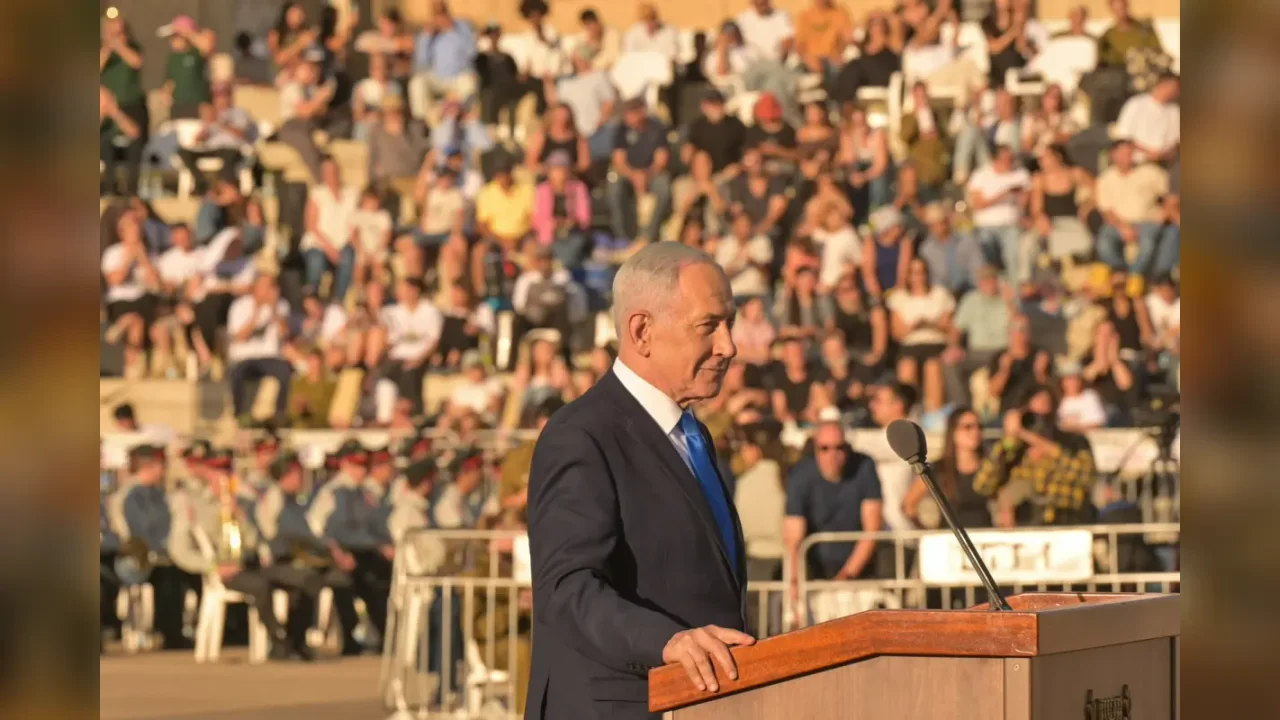
Daniel Greenberg, known as the police informant at the center of the election interference controversy, revealed new details in a televised interview regarding his communications with Prime Minister Benjamin Netanyahu in the immediate aftermath of the election. Greenberg stated that Netanyahu contacted him a day or two after the polls closed to discuss alleged irregularities in the southern region. According to Greenberg, he briefed the Prime Minister in real time about the materials he had provided, and Netanyahu instructed him to wait and see how matters unfolded.
Simultaneously, officials in the Prime Minister's Office of Israel claimed that Greenberg resigned from his position after allegedly impersonating an official during interactions with the Shin Bet. According to these sources, Greenberg presented himself as an advisor for the protection of informants and participated in official meetings before stepping down to preempt legal proceedings. Greenberg's legal counsel, Adv. Avihai Yehosef, strongly dismissed the allegations, asserting that unverified speculation and rumors were being manufactured into public scandals to fit a pre-determined political narrative rather than resting on objective facts.
Police Leadership Clashes Over Investigation
Behind the scenes, the internal leadership of the Israel Police is facing intense turmoil. Inspector General Danny Levi spoke with Attorney General Gali Baharav-Miara, urging her to rescind her decision to freeze an internal police probe into the force's conduct on election day. Levi maintained that the organization was under severe strain and requested approval for an expedited review panel to conclude its work within days. However, the Attorney General, in coordination with State Attorney Amit Isman, intervened and halted the internal inquiry, weighing whether to transfer the case to the Department of Internal Police Investigations due to potential criminal misconduct.
Identity of the operational chain of command has also emerged. Commander Ruti Hauslich, head of the investigations department within the police's intelligence division, instructed southern district counterparts via text message to take immediate action after local officers questioned the credibility of the intelligence source. Sources within the southern district maintained that all actions strictly complied with standard police operational regulations.
Conflicting Versions and Political Fallout
Significant discrepancies remain between Greenberg's account and the official stance of the police. Greenberg claims that a senior Arab lawmaker provided him with incriminating material regarding fifteen Ra'am activists distributing funds on the eve of the election, which he then routed through the Prime Minister's Office to the upper echelons of the police. Conversely, Lahav 433 investigators stated that no intelligence existed beyond a single telephone call received on election eve, raising internal questions about why immediate arrests were ordered instead of conducting covert surveillance.
The revelations drew sharp denunciations from across the political spectrum. Leader of The Democrats Yair Golan accused the Inspector General of attempting a cover-up, describing the affair as a criminal attempt to sabotage election results. Opposition figures intensified their rhetoric, with Yesh Atid leader Yair Lapid characterizing the incident as an attempted coup, while Joint List lawmaker Ahmad Tibi denounced the events as mafia-style behavior that threatens the foundations of democratic governance.