Poland Ready to Deploy Troops Against Russian Aggression in Baltic States
Poland is prepared to deploy military forces immediately to defend the Baltic states against any Russian attack without waiting for NATO to formally invoke Article 5.
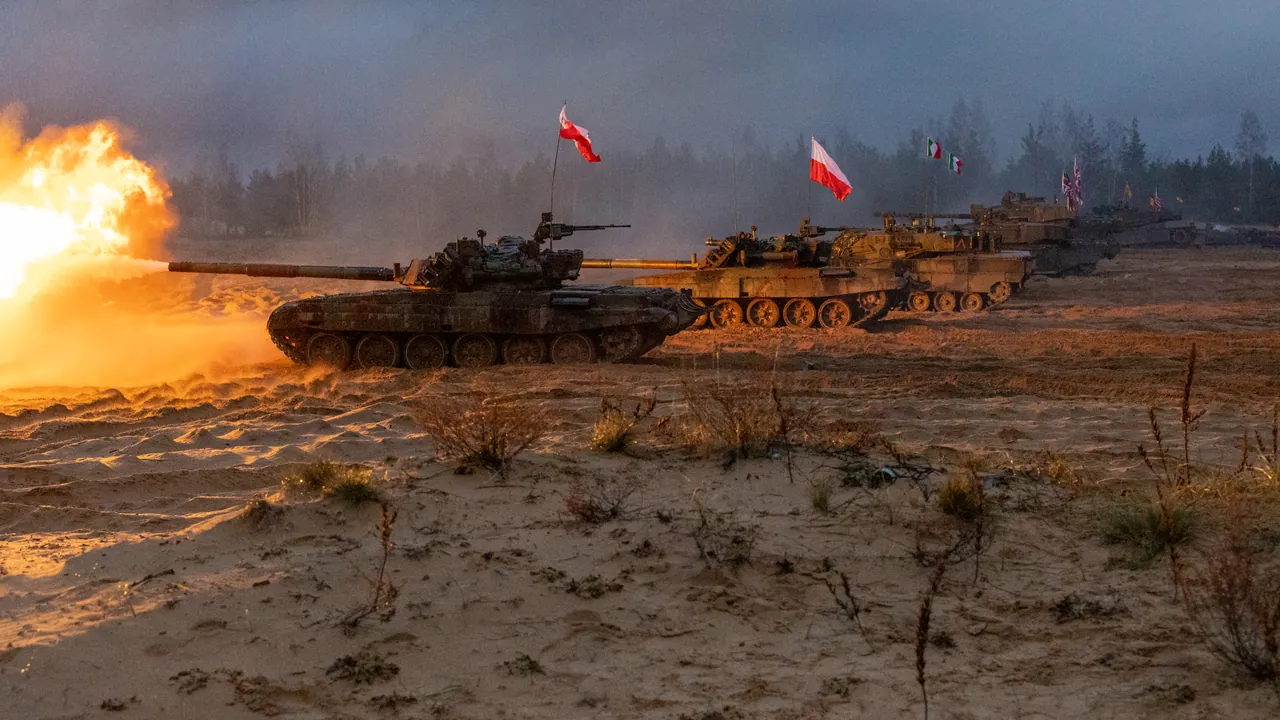
Poland is prepared to deploy military forces immediately to defend the Baltic states in the event of an armed Russian attack, without waiting for NATO to formally invoke Article 5 of the North Atlantic Treaty. Discussions within the leadership in Warsaw focus on the potential scope of military intervention rather than whether Poland should participate, according to senior government ministers cited by local media reports.
Polish defense planners are examining scenarios in which Russia might launch a limited military incursion into Estonia, Latvia, or Lithuania to test NATO's commitment to collective defense. One plausible scenario involves the seizure of Narva, a strategically located Estonian city situated along NATO's eastern border with Russia. While intelligence assessments indicate that Moscow currently lacks the capabilities and has no plans for a full-scale assault against a NATO member state, localized armed provocations remain a serious concern.
Strategic Debates and Independent Intervention
One government source stated that Poland would immediately dispatch military personnel to assist an attacked nation rather than waiting for a collective decision among all NATO member states. Such an intervention is designed to accelerate the activation of Article 5 while signaling directly to Moscow that continued military aggression risks triggering a conflict with the entire alliance.
A second government official emphasized the necessity of preserving Poland's own core defensive capabilities given limited military resources, suggesting that Warsaw would likely prioritize deploying special operations forces rather than heavily armored units. Despite minor internal disagreements regarding the exact size and composition of the deployment, both officials confirmed that Poland would respond militarily to Russian aggression against any Baltic state. Warsaw officials believe that a delayed response, or a failure to act, could undermine NATO's credibility and leave Poland exposed to similar provocations in the future.
Article 5 of the NATO treaty stipulates that an armed attack against one member state is considered an attack against all allies. However, member nations retain the sovereign right to provide military assistance independently without waiting for the formal activation of the mutual defense clause. Previously, Czech Chief of the General Staff Karel Řehka warned that Russia could launch a limited strike inside NATO territory to test alliance cohesion, while Estonian Defense Minister Hanno Pevkur voiced similar concerns regarding potential provocations aimed at eroding trust in collective defense guarantees.