Fewer Employees Leave Office for Lunch: Are Working Through Breaks Paid?
Data reveals a 22% drop in Israeli office workers leaving for lunch over four years, sparking legal questions over whether eating at the computer constitutes paid work.
A sharp decline of 22% in the proportion of employees leaving the office for lunch over a four-year period has highlighted shifting workplace habits and legal questions regarding meal-time compensation. Data compiled by attendance management firm Oketz Systems, which analyzed the punch-in records of 15,820 workers, shows that 35.4% of employees logged out and left the office during lunch between January and October of this year, compared to 45.5% during the same period in 2022.
Section 20 of Israel's Hours of Work and Rest Law regulates employee break entitlements. As a rule, breaks during which a worker is permitted to leave the workplace are not counted as working hours and are therefore unpaid. Simultaneously, Section 25 mandates that employers maintain continuous records of actual working hours using punch clocks or automated access control systems.
The Impact of Living Costs and Changing Food Habits
While the survey did not investigate the exact reasons for the drop, industry analysts point to the rising cost of living as a primary driver. Calculations based on Central Bureau of Statistics figures indicate that dining out prices have increased by approximately 16% since 2022. Meanwhile, a report published by Cibus shows that the number of corporate meal card transactions at supermarkets rose by 18% over the past year, with 58% of companies expanding their meal allowances to cover supermarkets, convenience stores, and pharmacies.
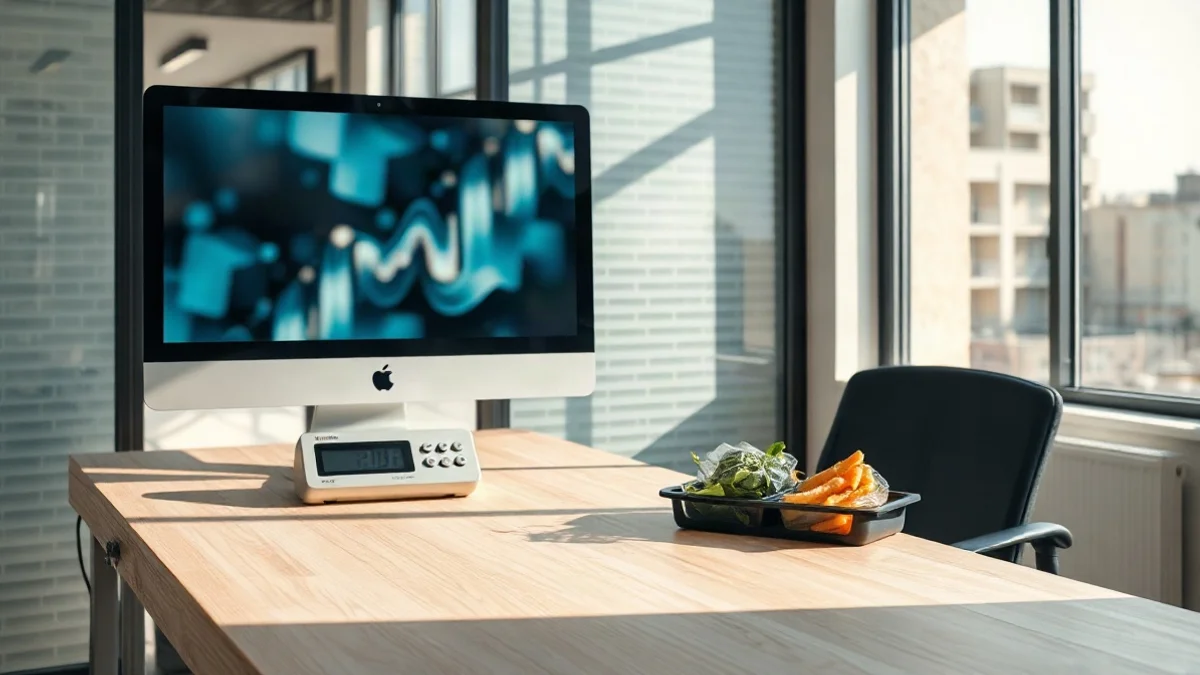
This behavioral shift raises an important legal dilemma: when an employee remains at their desk, eats lunch in front of the computer, and simultaneously continues handling work matters, does that time constitute an unpaid break or active working time that requires compensation?
Legal Precedents on Lunch Break Compensation
According to labor law attorney Hila Aharoni, when an employee does not take an actual break because the employer specifically requested that they keep working, they are legally entitled to compensation for that working time, even if they consume their meal concurrently.
In a landmark ruling regarding maintenance worker Oleg Kal versus the Crowne Plaza Hotel, the Labor Court ordered the hotel to pay 39,131 shekels for meal breaks that had been deducted from his salary. The court found that the employee was not permitted to leave his workstation for a break and had to remain on call throughout his shift, addressing malfunctions even while eating in the cafeteria.
When an employee decides independently to work through lunch while eating at their desk, the situation becomes more nuanced. Aharoni explains that a worker's unilateral decision to keep working does not automatically grant them a right to paid wages, since the employer intended for them to take a formal break.
Distinguishing Break Types and Employer Awareness
The National Labor Court addressed short employee breaks in a ruling involving Bezeq Call versus Raz Tzach, dividing rest periods into three categories:
- Actual breaks, where the employee can use the time freely for personal needs;
- Voluntary non-actual breaks, initiated by the worker for brief refreshment during work;
- Voluntary actual breaks lasting less than 30 minutes.
This classification helps determine whether specific intervals qualify as paid working hours. Furthermore, even without an explicit employer directive, Aharoni notes that if management knows an employee continues working through lunch, raises no objection, and fails to instruct them to take a proper break, a legal claim for compensation may still arise.
A regional ruling in Beersheba, involving Rachel Striki versus Menora Mivtachim Holdings, awarded an employee 5,730 shekels for unused break times. Haim Molcho, CEO of Oketz Systems, emphasizes that midday lunch is no longer the sole break during a workday. Employees frequently take short pauses for smoking, phone calls, and personal errands that accumulate to match the duration of a full lunch break, meaning the drop in office departures represents only part of the broader evolution in workplace habits.