Nothing to Unveil Screenless AI Recording Device and Productivity Gadget
British technology firm Nothing will unveil its first screenless AI recording device on December 8. Positioned as a productivity tool, the compact gadget tackles the context gap in language models through physical hardware.
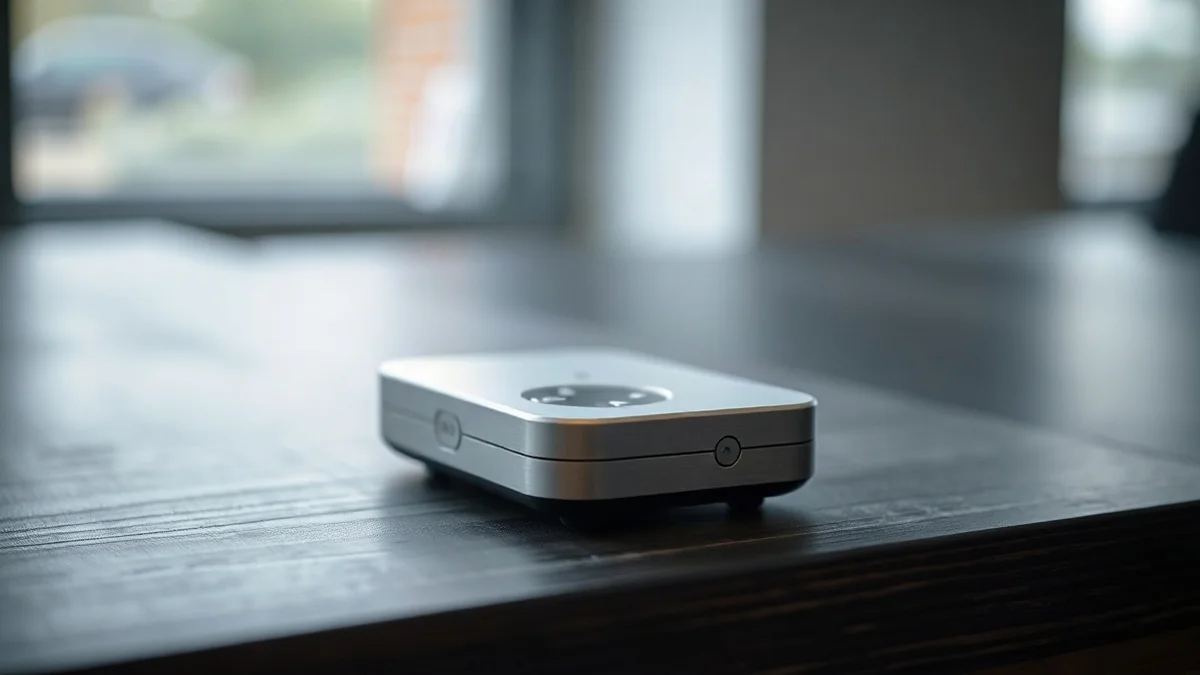
British technology company Nothing announced it will officially unveil its first dedicated artificial intelligence device on December 8, with sales expected to begin later that month. Although the exact product name and full specifications remain under wraps, a series of teasers and statements published on X by company CEO Carl Pei outline the core design of the gadget: a compact, screenless device featuring a brushed metal body, a large speech button, a secondary button marked with a recording symbol, and red and green indicator lights. The campaign's accompanying slogan, translated loosely as "To be present, it is recorded," highlights that the device's primary purpose is AI-driven documentation, summarization, and information management.
According to Pei, the most significant limitation of current language models is not computational capacity, but rather the "context gap"—the reality that advanced models remain disconnected from daily life experiences, leaving spontaneous ideas discussed over coffee inaccessible to digital assistants. Consequently, the company positions the device as a productivity tool for work rather than an attempt to manufacture an "iPhone of the AI era." Pei emphasized that the product includes "zero new screens" and "could not have been an app," hinting that its physical hardware plays an indispensable role in data processing or user interaction.
Industry Context and Strategic Positioning
Nothing's market entry unfolds against the backdrop of struggles faced by pioneering wearable AI companies in the USA. Humane's AI Pin and Rabbit's R1 device attempted to convince consumers to abandon smartphones for voice-driven interfaces, but ultimately stumbled due to sluggish response times, overheating, poor battery life, and hardware dependencies that failed to justify standalone gadgets. Conversely, Meta and Ray-Ban's smart glasses demonstrated that mass adoption is achievable when technology is seamlessly integrated into familiar everyday accessories. Meanwhile, consumer electronics markets in China and East Asia have embraced a pragmatic approach, fueling a surge in smart voice recorders, magnetic tags, and transcription devices such as Plaud's documentation solutions. These products avoid trying to replace smartphones, functioning instead as focused assistants for meeting summaries and organizational memory.
Nothing intends to leverage its established Asian manufacturing supply chain alongside its distinct European design language to transform a niche category into an accessible consumer product. For markets characterized by rapid adoption of AI tools coupled with healthy skepticism toward redundant gadgets, the new device faces a dual test. It must prove its ability to handle real-time transcription, voice recognition, and contextual understanding in local languages, while successfully justifying its independent existence alongside smartphones. At a time when Apple, Samsung, and Google embed AI-powered summarization and recording tools directly into flagship operating systems, Nothing must demonstrate on December 8 that pressing a dedicated physical button delivers tangible value that phone applications cannot replicate.