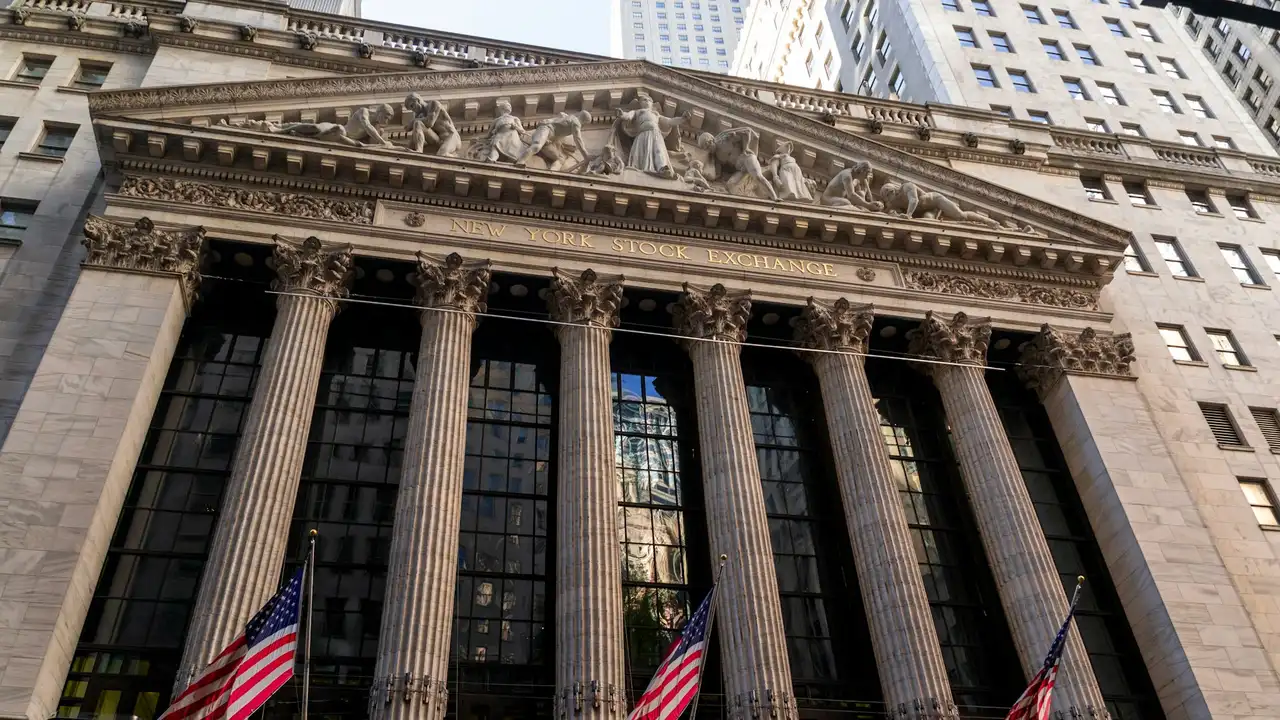
S&P 500 climbed to 47.4%: about 86% of companies beat profit forecasts
Alongside profit data and massive investments by SpaceX, a new report reveals the weakening of employment data in the US alongside interventions in foreign exchange trading that directly affected the American currency. The weighted growth rate of S&P 500 company profits climbed to 47.4% - the strongest trajectory since 2021.
The reporting season in the US presents a breadth of data not seen since 2021, but the slowdown in the labor market and inflation that has yet to be resolved are putting the rally on Wall Street to the test. International experts analyze the results of SpaceX, mark the trend of the dollar, and explain the events that will drive the markets in the coming week.
The US capital market presents a complex picture: on one hand, a surge in corporate profits that encompasses almost all sectors; on the other hand, sharp signs of cooling in the labor market and tense waiting for upcoming inflation data. Three leading experts in the financial capital market analyze the key trends.
SpaceX: tremendous growth in AI alongside massive investments of 18 billion dollars
SpaceX's first public earnings report drew huge interest on Wall Street. Sylvia Jablonski, Chief Investment Officer at Defiance, points to impressive growth alongside cash flow challenges: "The essence of the SpaceX story is exceptionally strong fundamental growth, alongside more careful scrutiny by investors regarding the amount of capital required to support it. The company's revenue almost doubled year-over-year and reached 7.8 billion dollars, driven by 66% growth in Starlink and a 250% jump in AI activity, alongside a significant reduction in operating losses.
The central focus of the discussion now is capital expenditures: SpaceX spent over 18 billion dollars during the quarter, of which about 15.8 billion dollars were on AI infrastructure. Management claims that the new computing investments generate a return in less than a year — a figure that, if maintained, will fundamentally change investors' perception regarding the return on investment."
Jablonski also addresses the expiration of the company's lock-up period: "About 911.5 million additional shares became available for trading — more than doubling the public float. The stock rose on the expiration day despite active trading volumes, which indicates that the supply was absorbed better than feared. However, as long as the stock trades below the offering price ($135), future lock-up expirations may continue to create volatility."
Reporting season: AI leads, but the entire market is rising
One of the positive surprises of the current reporting season is the expansion of strength beyond just the technology giants. Violeta Todorova, a research analyst at Leverage Shares, notes the expansion of the rally: "This reporting season presents a story of two markets: companies successfully monetizing AI receive premium valuations, while companies without exposure to AI are judged mainly by cash flow and operational performance.
However, the weighted growth rate of S&P 500 company profits climbed to 47.4% — the strongest trajectory since 2021. Even excluding Alphabet and Amazon, profit growth stands at an impressive 28.8%. About 86% of S&P 500 companies beat profit forecasts, and 10 out of 11 sectors report growth in the bottom line. The market is no longer supported only by a limited number of tech giants."
Sylvia Jablonski from Defiance joins this view: "The S&P 500 has returned to new highs, with the rally supported by growth in corporate profits and not just multiple expansion. Investors are now also rewarding companies in the healthcare, industrial, and financial sectors, where valuations remain more reasonable. Broader participation of all sectors makes the bull market more durable and stable over time."
Labor market cooling: has the path to interest rate cuts opened?
The weak employment report showed a surprising decrease of 23,000 jobs alongside downward revisions of 103,000 jobs in the previous two months. Paul Marino, Chief Revenue Officer at Themes ETFs, provides an in-depth analysis of the dynamics created in the market and the expectations from the Federal Reserve: "The assumption that the Fed will be able to start monetary easing now rests on stable ground.
Historically, a softening labor market gives the Fed more room to maneuver to prioritize economic growth over rigid maintenance of inflation — especially when a systematic decline in the labor force participation rate indicates structural slack rather than overheating of the economy.
In my estimation, the Fed's interest rate has reached its highest level for this year and will not rise further. The combination of stagnation in new job creation, a decline in participation, and downward revisions of past data clearly tilts the balance of risks toward future interest rate cuts rather than further tightening. The most cautious and correct path for the Fed now is to leave the interest rate at its current level and let the data continue to evolve.
Markets, for their part, received these tidings with a warm embrace: index futures rose and government bond yields fell as a result of repricing toward a more dovish policy. If hiring stabilizes, the unemployment rate may move toward 4% by the end of the year, which will support a 'wait and see' approach by the central bank."
Sylvia Jablonski from Defiance reinforces these points regarding futures trading: "The employment report immediately reduced expectations for an interest rate hike in September. Futures moved from a 57% probability of monetary tightening to only about 44% after the report, while the probability that the Fed will leave the interest rate unchanged rose to about 60%. The Fed now has a significant reason to demonstrate patience, as the employment side of its mandate begins to receive central weight again."
Dollar trend: from external pressure to stabilization in the 97-100 range
Weakening employment data alongside foreign exchange trading interventions directly affected the American currency. Violeta Todorova from Leverage Shares analyzes the dollar's direction: "The Dollar Index (DXY) fell by more than 2% to a level of about 99. The retreat stems from uncertainty surrounding Fed policy, alongside Japanese intervention to support the yen and reduced demand for US bonds by foreign investors. Now the dollar is going through a period of consolidation and is expected to trade in the range of 97 to 100 in the second half of the year. Cooling inflation will weigh on the currency, but relative economic growth and attractive bond yields will provide it with support."
What awaits investors in the coming week? The CPI report and AI infrastructure tests
Investors' focus is shifting from macro employment data back to price indices and management updates. Violeta Todorova from Leverage Shares marks the key events: "The key event of the week will be the publication of the Consumer Price Index (CPI) in the US on Tuesday. A softer-than-expected reading will strengthen estimates for a more dovish Fed policy and support technology and growth stocks. Conversely, a higher-than-expected index could push bond yields up and exert pressure on highly valued stocks.
In the corporate sector, the reporting season is moving to infrastructure and hardware giants: reports from Super Micro Computer and Cisco will be closely examined to see if investments in AI infrastructure continue at a high pace. Management forecasts will be more important than the quarterly results themselves, as investors look for evidence that AI investments are translating into sustainable revenue growth."