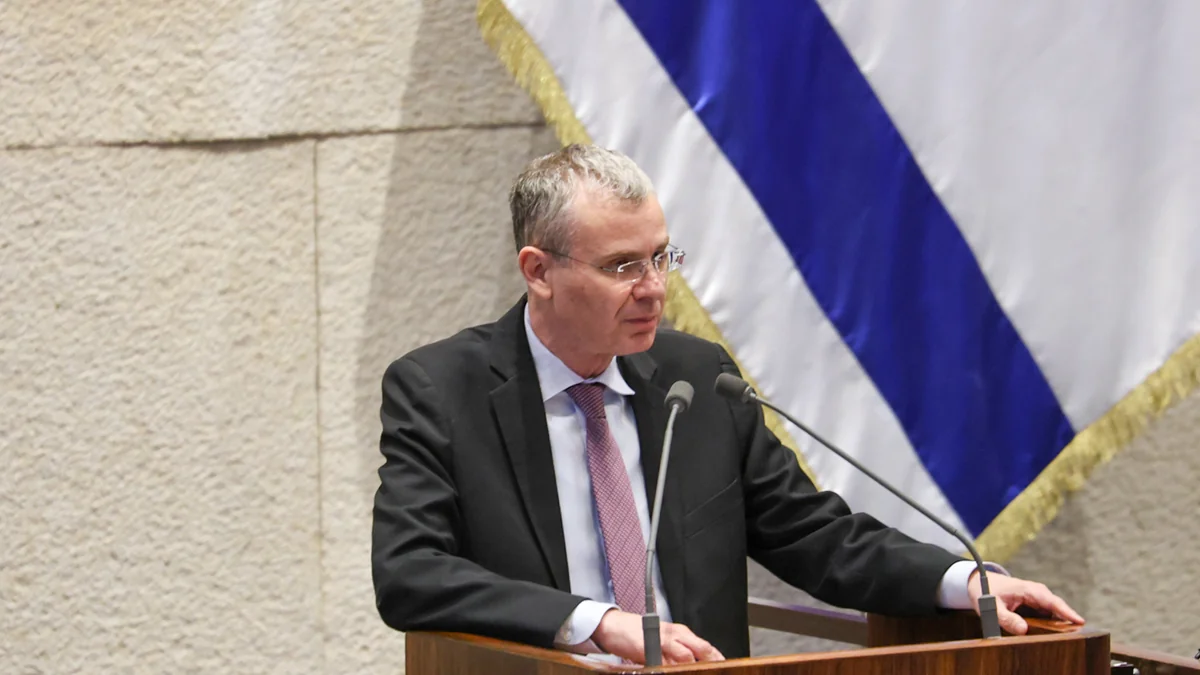
The Minister of Education ordered a report on the teacher shortage - but buried its conclusions
Minister of Education Yoav Kisch initiated an expert committee to address the teacher shortage, but a year after the report was submitted, its recommendations remain unimplemented. The report proposed national licensing exams, reduced classroom hours, and a consolidation of teaching colleges.
Minister of Education Yoav Kisch boasted about appointing a committee to address the teacher shortage - but did not publish its conclusions and ignored its recommendations.
A licensing exam for teachers similar to that for doctors, reducing teaching hours in front of the class, and a public campaign to improve the image of the profession - these are just some of the recommendations of the expert committee to examine the teacher training system that Minister of Education Yoav Kisch established himself. However, a year after the report was submitted to him, according to the committee members, the minister decided to "bury" it, did not convene discussions on the recommendations, and did not publish its content.
In February 2025, Minister of Education Yoav Kisch announced that in view of the severe teacher crisis, he was establishing the expert committee to examine the teacher training system. The committee was headed by Prof. Tzipi Livman, one of the most respected educators in Israel, alongside educators and academics. Before the start of the previous school year, Kisch received the report - but since then almost nothing has been done, according to the team.
The Crisis in Teacher Training
The report's conclusions reveal the depth of the crisis in education: there is an acute shortage of teachers for mathematics, science, English, and other subjects. The report showed that there is a deep disconnect between teacher training and practice, and that studies do not prepare students for challenges such as classroom management, dealing with parents, and integrating students with special needs. The report also pointed to a low academic level and low admission requirements in teaching colleges, which stem from the multitude of institutions that train teachers (about 30 different institutions). This creates wild competition for every student, which leads to lowering the admission threshold and compromising on quality.
Furthermore, the Ministry of Education does not have a national database that allows for monitoring of shortages and surpluses by subject and geographical area. The system suffers from alarming dropout and burnout rates - one in four new teachers leaves the system within five years, and in the last decade about 26,000 teaching graduates did not enter to work in classrooms at all.
Report Recommendations
Among other things, the report stated:
-
Teaching License: The committee recommends making the license to practice teaching legally conditional on passing a unified national licensing exam, which will test knowledge alongside pedagogical and managerial skills.
-
Reducing the burden: Reducing frontal teaching hours and examining a transition to a five-day school week. It was also recommended to use digital tools to reduce the burden on teachers.
-
Higher standards: Raising the threshold for admission to teaching and holding national screenings as a condition for admission. A public campaign to improve the image of the teaching profession.
-
Internship reform: Every intern will be assigned a senior teacher who will be compensated, and a system for accompanying teachers in the first two years will be established.
-
Consolidation: Reducing the number of teaching colleges, merging institutions, and establishing large-scale "academic centers" by region or sector.
Disregard for Committee Members
"The conclusions were submitted a year ago - and the committee members were not even invited to a discussion. It is a shame and a disgrace," says a source close to the committee members. "The recommendations were simply buried. The committee members did serious work and offered solutions to the teacher shortage. We didn't even receive a minimal thank you letter for the work. Everyone worked there on a full volunteer basis, with huge investment - and in return received complete disregard."
Response of the Council for Higher Education: "The committee's conclusions were presented to the management and the professional staff, and a meeting was scheduled to present them to the joint committee, headed by the chairman of the Council for Higher Education and the Director General of the Ministry of Education. After presenting the conclusions, they will be brought for discussion in the Planning and Budgeting Committee. The Minister of Education met with the head of the committee and thanked her and the committee members for their work." According to the head of the committee, Prof. Tzipi Livman, she was invited to a meeting only recently, and since she could not attend - a meeting was scheduled for another near date.