The saga of budget transfers to the ultra-Orthodox: Knesset demands Supreme Court non-intervention
After Supreme Court Justice Alex Stein froze coalition transfers made during the parliamentary recess, the Knesset submitted a formal response. It argues that the Finance Committee meeting was convened legally, in accordance with the Speaker's authority and established parliamentary practice.
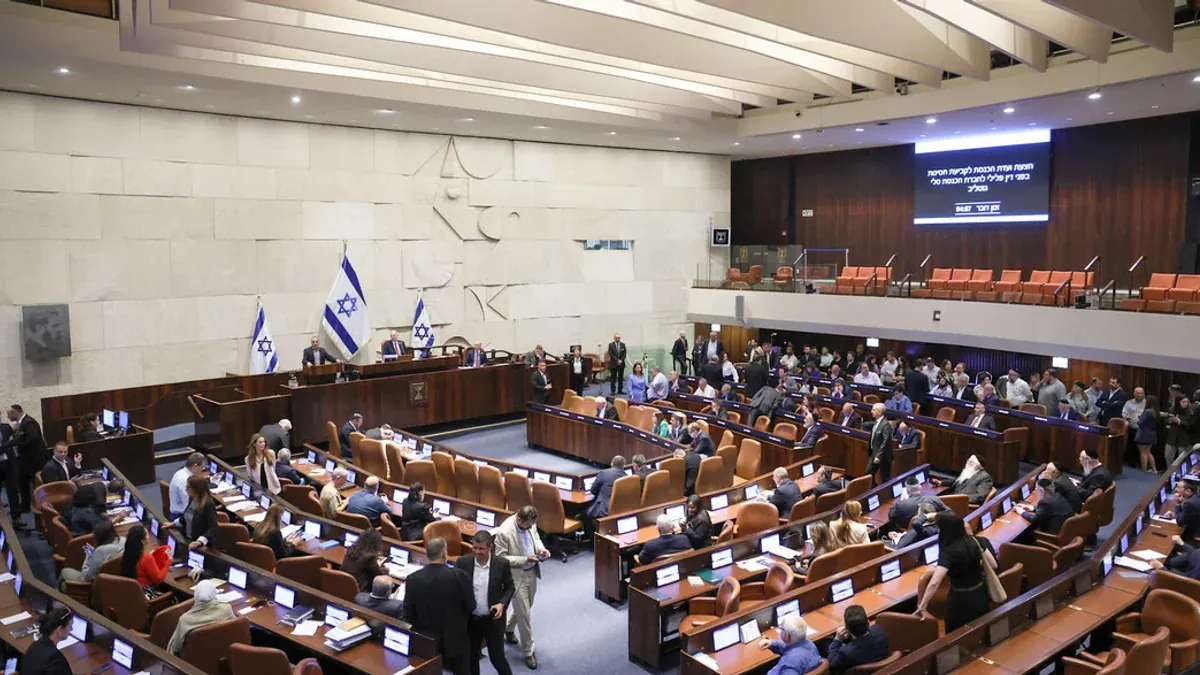
The Knesset submitted its response today, Sunday, to the Supreme Court regarding the petition against the Finance Committee meeting held during the election recess. The document argues that the committee's convening was legal, consistent with the authority of the Knesset Speaker, and in line with practices followed during previous election recesses.
The petition, filed by the organization Hiddush and MK Naama Lazimi through attorney Yifat Solel, challenges the Finance Committee meeting of August 4, during which six budget transfer requests were approved. The following day, the Supreme Court issued a temporary order delaying the execution of the transfers, with one exception.
According to the document, on July 29, the committee held a meeting where 33 budget requests were presented. The meeting began at 9:00 AM and concluded at 7:30 PM at the instruction of the Knesset Legal Advisor; during this time, the committee discussed 23 requests and approved 22. The committee chairman, MK Hanoch Milwidsky, requested a follow-up discussion the next day on the 13 remaining requests and three revision requests. The Knesset Legal Department reduced the list to six requests, but the Consent Committee refused to approve the discussion following the opposition of the opposition coordinator, MK Merav Ben-Ari.
At this stage, Milwidsky turned to an alternative route under section 112(b) of the Knesset regulations, which allows Knesset Speaker Amir Ohana to authorize a committee meeting during recess in "special cases." Ohana approved the meeting based on the Legal Department's position and even authorized shortening the advance notice to three days instead of four, contrary to the Knesset Legal Advisor's position.
The Knesset's response details that the approved requests included:
-
Internal adjustments of approximately 6 billion shekels in the defense budget.
-
Approximately 85 million shekels for contractual obligations to teachers' unions.
-
Approximately 268 million shekels in coalition funds for Torah institutions and the religious education administration.
-
Approximately 800 million shekels for the implementation of government decisions, including the "Summer Vacation School" program.
-
Approximately 78 million shekels for the Ministry of Religious Services, intended, among other things, to pay a 700,000 shekel debt to Microsoft to prevent the shutdown of rabbinical court computer systems.
The Knesset rejects the claim that the committee's decision undermines the Speaker's authority, arguing that the regulations hold constitutional validity under the Basic Law: The Knesset. The response further notes that during the 24th Knesset's election recess, the Speaker approved three Finance Committee meetings via the same route after the Consent Committee refused. In conclusion, the Knesset argues that this is a strictly intra-parliamentary decision with extremely limited scope for judicial intervention, and therefore the petition should be dismissed.