The country's largest insurance company publishes reports: these are the numbers
The core profit of Phoenix grew 10% above expectations, asset management activity jumped 36%, and the company is returning 62% of the half-year profits to shareholders. Phoenix is also increasing its share buyback program and announces that it will update its 2028 targets upwards.
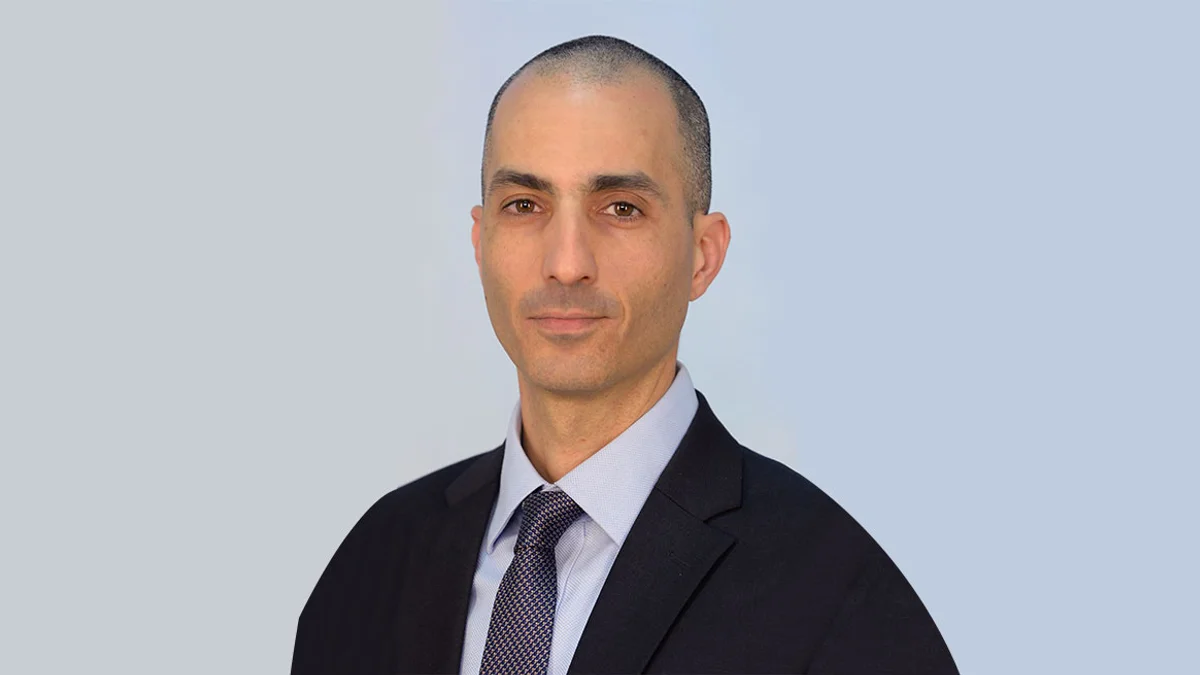
Phoenix Finance, managed by CEO Eyal Ben Simon, published results for the first half of 2026 with a total profit of 1.574 billion shekels and a return on equity of 26.1% — among the highest in the industry.
But the figure that catches the eye is the growth rate of asset management activity, which jumped 36% in the half-year and accelerated to 48% in the second quarter. The performance was so strong that the company announced its intention to update its strategic targets for 2028 upwards.
The secret of Phoenix lies in breaking down the sources of profit. Core profit — the metric that neutralizes capital market noise and reflects current profitability — grew 10% in the half-year to 1.452 billion shekels, above the company's own forecasts.
Hidden within this number are two strong trends: insurance activity contributed 873 million shekels and remained stable as expected, while asset management activity (investments, pension and provident funds, agencies, payments, and financing) jumped to 579 million shekels. This is exactly the strategy of Phoenix — to shift the center of gravity towards activities with high profit multiples and low capital consumption, whose profits are less dependent on the stock market.
A point that requires clarification: the total profit of Phoenix decreased slightly compared to the corresponding half-year last year (1.496 billion shekels). This is not a business weakening — the decrease is almost entirely due to non-operational effects, mainly interest rate changes, which offset part of the profit from investments. In terms of current activity, the company actually grew.
In insurance, Phoenix is in the midst of implementing the "stochastic model" in life insurance — an actuarial move that is supposed to add between 1.2 and 1.5 billion shekels to the CSM balance (the pool of future profit accumulated in policies) and contribute about 100 million shekels to core profit before tax as early as 2027. For the long-term investor, this is profit that has not yet entered the books but is expected to enter.
Phoenix stands out in the volume of distribution: 972 million shekels in the half-year, about 62% of the period's profits — far beyond the official policy of at least 55%. Of these, 720 million shekels are cash dividends and 252 million shekels are in share buybacks. At the same time, the company increased the share buyback program for 2026 from 300 to 400 million shekels. Since 2020, Phoenix has distributed more than 5 billion shekels.
Phoenix manages 658 billion shekels, mainly public savings and pensions, and is building a full financial platform under one roof — investments, savings, insurance, and credit — with about a million users on the app. As the customer base expands, the potential for cross-selling and management fee income grows.
The caveat: a significant part of the profitability still relies on a positive capital market, and the comparison with the industry shows that Phoenix's return on equity (26.1%) is higher than that of Clal and Migdal but lower than the exceptional return of Menora. For the saver, Phoenix's transition to a capital-light and fee-based model is a positive sign of profitability stability over time.
Eyal Ben Simon, CEO of Phoenix Finance, said:
"Phoenix continues to demonstrate strong performance and generate strategic growth at a rate higher than expected, even in a competitive market and a challenging business environment. The half-year results reflect the continuation of the trend of changing the activity mix with an accelerated growth of 36% in asset management activities with high multiples and high growth rates, and we plan to adjust the company's targets in light of the increase in growth."
The company continues to lead and generate competition in financial services in Israel with accelerated growth of investment and asset management activities, with advanced products and services, a large customer base, hybrid distribution of direct and partner channels, growth in cross-selling, advanced data capabilities, digitization, and personalization to customer needs.
We are integrating the activities we recently acquired and expect significant synergy realization later this year. The company is constantly examining opportunities for additional transactions. At the same time, we are working to expand the capabilities of the Phoenix platform. We have established an international reinsurance platform, and in addition, Phoenix continues to accelerate investments in technology and the development of capabilities in digitization, data, and artificial intelligence while focusing on improving the customer experience. These investments allow us to establish competitive advantages, expand the circle of customers and the value produced for them, and accelerate growth.
The group generates quality cash profits and distributes 970 million shekels, representing 62% of the group's profits in the half-year, as cash dividends and share buybacks. In addition, we increased the annual buyback program to 400 million shekels.
We are happy about the international recognition that is reflected, among other things, in the expansion of the company's international investor base and in international ratings of both Phoenix Finance and the insurance company. These provide us with the flexibility to continue and invest in growth and expansion of capabilities, in accelerating mergers and acquisitions, and in leading competition in the market, while managing capital responsibly and creating high value for shareholders.