The move Benjamin Netanyahu is willing to accept is Donald Trump's nightmare scenario
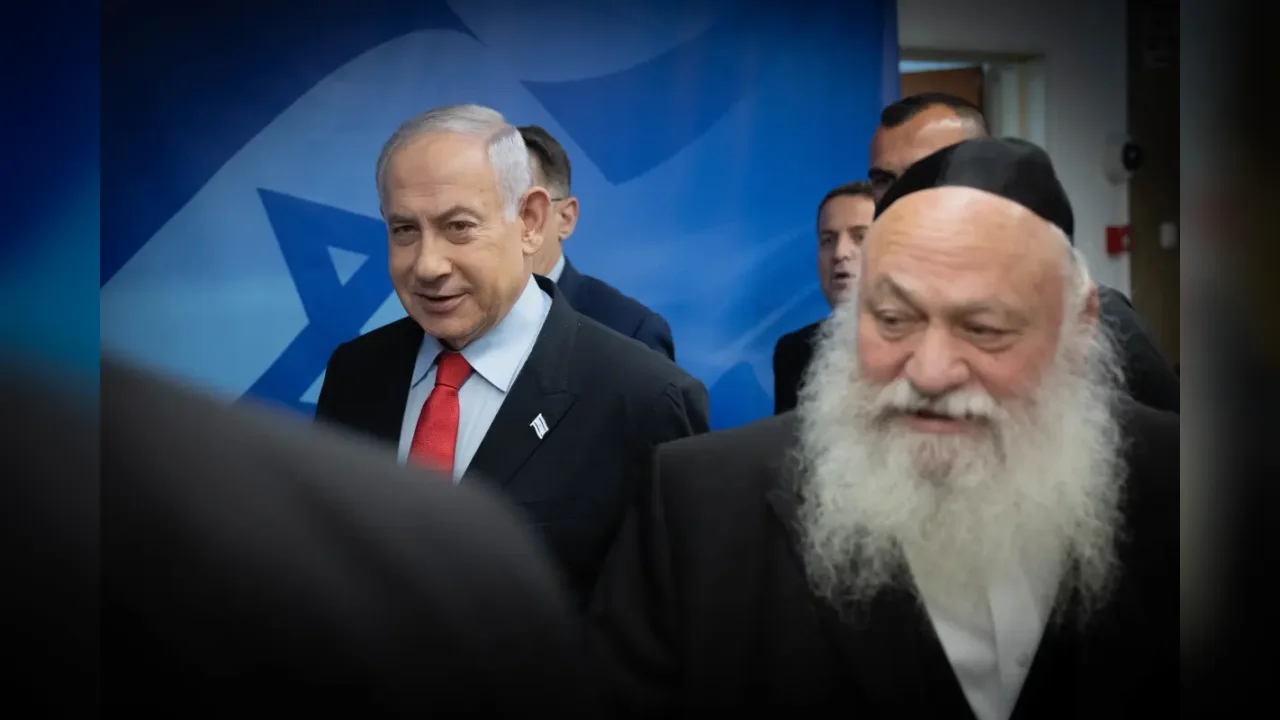
Prime Minister Benjamin Netanyahu is willing to go for another round of elections if that is the last option for him to remain in power. However, the White House is particularly concerned about such a scenario.
Prime Minister Benjamin Netanyahu's political situation further complicates American calculations. His current coalition is far from the 61 seats needed to form a government. From his perspective, even preventing a majority for the rival camp might be enough: if no one succeeds in forming a government, he will remain in office as prime minister of a transitional government until further elections. This possibility is particularly worrying to Washington, because it means more months during which Donald Trump's regional agenda might have to wait for Israeli politics.
Donald Trump also has personal political leverage over Netanyahu. So far, he has refrained from giving him the public support in the elections that the prime minister had hoped for. When they met at the White House about two weeks ago, Donald Trump even asked him directly about his standing in the polls. Netanyahu hesitated, and one of his advisors rushed to answer the president that he is "winning." The data tells a different story. On four different occasions in recent weeks, Donald Trump was asked if he supports Netanyahu, and in all of them, he evaded expressing explicit support.
This avoidance has additional significance because of the history between the two. Donald Trump has already proven in the past that he is willing to put his full weight into an Israeli election campaign: days before the April 2019 elections, he recognized Israeli sovereignty over the Golan, a move he himself later boasted helped Netanyahu. This time, at least for now, he is keeping this card to himself.
US President Donald Trump at the NATO summit in Turkey, against Iran (Photo: DRM news)
The Israeli opposition also understands the value of this card. Sources in the circles of Gadi Eisenkot, Naftali Bennett, and Yair Lapid have in recent months conveyed messages to Donald Trump's people, through acquaintances, donors, and political allies, asking him to remain neutral in the elections. This activity shows how much Donald Trump's position has become an element of the Israeli election campaign, even before he decided whether to intervene in it.
Personal relations between the two have not been severed. American officials describe Donald Trump as someone who likes Netanyahu but is increasingly frustrated by his decisions. Recently, Donald Trump was even quoted in private conversations as saying that Netanyahu is "his own worst enemy." At the same time, support for Israel as part of Donald Trump's policy has weakened following the agreement with Iran and the restrictions the administration imposed on Israeli freedom of action in Iran, Gaza, Syria, and Lebanon. Donald Trump also has his own political limitation: too aggressive an intervention in the elections in Israel could damage his standing among a public that in the past gave him almost automatic support.
Lebanon is not the only arena where this gap is being tested. In Gaza, the White House seeks to promote the Peace Council plan; in Syria, Washington is investing in President Ahmad al-Sharaa, while in Israel, harsh statements are heard against him; and over Iran, the question still hangs whether the crisis will end in an agreement or another round. Jared Kushner, Nickolay Mladenov, and Tony Blair are arriving in the region this week to promote the move in Gaza. From their perspective, this is expected to be the first issue on the agenda with Netanyahu. An Israeli action in one of these arenas could complicate an American move in another.
There is currently no basis for the assessment that Donald Trump is about to become an adversary of Israel or Netanyahu. The risk for the prime minister is that an American president convinced that the time for deals has arrived will begin to attribute to Jerusalem an increasing share of the responsibility for their delay. Donald Trump still holds other cards that Netanyahu may need as the elections approach — from expressing public support to another move regarding President Isaac Herzog on the issue of a pardon. For now, he is not using them. As the elections approach, Netanyahu's room for maneuver in the face of American demands also narrows.