"The yellow line" moves west: IDF installs concrete blocks in Gaza
The IDF continues to push Hamas back, expanding its control in the Gaza Strip. The placement of concrete blocks in western areas reduces the space available for Palestinian movement and triggers new waves of displacement.
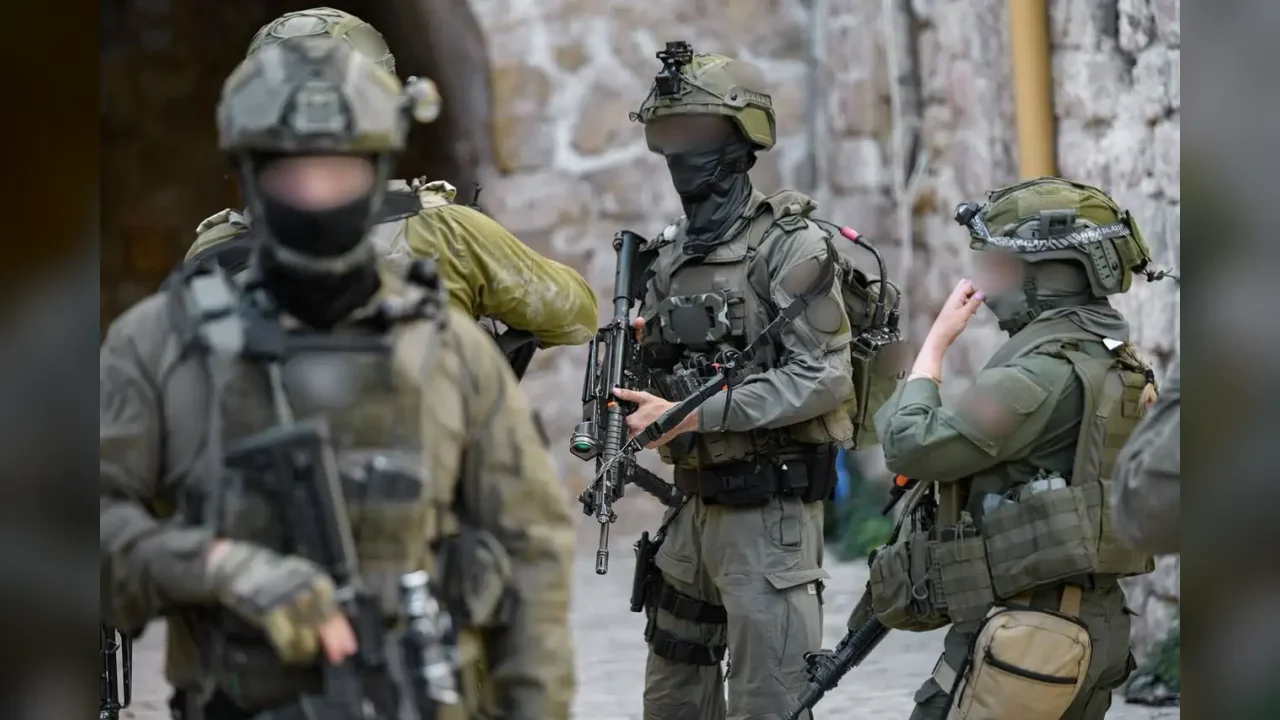
Palestinian sources report that IDF forces continue to shift the "yellow line" within Gaza City by placing concrete blocks in more western areas, thereby restricting Palestinian movement. Such actions were observed over the last 24 hours in the Tuffah neighborhood, east of Gaza City, near the Salah al-Din axis.
In recent weeks, the IDF Southern Command has been systematically pushing Hamas back within the Gaza Strip. As early as May, Prime Minister Benjamin Netanyahu noted that Israel controls approximately 70% of the Strip's territory. This advance deep into the territory increases pressure on Hamas and enhances the security of the Gaza envelope communities. The operation to clear areas of weapons and terrorist infrastructure continues alongside targeted killings of senior Hamas officials, serving as leverage in ongoing negotiations.
"Last night, the army moved the yellow blocks in an area where many displaced families are staying," described a source near the Salah al-Din axis. "Many were forced to flee as the area became extremely dangerous, similar to what happened in Shuja'iyya and Zeitoun." Another source confirmed that the blocks are moved from east to west three to four times a week. The Salah al-Din axis, the main artery of the Strip, has effectively become a border line.
According to local residents, the territory east of the Salah al-Din axis is now considered under full IDF security control. "The army is not always physically present at every moment, but holds dominant positions from which it can reach the axis in minutes," an eyewitness explained. One of the concrete blocks featured an inscription in Arabic: "Khalil al-Hayya, come remove the stone," directed at the new Hamas leader. This dynamic movement of lines causes deep concern among residents, forcing thousands to seek shelter in the western part of the Strip.