Playing with fire
The security paradox of Judea and Samaria makes the arena particularly complex: precisely when Palestinian terrorism is on a downward trend, Jewish nationalist crime is rising, and the friction creates a threat that could ignite the area and create a cycle of revenge.
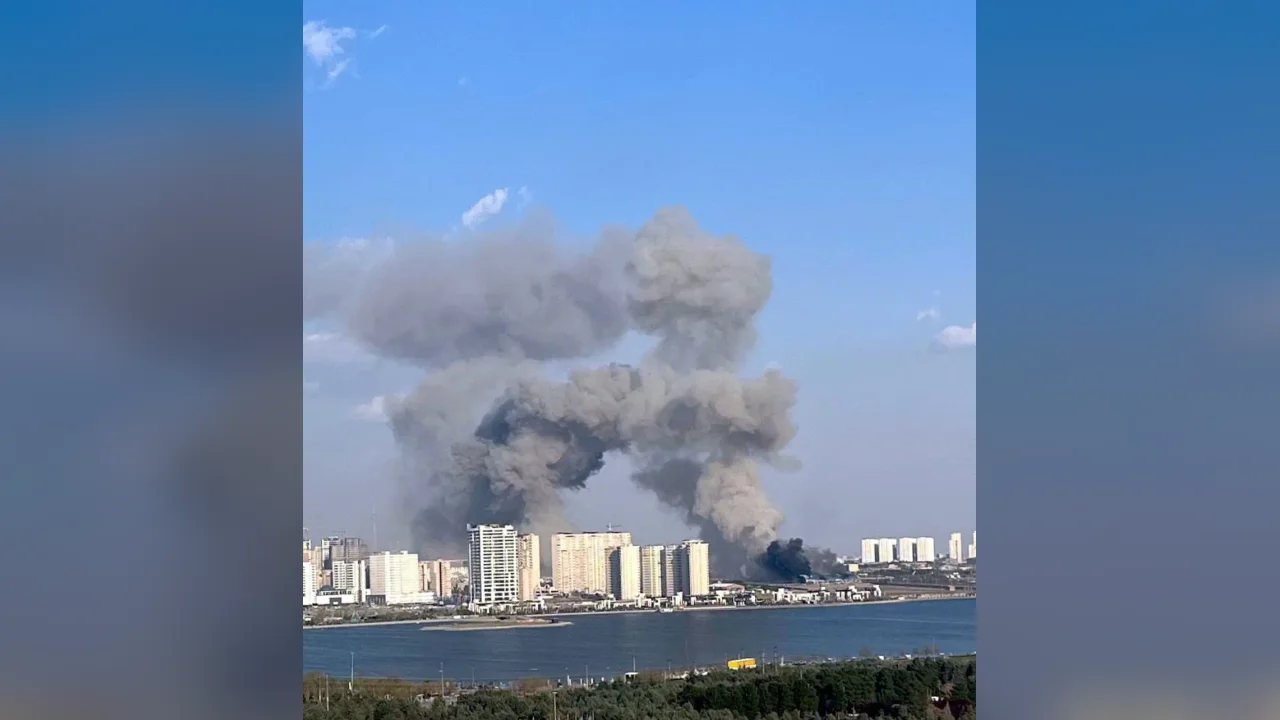
The Judea and Samaria region is at a point of unprecedented security and operational boiling. In my estimation, the probability of a significant explosion today is higher than the probability of returning to fighting against Iran — not because Palestinian terrorism has necessarily returned to the peaks of previous years, but because the combination of the security reality, the dramatic change in the settlement map, the shortage of forces, and the possibility of a cycle of revenge between Jews and Palestinians creates explosive material here that is very difficult to control.
The severe shooting attack on Friday on the outskirts of the village of Tel, in which a member of the Gilead Farm standby squad, Staff Sergeant (res.) Benyahu Malet, and the battery commander in the Artillery Corps, Major Yuval Ezra, were murdered, was the match that ignited the chain. Within hours, the region moved from fighting Palestinian terrorism to fearing bilateral ignition: a sequence of Jewish terror incidents and 'price tag' actions, burning of mosques and vehicles, and spraying the graffiti 'Revenge for Benyahu' in the village of Kusra. This is exactly the scenario the security establishment fears: not just another attack and another arrest, but a cycle of revenge. An attack that leads to a 'price tag' action, which leads to another attack, and so on. Once this mechanism starts working, it is very difficult to stop it.
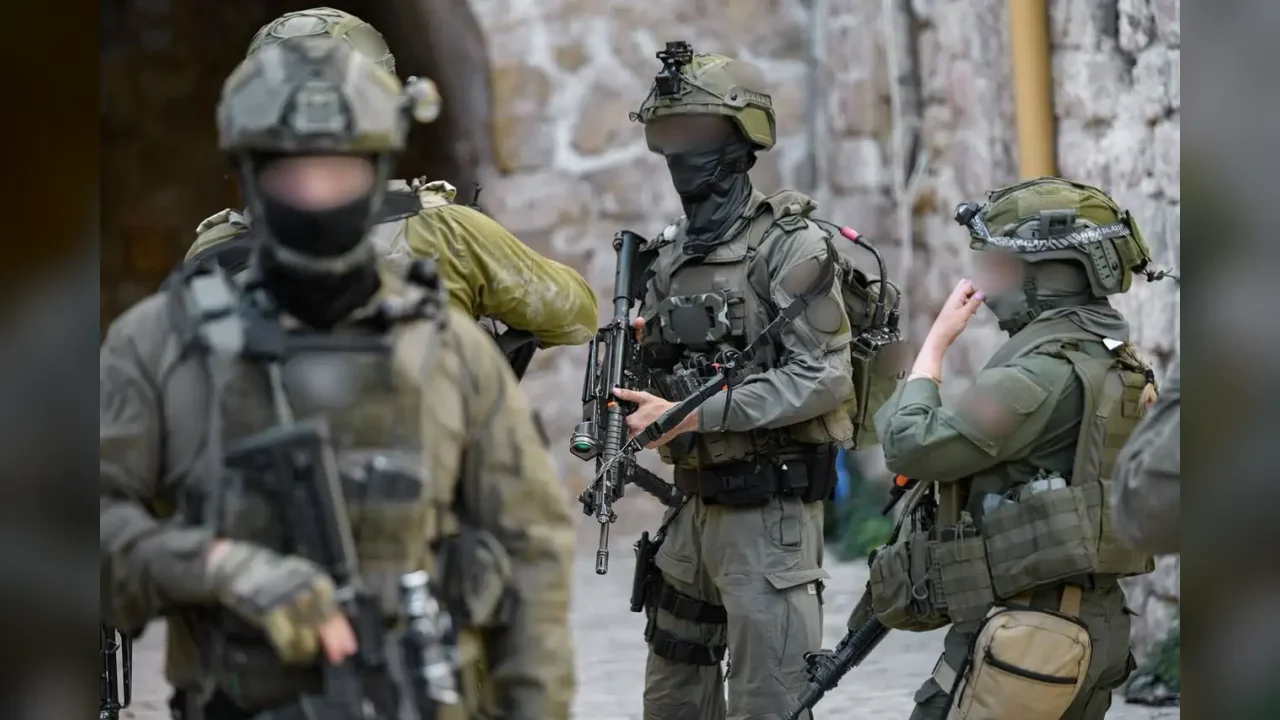
In the IDF, they understand this well and therefore are trying to cool the area. 26 battalions — an unprecedented number, about half of them regular — are currently in Judea and Samaria. The Central Command has stopped the entry of Palestinian workers into the settlements, except in industrial zones, with the goal of creating separation and reducing friction. At the same time, forces from the Samaria Brigade completed the sealing of the home of the terrorist from the attack in the village of Tel in preparation for its demolition.
Without breathing room, but this is exactly where the bigger problem begins: to prevent ignition in Judea and Samaria, you need force. A lot of force. And the IDF is currently in a situation where almost all sectors are open — Gaza, Lebanon, Syria, and Judea and Samaria. Whoever goes out for a refresh moves to Judea and Samaria instead of somewhere else. There is almost no breathing room. Over the weekend, the army was forced to take companies from the training stage in the Commando and Kfir brigades to reinforce the sector. This is an understandable decision in an emergency, but it illustrates the cumulative price of the long war: the army is using forces that are supposed to train, improve, and build for the next war to close operational holes here and now. And this is no longer just a matter of manpower. It is a matter of force buildup. The IDF is almost unable to train in the required volumes because it is constantly busy manning the sectors. In the end, the army may find itself with a great many fighters performing tasks, but with fewer and fewer units receiving the time needed to prepare for them.
Into this equation enters the biggest change the region has undergone in recent years: the expansion of settlement. The map of Judea and Samaria is changing dramatically. The establishment of 80 settlements was approved, 34 of which have already been established. Alongside this, more than 100 agricultural farms and a similar number of outposts were established, some of which are undergoing legalization processes. What began in the past as an initiative of 'individuals on the hill' has largely turned into a large-scale move that changes the geographical layout and the surface area where Israel is required to protect its citizens. And this is a point that is important to understand: every new settlement is not just a point on the map. It requires protection. It creates traffic routes, friction points, security tasks, and a defense routine. As the Israeli space expands, so does the space that the IDF is required to protect. Therefore, the debate about Judea and Samaria is not just political. It also has direct military significance. When the IDF is required to protect a larger space while managing a multi-front war and dealing with a manpower shortage, the question is not just how many battalions it has — but how many tasks can be imposed on them before they are worn out.
And from here comes one of the most worrying data points in the current situation: alongside the sharp decline in the scope of Palestinian terrorism, there is actually a significant increase in Jewish nationalist crime. According to data from the security establishment and the Judea and Samaria District, in the first half of 2026, 660 nationalist crime incidents were recorded — an increase of 63% compared to the second half of 2025, in which 405 incidents were recorded. The severity of the incidents has also increased: six Palestinians were killed and 140 injured in the first half of the year, compared to zero killed and 82 injured in the previous half. At the same time, 45 incidents of intentional assault on IDF soldiers and Border Police officers by extreme right-wing activists were recorded.
This is the security paradox of Judea and Samaria: precisely when Palestinian terrorism is on a downward trend, Jewish nationalist crime is rising. And instead of the decline in terror allowing for a reduction in tension, a different kind of threat is created, which could ignite the area from within and create a cycle of revenge. On the other hand, one must not ignore the other side of the equation. Since the beginning of the year, three Israelis have been murdered in terror attacks in Judea and Samaria. In 2025, the number was 21 Israelis, and in 2024, more than 30. That is, there is a decrease in the number of dead, but it does not mean that the region has calmed down. On the contrary: friction remains high, incitement continues, and the ability of a single event to ignite a broad outbreak is very much present. Added to this is the security concern regarding the arming of dozens of local Palestinian 'guard committees,' which could turn from a local defensive factor into an armed and significant component and change the friction dynamics so that the space becomes even more complex operationally.
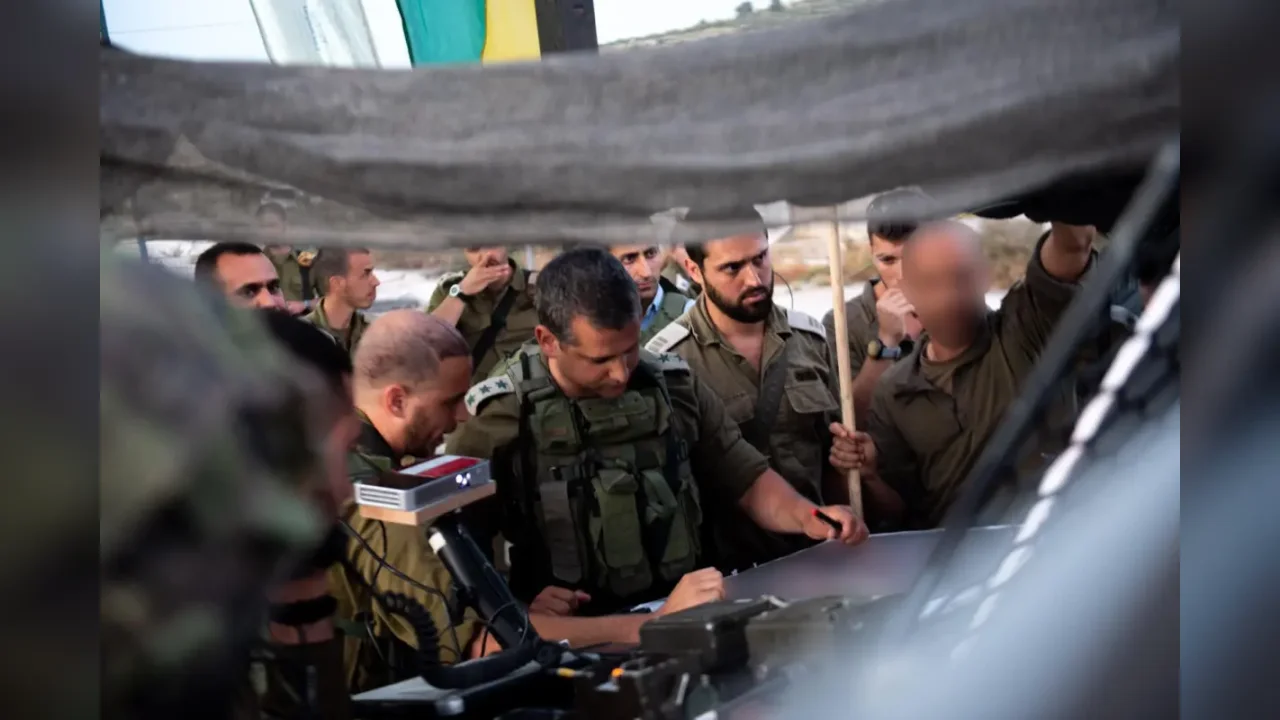
And within all this, the claim that the problem is that IDF commanders are not offensive enough is not serious in my eyes. At the head of the system today are the Central Command commander, Major General Avi Bluth, a graduate of the Eli pre-military academy, the commander of the Judea and Samaria Division, Brigadier General Kobi Heller, who grew up in Karnei Shomron, and the head of the Shin Bet, David Zini. It is hard to argue that these are people who do not know the reality or do not understand the need for forceful action against terror. And if these three senior officials — who know the settlement, the territory, and the threats well — do not identify the danger of October 7 in Judea and Samaria, as certain elements on the right claim, then who is supposed to identify it? Precisely because they know the territory up close, their responsibility is to identify the early warning signs, act against Palestinian terror with determination — and equally prevent deterioration that will lead to a cycle of revenge and broad ignition.
The problem is more complex: the IDF needs to fight Palestinian terror, prevent Jewish terror, protect the expanding settlement, and prevent a cycle of revenge that could ignite the Palestinian street — and all this with the same force structure, more or less. Therefore, the 26 battalions in Judea and Samaria, half of which are regular, are not just an impressive figure: they are also a warning sign. The army is forced to use training forces to close gaps, and the meaning is that the system is already in a state where every reinforcement in one sector comes at the expense of something else. The paradox is that Judea and Samaria may not currently be the arena where the most Israelis are killed, but it can certainly be the arena where the next ignition begins. The danger is not necessarily another attack: the danger is the connection between an attack, revenge, expanding settlement, daily friction, weapons accumulating on both sides, and a shortage of forces that can separate them. In the Middle East, sometimes a big war starts from a small event. In Judea and Samaria, the IDF's challenge is to ensure that the next match does not meet the fuel vapors that are already in the area.