Jordan Launches $6.6 Billion National Water Conveyor Project in Aqaba
Jordan has launched its $6.6 billion National Water Conveyor project in Aqaba, aiming to secure 40 percent of its drinking water through massive desalination and pipeline infrastructure amid strained water ties with Israel.
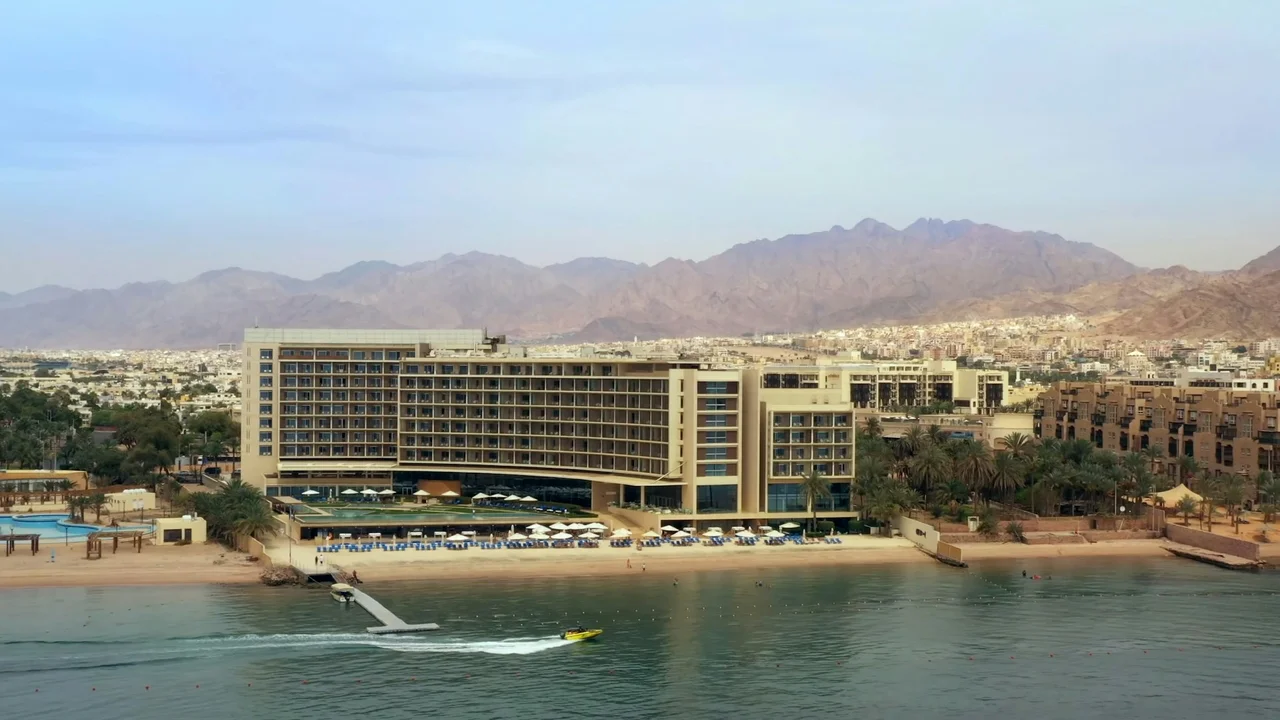
Jordan has officially launched its ambitious National Water Conveyor project in Aqaba, with Prince Faisal bin Hussein inaugurating the massive undertaking alongside Prime Minister Jafar Hassan. Costing approximately $6.6 billion, the strategic venture aims to supply roughly 40 percent of the Hashemite Kingdom's drinking water needs by desalinating water from the Gulf of Aqaba and pumping it to various regions. Construction is projected to span four years, with commercial operations and water pumping scheduled to commence during the final quarter of 2030.
Water and Irrigation Minister Raed Abu Al-Saoud stated that the infrastructure will annually deliver 300 million cubic meters of desalinated drinking water. The project entails laying a 417-kilometer pipeline network stretching from Aqaba to Amman, engineering complex pumping systems capable of lifting water up to 1,100 meters above sea level, and integrating solar energy facilities to supply about 30 percent of the project's total electricity demand. Abu Al-Saoud emphasized that the initiative reflects strong international investor confidence in Jordan and highlights the kingdom's capacity to secure large-scale funding and build sustainable partnerships.
Strategic Scope and International Backing
Prime Minister Jafar Hassan highlighted the magnitude of the undertaking on social media, describing it as the largest strategic venture in the kingdom's history and among the most significant water desalination and conveyance efforts globally.
"We are proud of this historic and vital step, which advances water security and our independence in this sector—a crucial contribution to the future of our esteemed nation and generations to come."
Jordanian officials expressed deep gratitude to key international partners that supported the realization of the project, including the USA, the European Union, Germany, and France, alongside various international financial institutions and global investors. The initiative is being advanced by a consortium led by the lead developer Meridiam and technical partner Suez, with full ownership scheduled to revert to the Jordanian government 26 years after operations begin.
Context of Water Independence
The launch of the mega-project unfolds against the backdrop of complex water dynamics involving neighboring Israel. Under the 1994 Israel-Jordan peace treaty, Israel is obligated to transfer 50 million cubic meters of water annually to the kingdom, but a separate agreement supplying an additional equal volume at a discounted rate has remained unrenewed since November 2025. This diplomatic friction underscores Jordan's urgent drive to reduce external reliance on water resources. The kingdom previously announced in November 2023 that it would not advance the planned "Green-Blue Jordan" water-for-energy pact with Israel, under which Amman was slated to receive desalinated water in exchange for solar-generated electricity.