NASA Telescope Captures Rare Cosmic Event as Giant Star Swallows Companion
NASA's James Webb Space Telescope captured a rare cosmic event where a red giant star swallowed a smaller companion in the Andromeda galaxy, culminating in a powerful explosion and offering unprecedented insights into stellar mergers.
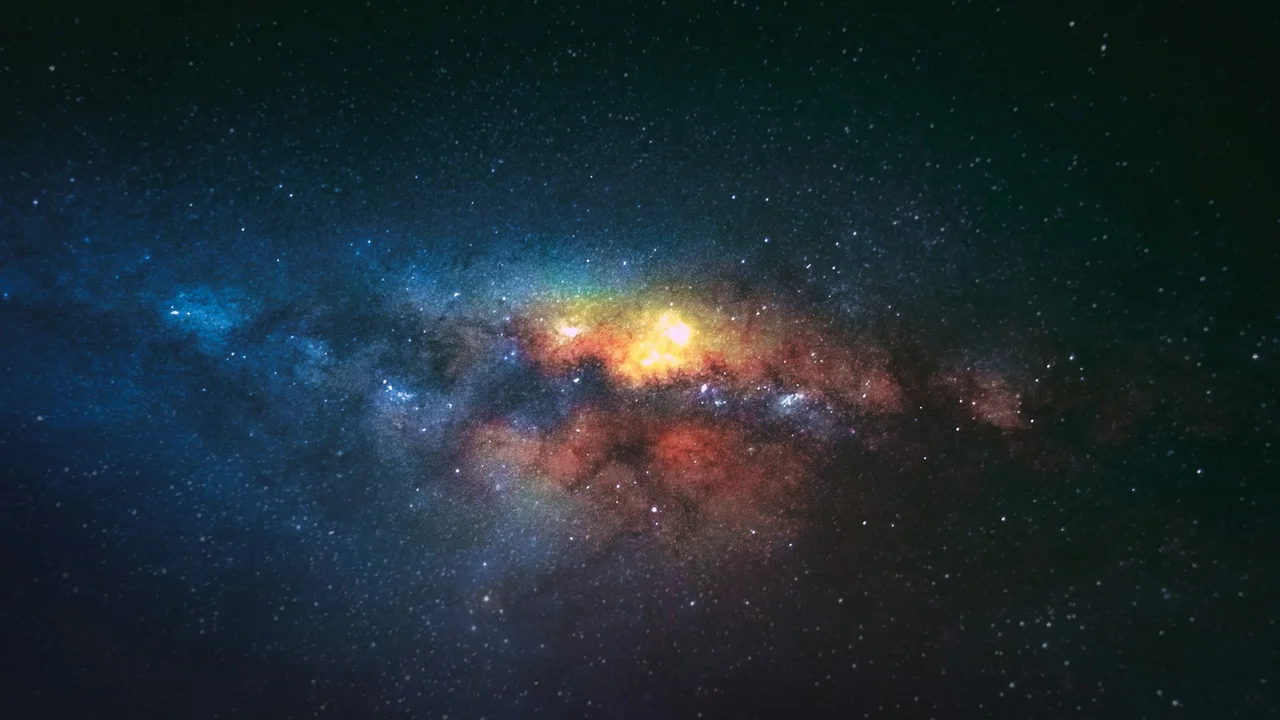
At the outer edges of the Andromeda galaxy, astronomers have recorded a rare cosmic event in which a massive red giant star gradually swallowed a smaller companion star, culminating in a powerful explosion. Designated scientifically as AT 2025abao and nicknamed "Bao", the event marks the first time scientists have successfully tracked such a stellar merger in detail from its early warning signs to its violent conclusion, utilizing observations from NASA's James Webb Space Telescope.
The primary star, dubbed "Big Bao" by researchers, is a red giant with a mass seven times that of our Sun, a radius 350 times larger, and a luminosity 18,000 times higher. Orbiting this behemoth was a much smaller star possessing approximately 70 percent of the Sun's mass. For millennia, the two bodies existed in a binary system, but as the larger star expanded and swelled, its smaller companion began penetrating its outer gaseous layers.
Mechanics of the Stellar Merger
The incursion generated friction and drag that decelerated the smaller star while simultaneously expelling stellar material into space. Researchers discovered that after the onset of this final phase, the smaller star required only seven orbits, lasting roughly seven years, to reach the giant's core and merge completely. Historical data from the NEOWISE space telescope first flagged anomalies in the system's brightness in February 2023, followed by mounting emissions of dust and gas.
A dramatic outburst peaked on October 17, 2025, surging in luminosity and temperature within a single week rather than the years typically projected for such massive stellar events. On December 24, 2025, the James Webb Space Telescope turned its infrared instruments toward the system 47 days past peak brightness, penetrating surrounding dust clouds to reveal centuries of ejected stellar material and energy dynamics.
Broader Implications for Astrophysics
Published in the scientific journal Nature, the findings shed new light on common envelope evolution, a phenomenon where an expanding star engulfing its partner either merges or survives as a tight binary. Understanding these dynamics is crucial for explaining the formation of black holes, neutron stars, and gravitational-wave sources.
While questions remain regarding the internal restructuring and future trajectory of the newly unified star, the discovery showcases advanced observational capabilities. By combining historical data with the Webb telescope's cutting-edge infrared technology, researchers can now examine violent cosmic processes in real-time as they shape the life and death of stellar bodies.