Israeli Navy Expands Missile Fleet by 30 Percent Amid Mediterranean Tensions
The Israeli Navy is expanding its missile corvette fleet by 30 percent to address regional maritime challenges, including routine operational friction with Turkey near Cyprus and Greece.
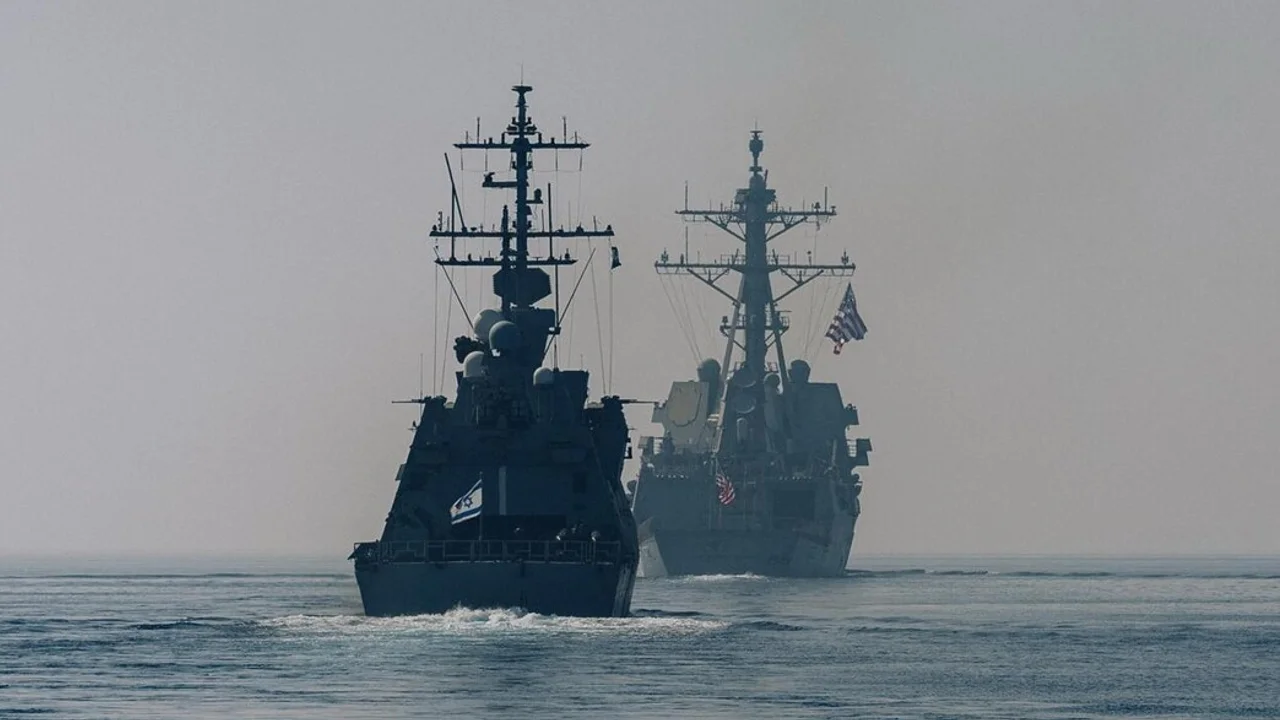
The Israeli Navy is undergoing a dramatic force buildup program to expand its missile corvette fleet by approximately 30 percent in the initial phase, transforming the maritime branch into a strategic arm amid evolving regional challenges. Flotilla 3 currently operates 14 missile corvettes from the Nirit, Sa'ar 5, and Sa'ar 6 classes. To address rising threats, expanding operational missions ranging from the defense of natural gas rigs to operations in distant theaters, and the decision to elevate the service's strategic profile, authorities have approved a plan to increase the corvette inventory to 18 vessels.
The expansion will be driven by the acquisition of the new Reshef-class combat ships, slated for delivery starting in 2029, alongside a decision to retain several veteran Nirit-class vessels in active service. A senior naval official noted that multi-year planning discussions already contemplate further expanding the fleet to 21 vessels. Beyond quantitative growth, the navy has developed a mission-deck concept that integrates unmanned aerial vehicles and drones tailored to specific operational requirements, granting the force independent land-strike capabilities and complete operational autonomy.
Maritime Friction with Turkey and Strategic Deterrence
Operational friction has escalated with the Turkish Navy, particularly within the exclusive economic zones of Cyprus and Greece, prompting naval leaders to expand the missile ship fleet. Israeli naval vessels patrol the outer edges of these economic zones to delineate clear operational boundaries for Turkish warships, frequently navigating in close proximity while maintaining safe distances. Turkey, exhibiting regional ambitions and challenging international maritime borders, engages in frequent maritime encounters with Israeli patrols nearly every week.
Despite numerical disadvantages in raw hull counts compared to the Turkish fleet, a senior naval official emphasized the qualitative superiority of Israeli forces:
"When you measure military strength in dry numbers, in the number of corvettes and submarines against the Turkish fleet, we are in a bad place. But the numbers do not tell the whole story. By combining intelligence, staff planning, and operational firepower, the Israeli Navy is dozens of times above any other fleet in the region. We know how to extract much more from every single vessel."
While the Israel Defense Forces officially classify Turkey as a pivot state rather than a direct enemy, the ongoing friction is managed through controlled military maritime diplomacy designed to demonstrate resolve without triggering escalation. Missile corvettes maintain a visible presence in contested sectors to enforce red lines.
Joint Drills and Regional Alliances
As part of tightening strategic alliances in the Eastern Mediterranean, Flotilla 3 recently participated in landmark joint exercises with regional partners. For the first time, the Israeli Navy and the Hellenic Navy conducted a specialized strike drill involving live missile fire and coordinated target engagement. The Commander of the Israeli Navy, Vice Admiral Eyal Harel, and the Chief of the Hellenic Navy, Admiral Dimitrios Kataras, observed the exercise aboard the command ship to synchronize strikes in real time.
Concurrently, a large-scale maritime search and rescue exercise was conducted off the coast of Cyprus aboard the INS Sufa in cooperation with the Cypriot Joint Rescue Coordination Center. The drill focused on emergency response, natural gas rig defense, boarding simulations, firefighting procedures to prevent ecological disasters, and real-time intelligence sharing. Through fleet expansion, enhanced strategic cooperation with Greece and Cyprus, and calibrated deterrence, the navy aims to secure Israel's standing as a dominant regional maritime power and ensure the continuous protection of vital trade routes.