IDF 'Mosquito Procedure' Investigation Sparks Intense Public Debate
An investigative report on the IDF's battlefield "Mosquito Procedure" in Gaza has sparked intense public debate in Israel, forcing a reckoning over wartime improvisation, military ethics, and the role of public broadcasting.
The IDF ground maneuver in Lebanon commenced on September 30, 2024, as part of Operation Northern Arrows. Within slightly more than 24 hours, the military sustained eight fatalities: six combatants from the 98th Division and two from the Golani Reconnaissance Unit. These casualties came from elite units that had previously accumulated extensive combat experience in Gaza. "Lebanon behaves differently than the Strip," an officer participating in the fighting remarked at the time. "We will have to study Hezbollah and make adjustments."
Warfare is fundamentally a learning competition where the side that adapts to the enemy faster secures the advantage, a principle reiterated by IDF commanders in virtually every briefing over the past three years. This dynamic environment birthed the informal battlefield practice known as the "Mosquito Procedure", which became the subject of a controversial investigative report broadcast on the television program Zman Emet and subsequently sparked intense public debate.
Battlefield Improvisation and the Genesis of the Procedure
As highlighted in the investigative report, the military was never originally structured for a full-scale conquest of the Gaza Strip and consequently lacked adequate intelligence regarding Hamas's vast underground tunnel network or established doctrine for handling hostages in active combat zones. In response, Israeli forces relied on continuous battlefield improvisation. Solutions ranged from attempts to pump seawater into tunnels and real-time applications developed to locate hostages to the creative deployment of drones for security and intelligence gathering, with many innovations emerging organically from the field.
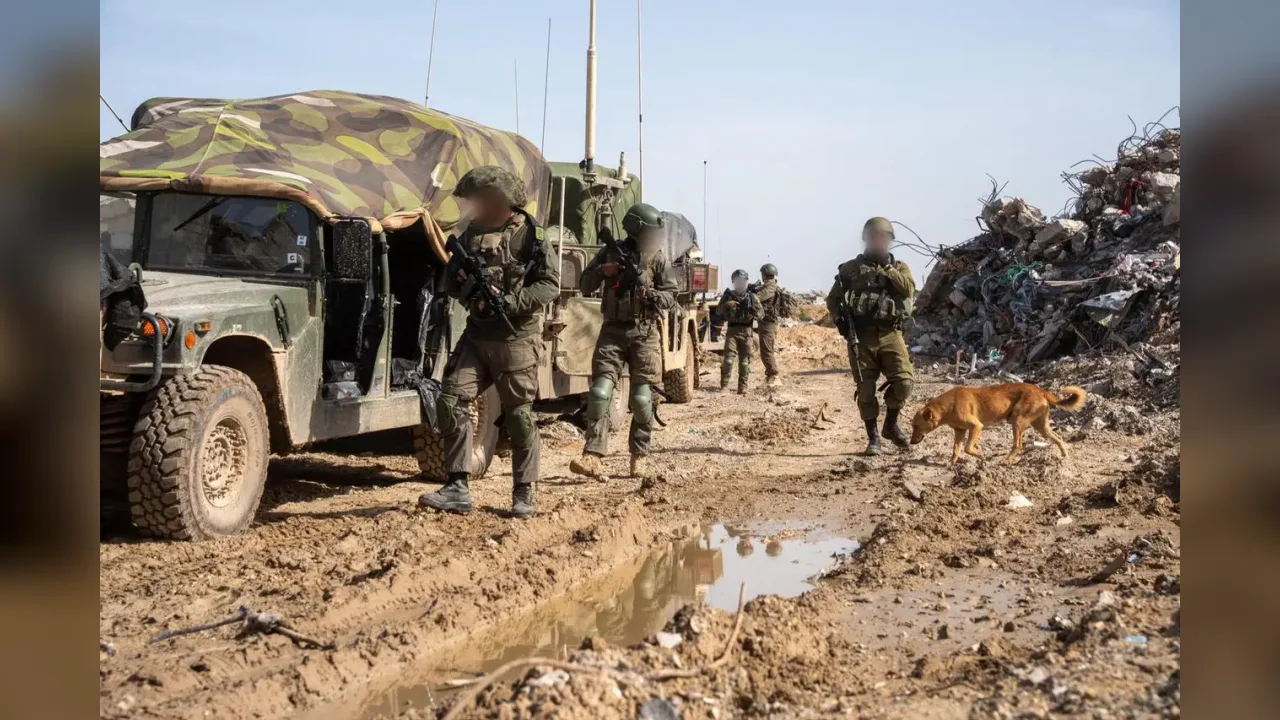
Building clearing and sanitization protocols followed a similar trajectory. Infantry battalions quickly identified that booby-trapped structures and bait tactics represented critical vulnerabilities that caused numerous casualties. To mitigate these risks, forces introduced bulldozers, combat engineering dogs, and unmanned aerial vehicles to safeguard troops during clearing operations.
The Operational Reality of Using Local Civilians
While learning and improvisation remain core strengths of the military, they also encourage operational chaos and complicate command and control, particularly during intensive combat involving reserve forces. Thus, on the fringes of infantry units, a localized practice developed in which local civilians were utilized to inspect buildings. Although the military previously employed a similar framework known as the "Neighbor Procedure" before judicial review and international pressure led to its cancellation, the utilization of civilians in Gaza generally proceeded without formal authorization or standardized doctrine, despite awareness among some senior commanders.
This practice, dubbed the "Mosquito" or "Shawish" code, spread via word-of-mouth as an effective method for protecting troop lives. However, the investigation revealed that the military command did authorize specific units to utilize civilians for tunnel clearance following extended training protocols. Consequently, the curtailment of the practice stemmed primarily from operational and technical hurdles—such as whether to bind a civilian's hands in front or behind, how to prevent escape or attacks against soldiers, and when to release them—rather than ethical prohibitions alone.
Lieutenant Colonel (Res.) Altzafon Granvitz, deputy commander of the 4th Brigade and the sole combat officer to appear on camera for the report, acknowledged that while he understood the operational pressures driving commanders to use the procedure, his primary concern remained the absolute lack of formal regulations governing the practice.
Journalistic Responsibility and the Public Debate
Throughout the war, journalists have faced profound professional and ethical dilemmas between exposing institutional failures and fulfilling their civic duty as citizens defended by the armed forces. In the absence of an official state commission of inquiry into the failures of October 7, the press has frequently functioned as an unofficial investigative body, heightening tensions surrounding sensitive reporting.
The broadcast of the investigation raised acute questions regarding public broadcasting responsibilities. Critics argued that because international media outlets had already covered the practice and damaged Israel's global standing, a public broadcaster airing the report compounded the international public relations challenge. Nevertheless, editors and reporters who advanced the project defended the journalistic necessity of addressing the phenomenon, noting that the military must ultimately decide whether to officially prohibit or regulate the use of civilians in combat environments.